
Fifty years ago today, Dr. Martin Luther King, Jr. and the civil rights movement marched on Washington D.C. and history was made. Today, all of us should take a moment to reflect and pay tribute to a great man and a powerful movement. However, I encourage you to also take another moment to think about the role that non-profit organizations played in Dr. King’s dream and the impact his message has on our sector.
First, let’s start in the beginning with this YouTube video of MLK and his famous speech of 50 years ago:
[youtube=http://www.youtube.com/watch?v=smEqnnklfYs]
When listening to Dr. King’s speech, I am most struck by how many non-profit organizations today are engaged in the struggle he articulated. His impact is still felt 50 years later, and his legacy is his gift of a “vision statement” for so many non-profit organizations.
The following is a list of non-profit organizations from 50 years ago. Do you know what they all have in common?
- Alpha Phi Alpha
- National Association for the Advancement of Colored People (NAACP)
- Women’s Political Council
- Southern Christian Leadership Conference
- The Penn Community Services Center
- Detroit Council for Human Rights
- American Committee on Africa
- SNCC Freedom Singers
- The Fellowship of Reconciliation
- The Martin Luther King Jr. Center for Nonviolent Social Change
Yes, these are all non-profit organizations with connections to MLK. If you’re interested, you should click-through to an amazing Blue Avocado article titled “Did You Know? … Ten Nonprofits that Shaped the Life of Martin Luther King Jr.”
When you go to GuideStar and type in the words “civil rights nonprofits” a list of 6,1,63 different non-profits come up under the category of Civil Rights and Liberties. While not all of these charities are tied to MLK, they are all connected to the legacy he helped sow.
Fifty years later, we use Martin Luther King Jr. Day to encourage our fellow citizens to use it as a “Day of Community Service“.
As I reflect on MLK’s accomplishments and use a non-profit lens to do so, here is what I see:
- The man and his point of view was influenced by non-profits.
- His movement was fueled by non-profits.
- His “I have a dream” speech is a vision statement for countless civil rights organizations to this very day.
- His messages and his tactics are his enduring legacy, and these things are still used by all sorts of non-profit organizations.
- The national holiday celebrating his birthday has transformed into a day of service benefiting countless non-profit organizations.
It is an amazing legacy with non-profit fingerprints and connectivity associated with it. I hope you have a few moments to reflect on all of this today.
Do you have a dream? What is your non-profit organization’s dream? How is your organization’s mission and vision rooted in Dr. King’s iconic “Dream speech“? Please use the comment box below to share your thoughts or just leave a tribute to MLK.
Here’s to your health . . . “Let freedom ring!”
Erik Anderson
Founder & President, The Healthy Non-Profit LLC
www.thehealthynonprofit.com
erik@thehealthynonprofit.com
http://twitter.com/#!/eanderson847
http://www.facebook.com/eanderson847
http://www.linkedin.com/in/erikanderson847
 Last week a dear non-profit friend of mine from California couldn’t sleep. She tossed and she turned. Ultimately, she got out of bed, turned on her computer and started talking into a microphone. When I woke up in the morning in my bed in Elgin, Illinois, there was an email sitting in my inbox with a voice file attachment. Her words have tumbled around in my head for a week, and I’ve decided to enlist your support in dissecting them.
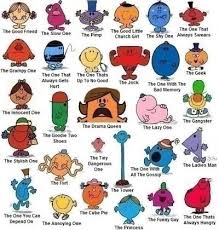 After listening to my friend’s recording, I started Googling around and searching for anything that anyone might have written about characteristics and traits of effective boards. I was especially intrigued by her question about incorporating personality testing into the board development process. After all, many workplaces are incorporating this type of assessment into their employee hiring process.
 Competencies
 Recently, I’ve been doing a lot of what I consider “Nonprofit 101” trainings focused on board roles and responsibilities. After talking with board members about their fiduciary responsibilities, they often push back on their role in fundraising. I’m becoming really good at giving them the “sympathetic smile,” which communicates that I’m hearing their fear but not giving them permission to wash their hands of their role in resource development.
 After all, how scary can it be to “tell stories,” right?
 Welcome to O.D. Fridays at DonorDreams blog. Every Friday for the foreseeable future we will be looking at posts from John Greco’s blog called “
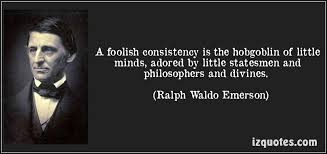
 Well, huh? Let me see here. Every good planning process begins with an assessment /evaluation which springboards off into goal setting, strategy development and action planning. If the organization I just referenced hadn’t been so “foolishly consistent,” they would’ve seen the following:
 The board members and executive director of the agency I reference in the example above certainly were “little“. I say this because their “foolish consistency” and unwillingness to do any assessment and planning had locked them into being a certain size. When you looked at their agency budget, they had brought in the same amount of revenue for the last 10 years.
 There are exceptions to my general rule of “no selling”. The Girl Scouts and Boy Scouts sell cookies and popcorn very well. Their troops, which are volunteer-led, rely on those sales for most of their troop activities. Good for them! There are also

 I am of the opinion that those of us who still use the economy to explain our shortcomings are simply making excuses. In fact, let me take it a step further. Invoking the economy to explain your poor fundraising performance is nothing short of excuse making.
 Empathize . . . they are grieving the lack of results from their collective efforts
 When I engage non-profit organizations in board development related issues, it can be like simultaneously operating in two parallel and polar opposite universes. One universe exists where everyone is talking about how things are “supposed to be” done. This is described in the agency’s written board development plan. In the other universe, there are board members and staff sitting around a table talking about “some guy” they know without any discussion about board composition gap assessment, prospect lists, prospect evaluation or anything that sounds like process.
 With this in mind, I am reminded of an old “Mondays with Marissa” post from a year ago titled “
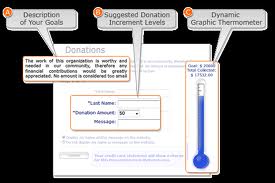 Jeff Bezos has been on my mind lately. Of course, he is the 49-year-old owner of Amazon.com, and this internet pioneer recently purchased one of the iconic old media newspapers — The Washington Post — for $250 million. It was no more than a few days after this announcement that I was talking to a non-profit board volunteer about fundraising when I was reminded of this famous Jeff Bazos quotation: “A company shouldn’t get addicted to being shiny, because shiny doesn’t last.”
 I am a huge proponent of using technology and integrating it into your non-profit organization’s fundraising program, but it shouldn’t be introduced in a way that undercuts the other best practices embedded in your resource development plan.
 Welcome to O.D. Fridays at DonorDreams blog. Every Friday for the foreseeable future we will be looking at posts from John Greco’s blog called “
 However,
  More than a year ago, I stumbled upon a fun article published in the Stanford Social Innovation Review (SSIR) titled “
 So, the conversations I’ve been referencing throughout this post have to do with board development and not the actual revenue models.