
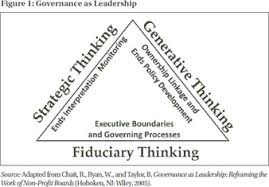
 Sometimes I hear something that hits me just right, and it takes days to get it out of my head. This happened on Tuesday during the Fox West Philanthropic Network’s Philanthropy Day luncheon. The keynote speaker, Dani Robbins, was talking about the different modes of board governance and the importance of facilitating more strategic and generative discussions in the boardroom. Doing so will result in a more engaged board.
Easy as that! Right?
Well, that little voice inside my head started screaming at me. It was saying, “Whoaaaaa! Can strategic and generative discussions be done with any old board members? Or does it take a certain type of board volunteer?”
So, I raised my hand and interrupted Dani’s keynote address. (Sorry, Dani!)
I was half expecting her to say that everyone is capable of engaging in these higher order discussions. I was also expecting her to put the responsibility back on the person(s) who facilitate those boardroom discussions to get the most out of the diversity of people sitting around the table.
However, I got an unexpected answer.
 Dani suggested that board volunteers who are “strategic thinkers” will have an easier time making the transition from traditional fiduciary modes of governance to more strategic and generative modes.
I suspect this means for many non-profit organizations, who want to make this adjustment to governance, that some thought needs to be put into adding more strategic thinkers to their board recruitment prospects lists.
Once I arrived at this conclusion, I got a mental picture of a committee meeting with board governance volunteers going through their prospect identification and evaluation exercises focused on finding strategic thinkers. As this mental picture became clearer, lots of questions flooded into my head including:
- What does a strategic thinker look and sound like?
- Where do strategic thinkers live, work and play?
- How easy will it be for board governance committees to do this work, especially when most committees (in my experience) shortcut the cultivation and evaluation process and go straight from identification to recruitment?
As I normally do when issues like this start bothering me, I open up my internet browser and go to Google. 😉
I quickly found myself reading a post on CEB Blogs titled “5 Characteristics of Strategic Thinkers“. Here are those characteristics:
- Open yourself to perspectives from multiple sources
- Incorporate both logic and emotion into your thinking
- Seek options beyond today’s reality
- Question both the familiar and the to-be-determined
- Accept open issues
 If you’re scratching your head while reading this list and asking “what does THAT mean,” then click the link and read the CEB Blog post. It really is quite good. If you want to learn more, then I suggest you start Googling around. 😉 You also might want to click here and start with this interesting Wikipedia page on strategic thinking.
Let me bottom line what I’m thinking for you this morning.
- This isn’t as simple as changing some of the criteria in your gap assessment tool
- These characteristics are more subtle than questions of age, gender, ethnicity, occupation, fundraising experience, etc
- Only people who know or work closely with board prospects know whether or not they are strategic thinkers, which puts a spotlight on who is serving on your board governance committee
- Identifying strategic thinkers for your board recruitment process will require more time spent cultivating and evaluating prospects and less jumping straight from identification to recruitment
What is standing in your agency’s way of transforming its boardroom discussions from fiduciary to more strategic and generative modes of governance? What are you doing to over come those obstacles? Is your board governance committee approaching its job differently when it considers this question? If so, how?
Please use the comment box below to share your thought and experiences. We can all learn from each other.
Here’s to your health!
Erik Anderson
Founder & President, The Healthy Non-Profit LLC
www.thehealthynonprofit.com
erik@thehealthynonprofit.com
http://twitter.com/#!/eanderson847
http://www.facebook.com/eanderson847
http://www.linkedin.com/in/erikanderson847
 Sorry about not being able to post yesterday, but it was a crazy busy day because I was one of the co-chairs for
  Positioning Your Board for More Effective Fundraising
 Lunch: Celebrating 100 years of philanthropy
 Dani is a big fan of Richard Chait and talked a lot about his
  Don’t look now, but we are seven weeks away from drinking champagne and celebrating the end of 2013 and the start of a Happy New Year 2014. It is this time of the year when non-profit organizations are super busy. Many of you are closing out your fiscal year, and almost every non-profit with a pulse is executing its year-end giving strategy.
 I just finished helping a client with their year-end mail appeal. The executive director called on Friday to report the letters were delivered to the post office and we both did a little happy dance. The next thing on his year-end fundraising task list is preparing for the phone-a-thon follow-up the week of Thanksgiving.
 Holiday shopping appeals
 #GivingTuesday
 Your non-profit brand is powerful. It is coveted by major corporations. It doesn’t matter if you are a major non-profit juggernaut like Boy Scouts or Girl Scouts or if you’re a teeny-tiny rowboat out there in the vast ocean of non-profit organizations. You are still valued. The mere fact that you are a non-profit organization, regardless of your mission, in and of itself is valued by corporate America.
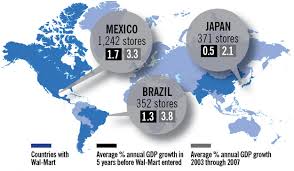 The following are all facts (OK, they are facts
  Have you heard of the “Halo Effect“?
 You may be wondering what I mean by “abusing your non-profit brand“. Here is just a short list of neglectful things:
 Boards meetings can quickly go from productive to destructive in any number of ways. The following are just a few lessons I’ve learned throughout the years and thought board volunteers might benefit from reading:
 When you don’t know where you’re going any road will get you there
 Time of Death: 2 hours after we started talking about this
 I am a member of Gen-X, and I behave like a typical person of that generation especially when it comes to my mailbox. I hate going to the mailbox. I hate opening mail because 99.9% of it is junk. Anything important comes to me via email, and all of my bills and charitable giving is set-up using automatic bill pay. So, imagine my surprise the other day when I was opening a three-week stack of mail, and I came across a handwritten envelope from one of my favorite local charities.
 Every once in a while this job allows me to do something fun and amazing. Last week was one of those times. During an organizational assessment project, I had a brush with history when one of my interviewees turned out to be Nate “Bobo” Smalls. Who is this guy? Quite simply, Bobo is one of the last remaining baseball stars from the Negro Baseball League, which is a piece of history that the world tries very hard not to remember or honor. I walked away from my interview with Bobo with goosebumps on my arm.
 Bobo recalled every neighborhood having at least one mentor.
 The epiphany
 It happens every year. My partner and I get a phone call from Cindy, who is Ernie Gamino’s assistant, and she asks us to please schedule a year-end sit down meeting. Ernie is our Edward Jones financial advisor, and getting time in both of our calendars is a challenge. However, we found some time this past Saturday. I’m glad we did because I discovered that Ernie is a really good fundraising professional, who has never been trained as one or worked at a non-profit organization. We can all learn a lot from Ernie and his colleagues.
 I started the meeting off by growling at poor Ernie. I wanted to know why this annual meeting is necessary? Can’t he just go about doing his job and call me when he needs to get permission to do something with my investment portfolio.
 We talked about his Northern Illinois University (NIU) football team and the state of the BCS football system.
 For two days this week, I’ve been holed up in a little room interviewing donors, community leaders, and collaborative partners as part of an organizational assessment project. When you work in a small room for an extended period of time, you tend to notice every little thing. It was during this time that I found inspiration literally painted on the walls, which got me wondering where you and your non-profit organization gets its inspiration?
 I know that today’s post is a little different from the typical DonorDreams blog post, but working in that small room surrounded by those quotations got me wondering:
 I just love this time of the year. The temperature outside is lovely. Trees are turning colors and putting on a show. Charity is coming into focus for millions of Americans. Last year approximately 174 million Americans donated approximately $50 billion to charities during the holiday season. While most resource development people will tell you this all starts with Thanksgiving, I contend that Halloween is when the starters gun goes off in my head.