
 When I graduated college with my masters degree in Urban Planning in 1994, our country was still emerging from a small recession (you know the once that propelled Bill Clinton into the White House). Needless to say, government jobs in urban planning offices across America were still in short supply, and there were many people with much more experience waiting in line for jobs ahead of me. It was this economic dynamic that forced me to innovate, changing my job search parameters and propelling me into the non-profit sector.
I starting thinking about this topic when the Wild Apricot Blog announced earlier this month that it was hosting the June 2014 Nonprofit Blog Carnival and the theme was “Innovation and Inspiration.” All of this got me wondering how many recent college graduates might be in a similar situation in which I found myself back in May 1994.
Getting it right the first time
Throughout my college years, I worked at a Boy Scout camp in the summer to earn money for room & board, books, and spending money. So, when my job search focus changed from urban planning to non-profit jobs, agencies with a youth development focus made sense.
My first non-profit job was with the Don Moyer Boys & Girls Club as a unit director. My job was to open a new site in a rural community west of Champaign, Illinois in a town called Mahomet.
I didn’t last long in that position because the salary was miserable, and I was working 50 to 60 hours per week. However, little did I know that I found my non-profit career path and future employer right out of college.
My next job was in the for-profit sector, and three years into that position I was regretting my choice to leave the non-profit sector.
I opened a new job search and thought I had found the perfect fit when I accepted a District Executive position working for the Boy Scouts of America in the northwest suburbs of Chicago.
I saw this as perfect because:
- I am an alumnus of the scouting program and an Eagle Scout
- I had already worked for the scouts as a summer camp employee and thought I understood the culture
- It was a youth development agency, which I learned was a passion for me from my work at the Don Moyer Boys & Girls Club
Valuable lessons learned
 I loved working for the Boy Scouts because I learned so much including:
- Membership recruitment & management
- Volunteer recruitment & management
- Field service
- Fundraising
- Training
In spite of all of this, I learned this wasn’t “the perfect job for me” as I had originally thought.
First, I was still reeling from a divorce and grappling with my sexual orientation.
I was fairly sure that I was gay, but I thought I could make the choice of celibacy as I entered scouting’s anti-gay workplace. Interestingly, when the job offer arrived, it motivated me to come out of the closet to my first family member — my mother — because I was afraid that I would somehow get “outed” and she would find out by reading it in the newspaper. (side note — this kind of stuff was happening in communities across America at that time . . . it was a very different world in the 1990s)
Second, I learned after three years on the front line with the scouts that the mission of the Boy Scouts only matched my passion and what was in my heart by about 95%.
It wasn’t enough to love scouting and be a poster-child (except for being gay) illustrating the impact that scouting has had on the lives of millions of Americans.
What I learned was that the mission of the non-profit organization for which you work (and work like a dog) must match what is in your heart 100%. Being close is not good enough.
I used to joke with close friends that it was the mission of the Boy Scouts to “take today’s average Joe and turn them into tomorrow’s CEO.” Of course, scouting’s mission is much more than this, but leadership development is still at its core.
What I came to realize was that I am passionate about much more than just working with and making a difference in the lives of today’s youth. I am passionate about working with “those kids who need us most.” We used to call those kids “at-risk” or “youth from disadvantaged circumstances.”
So, I opened another job search, left a job promotion opportunity on the table with the Boy Scouts, and landed my first executive director job working with a local Boys & Girls Club. And the rest as they say is history! 😉
Words of wisdom for those young people looking for non-profit jobs today
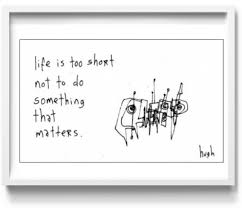 Look into your heart and understand your passions
- Match your job search with your passions
- Don’t settle for offers from non-profit organizations that don’t speak to your inner passions
- Understand the organizational culture of the agency for which you’re going to work
- Understand that you can most likely make more money working in the for-profit sector, but your payday will come from making a difference in the lives of your clients
- Consider doing some volunteer work first to identify areas of interest before jumping into a non-profit career
- Don’t abandon hope of doing what you studied in school because there is lots of room for lots of stuff in the non-profit community (for example, I am using my urban planning degree to do lots of strategic planning, board development planning and fundraising planning)
Are are currently looking for a non-profit job? Or does your story sound similar to mine? If so, please scroll down and share your thoughts and experiences in the comment box below. We can all learn from each other.
Here’s to your health!
Erik Anderson
Founder & President, The Healthy Non-Profit LLC
www.thehealthynonprofit.com
erik@thehealthynonprofit.com
http://twitter.com/#!/eanderson847
http://www.facebook.com/eanderson847
http://www.linkedin.com/in/erikanderson847
 When I decided to ask local non-profit organizations to use my blog platform to talk about some aspect of building loyalty with a particular stakeholder group, I sent out a ton of email requests to former clients asking them to consent to an interview or send me something in writing.
 Every good planning process begins with some form of evaluation. It could look like a SWOT analysis. It could be significantly more intensive and involve going through an accreditation process. Regardless of what evaluation process you use, good planning starts with evaluation because it is difficult to figure out where you want to go if you don’t know where you are currently.
 My first days (and those leading up to) as the Director of Operations for the
  Team vs. Group
 The first step I stress to all of my managers in building a loyal team is the importance of the interview process.
 Once hired, make sure the new employee participates in an immediate on-boarding process and orientation to the organization.
 After the honeymoon phase and the initial adrenaline of starting something new, the “real work” is just beginning for the person managing a new employee. The staff manager has the unenviable job of figuring out how to retain talent and simultaneously build a team.
 While Boys & Girls Clubs of Columbus allows each of our five programs to have its own identity, we strive for something that we call a “One Club Feel.” This, to me, is the most important part of my job and truest test of my success (or failure) as a leader.
 “You don’t manage people; you manage things. You lead people.”

 Last week we paused for a recap of how far we have come in Lon Safko’s book “
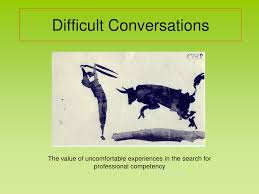 From time-to-time, we all need to have a difficult conversation with someone. It could be an employee, board volunteer, donor, collaborative partner, or even a spouse or loved-one. I was in such a position a few days ago, and needless to say it didn’t go very well. In the subsequent days, I spent a lot of time licking my wounds and thinking about what I could’ve done differently. So, I’ve decided to share some of my thoughts with the readers at DonorDreams blog and hope you’ll also share your thoughts and experiences.
 I’ve done some research into how I can do better in the future with engaging others in these type of conversations. Here are just a few of the best practices that resonate with me:
 Did you read
  Yesterday, I had the opportunity to spend a little time with a professional grant writer, and I walked away from the encounter wondering if there isn’t a new trend afoot in the world of non-profit grants. During our time together, I got the sense that the winds of change are blowing. So, I thought I’d blog about it this morning and see if you are encountering some of the same things.