
 The turkey has been consumed (and so have the leftovers). Black Friday came and went with only a few bumps and bruises for Americans. Cyber Monday also came and went with consumer dollars flying all over the information super highway. Are you ready for one last hurdle? Today, is #GivingTuesday, which is the day that the non-profit sector is trying to establish in the minds of Americans as the day to make online charitable contributions of time and money to your favorite charities.
Two years ago, DonorDreams blog featured this ePhilanthropy inspired holiday in its “Mondays with Marissa” series with a post titled “Five ways your non-profit can participate in #GivingTuesday“. In 2013, we spotlighted this special day in a post titled “Is your non-profit ready for the homestretch of 2013?”
This holiday is so new that I almost forgot about it this morning until I opened my email inbox.
My first #GivingTuesday solicitation came from an organization named A Safe Haven. Their email highlights a “challenge” that ends tonight to instill a sense of urgency among its donors.
The second email solicitation this morning came from Mikva Challenge. This organization is promoting a link to a video featuring one of their members. The video highlights their client participating in a program they call Project Soapbox.
Out of curiosity, I went to Google this morning and did a search on #GivingTuesday. Believe it or not, there are three paid ads featured at the top of my screen for the following agencies:
My magic crystal ball broke a long time ago, and I normally have a hard time predicting the future. However, it looks like #GivingTuesday, which is only a few years old, is starting to take root.
Of course, none of my favorite local charities appear to be participating this year. As I soaked this thought in, it got me wondering:
- Is your agency participating in #GivingTuesday this year? If so, what do your efforts look like?
- What strategies are you using to attract online donors?
- Did you participate last year? If so, what did you learn and what changes did you make between last year and this year?
- If you decided not to participate this year, why not? What went into making that decision for you?
- If you are looking at next year as your first foray into #GivingTuesday, what do you need to do in order to get your agency well positioned?
- Are you doing other things online at the end of the year that don’t correlate to #GivingTuesday?
Please scroll down and use the comment box to share your thoughts and experiences.
Here’s to your health! (And Happy #GivingTuesday)
Erik Anderson
Founder & President, The Healthy Non-Profit LLC
www.thehealthynonprofit.com
erik@thehealthynonprofit.com
http://twitter.com/#!/eanderson847
http://www.facebook.com/eanderson847
http://www.linkedin.com/in/erikanderson847

 I read this and imagine my organization with engaged donors engaged in open communication, positive feedback, while building a better organization. Ahhhh, nirvana, but wait . . . did he say negative feedback, too?
 David was a tenured college professor. While an expert in his field, he knew very little about computers; just enough in fact to get on a network and ask for help. Fortunately, a more experienced user came to his aid, never failing to give just the right advice.
 A few short years ago, we couldn’t have even imagined such a scenario. In the past, proximity and commonality brought us together. We had family and close friends; help came from familiar places.
 And I already see that I’m not adapting fast enough to keep pace with the innovations. The technology school bus isn’t waiting for me!
 Safko explains that social media marketing is like going to a networking event, a party, a trade show, church, or anywhere large groups of people gather.
 I don’t know about you, but radio plays an important role in my life. I used to live in my car traveling from client-to-client throughout the Midwest when I was an internal consultant. After opening my own consulting practice, I now travel much shorter distances, but I still spend a decent amount of time in my car. So, the radio is where I turn for a decent amount of news and entertainment, especially when I’m on the road. However, when I’m at home I don’t listen as much because I don’t get very good reception in the house, which is why I was so elated the other day when I discovered the
  You know what Douglas Adams says (according to
  When I look at my email inbox, I do a lot of scanning. I first look at the names of people who sent me something. As I do this, I am deleting anything that vaguely looks like spam or advertising. I don’t even open it. After this first purge, I re-visit those who are left standing and start looking at subject lines. I’m essentially trying to prioritize what I should open first versus leave for later when I have more time. And when I say “leave for later,” it could be days or weeks later.
 A few months ago, I had a horrible experience with my favorite airline. Long story short . . . delay, delay, delay, delay, loaded on the plane, equipment malfunction, delay, delay and finally up-up-and-away. A whole day was lost. However, in that catastrophe, I was able to learn something about Twitter and the new age of customer service. In the last few weeks, I’ve been reminded of this experience when two bloggers talked about Twitter. So, I thought I’d we’d look Twitter a little more closely today, especially as it relates to non-profit organizations.
 I am on Twitter every day. I’m not there very long. I’m not a Twitter expert. I’m sure that I am doing lots and lots wrong in the eyes of social media experts. However, I do see lots of content and most of those who I’m following are non-profit organizations.
 This is a tough question to answer because I suspect it may vary slightly from agency-to-agency. However, some of the better non-profit organizations are tweeting the following:



 As you can probably imagine, I subscribe to a lot of things — everything from eNewsletters to blogs — and I do a lot of reading. It helps me be a better non-profit consultant, and equally important it helps me be a better thought-leader / blogger. This brings me to an article written by Cody Switzer in The Chronicle of Philanthropy titled “
 Cody’s article about the
 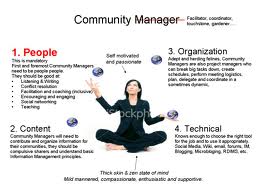 This person isn’t a “technology person” working in your IT department. In fact, they don’t need to have many of those skill sets because you either already have an a) IT person on your payroll, b) relationship with an IT consulting firm or c) utilize “in-the-box” technology (e.g. Press Publisher, 1and1.com, etc) that comes with a toll-free help desk when things get dicey.