Two days ago, I published a post titled “What will Trump’s impact be on the non-profit sector?” and I followed it up yesterday with “How is Trump ushering in renaissance for non-profit sector?” Today, I’ll end this series by talking about your non-profit and sharing a few readiness tips for your consideration.
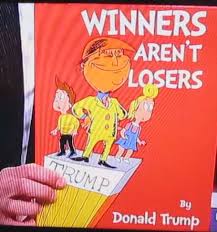
President Trump is famous for talking about “winner” and “losers.” He is also a self-described conservative who campaigned on shrinking the size of the federal government. In the administration’s first budget to Congress, there are a number of programs he proposed reducing or eliminating that has a direct impact on non-profit organizations. In just the last few days, I’ve heard my clients chattering about the following few proposed cuts:
- 21st Community Learning Centers
- Meals on Wheels
- Community Development Block Grants
As our society enters a new era where government starts tightening its belt, those non-profit organizations that are heavily government funded and have little experience with private sector philanthropy will likely be “losers” in my estimation.
Similarly, if your organization has strong relationships with individual donors, then I believe you are well positioned to be a “winner.” I believe this is especially true because of the reasons I provided in yesterday’s blog post.
However, you may want to start changing the way you speak to your donors in this new era. As Tom Ahern is famous for saying, properly utilizing the right emotional triggers will be your key to success. You won’t simply be able to get a away with shouting the word “Trump” and sitting back to watch the money roll in.
The following few sections are just a few thoughts I’ve had on how you can start tapping into a new generation of engaged donors.
Increase your non-solicitation communications to donors
 Donors want to know how those you serve are being impacted by the changing world around us. So, help them see it.
Doing an informal audit of your last few newsletters is a great place to start. Pull those communications tools out of that dusty archive file and ask yourself:
- How much of your content is about your organization (e.g. upcoming fundraisers, your organization’s needs, etc)?
- How many times are you using the word “WE” and “US” versus “YOU”?
- Do your stories focus on how your donors are heros? Or do they talk about your successes?
- Is your content focused on seeing the world through your clients eyes or your eyes?
If you are talking more about your organization, then you want to change that practice and figure out how to make your donors the hero and reasons for those successes.
More importantly, check to see how many of your donor communication pieces are solicitation oriented compared to cultivation and stewardship oriented. You will want to change that ratio to lean more towards sending more cultivation and stewardship pieces (with small hints here and there about where the donor can contribute).
Talk about client needs and not about Trump
It is easy to point at Trump and blame everything on him. It is “shorthand” and he is an emotional conduit for some donors’ emotions. However, it is too easy for people to shrug their shoulders and say, “He’s the President. I’m just a little donor. I’ll try to make a difference in a few years when I go to the ballot box.”
It is a far better strategy to highlight the issues donors care passionately about and pull on those emotional heartstrings. Sure, feel free to point at policy changes being proposed that you feel will worsen the situation, but don’t rely on it as your case for support.
Explain how one donor’s contribution can and will make a difference in the lives of those you serve.
Pay more attention to small and mid-size donors
Over the last decade we’ve seen politicians prove this point. How much money did Obama, Sanders and even Trump fundraise in smaller donations of $25, $50 and $100 gifts? They talked about it constantly, and it is time non-profits start following suit.
After all, today’s small annual campaign donor is tomorrow’s lead gift in your capital or endowment campaign.
This means evolving your resource development plan. Don’t add more special events, which are labor intensive and costly. Look at peer-to-peer solicitation opportunities such as annual campaigns, monthly giving programs, a-thon style events, targeted mail and online peer-to-peer giving opportunities. These things don’t happen organically. They require thought and strategy. So, take the time to think it through on paper with your board members and fundraising volunteers.
Add more personal contact with donors
It is easy to send a piece of mail or an email to large groups of donors and potential supporters. However, there is a lot of that going on from many different organizations. Information overload is a real thing. So, tweak your approach to increase the effectiveness of your message.
Don’t stop sending mail and email. But think about adding some in-person opportunities. Here are just a few thoughts:
- Host a series of town hall meetings focused on the issues your clients face
- Host special (e.g. exclusive) donor receptions to meet those you serve and let them tell the story
- Invite donors to periodic coffee meetings with your organization’s executive director to talk about the issues
Encourage donor advocacy
Remind your donors they can and will make a difference by contacting your local, state and federal legislators about issues impacting your clients. Send out periodic notes talking about proposed policy changes that directly effect your clients. Encourage them to attend meetings, pick-up the phone or write a letter. And make it easy for them to do so. (off-handedly mentioning that a contribution will also help might not be a bad idea, too)
A note to those non-profits who are heavily government funded
OK, your organization might not be experienced in doing these things. You might be one of those organizations I indicated earlier in this post that are heading for that “loser” label.
Don’t fret! It isn’t too late to change your approach.
Here are a few suggestions you might want to look at:
- Gather your board members together and develop a short list of individuals who you think are like-minded and supporters of your issues
- Pick one or two of the things I mentioned above and start executing those strategies. Start small and make adjustments as you go
- With your volunteers, develop a small resource development plan that adds two or three small individual giving strategies. Start small and be realistic. It might be as simple as sending targeted mail to 50 individuals a few times a year and hosting a simple fundraising event. Dedicate yourself to growing it steadily over the years.
If you need help convincing board members, I suggest giving them a copy of the book Who Moved My Cheese, encouraging them to read it, and facilitate a boardroom discussion about what it means for your organization. There is wisdom in your boardroom. Trust me. All you need to do is tap into it.
Here’s to your healthy!
Erik Anderson
Founder & President, The Healthy Non-Profit LLC
www.thehealthynonprofit.com
erik@thehealthynonprofit.com
http://twitter.com/#!/eanderson847
http://www.facebook.com/eanderson847
http://www.linkedin.com/in/erikanderson847
 Yesterday, I published a post titled “
 Take a good look up and down this list. It is way to easy to buy into an explanation like “My-Liberal-Friends-Are-Rallying-The-Troops” phenomenon.” Right? And I almost did, but Jiminy Cricket was still wagging his finger at me (or maybe it was Trump). So, I held off on publishing my Trump blog post for a little longer.
 “Trump is like having a golden ticket’ to Willy Wonka’s Chocolate Factory for those organizations who know how to fundraise. But those organizations who have been fat and sassy and accepting lots of government funding instead of fundraising are likely going to fail or merge with other organizations.”
 Last week in a post titled “
 In a nutshell, the
  A few months ago I was onsite with a client and found myself working with a young fundraising professional. They hadn’t been on the job for long. In fact, their background wasn’t even in resource development. If my memory serves me well, then I think they had a college degree and an internship’s worth of experience in marketing or public relations.
 Later that evening, I was working from the hotel room with the television chirping away in the background. One of the “Back to the Future” movies was the evening feature. Ignoring Michael J. Fox and focusing instead on my work from earlier in the day, I started thinking about all of the fundraising mistakes I had made (and hopefully learned from) when I was younger.
 Let’s have a little fun with this topic. It lends itself nicely to it. Right? 😉
 There are literally tons of movies from which you could choose. Here are just a few ideas:
 You are welcome to write your blog post anytime during the month of May (or even submit a post you may have previously published); however, I must receive your submission by the end of the day on Monday, April 25, 2016:
 Earlier this week and last week, I started writing about the State of Illinois’ budget crisis and how it is impacting non-profit organizations. In
  Don’t want to take my word for it because you might have heard it from your grandfather or another beloved family member. No problem … I completely understand. Let me provide you with scientific proof. Simply
  Your board is likely made up of smart people. If they aren’t being used (at a minimum) as a “sounding board” on the issue of government funding and what to do about it, then my suggestions are:
 Of course, the more difficult question for most non-profit organizations is “What to do about it?”
 Slavery ended on December 6, 1865 when the 13th Amendment to the Constitution of the United States was ratified. In a nutshell, this means that people cannot own people anymore. I have a hard time juxtaposing this fact with what I hear some non-profit professionals sometimes say, which is: “. . . that is my donor“.
 Let’s face it . . . non-profit organizations typically have many competing priorities and projects usually going on simultaneously (e.g. supporting the annual fund, building a new building, renovating an existing space, endowing a program, etc).
![IMG_20150805_111547840_HDR[1]](https://donordreams.files.wordpress.com/2015/08/img_20150805_111547840_hdr1.jpg)
![IMG_20150805_105024312_HDR[1]](https://donordreams.files.wordpress.com/2015/08/img_20150805_105024312_hdr1.jpg)
![IMG_20150805_104819757[1]](https://donordreams.files.wordpress.com/2015/08/img_20150805_1048197571.jpg)
 Last week I wrote a post titled “
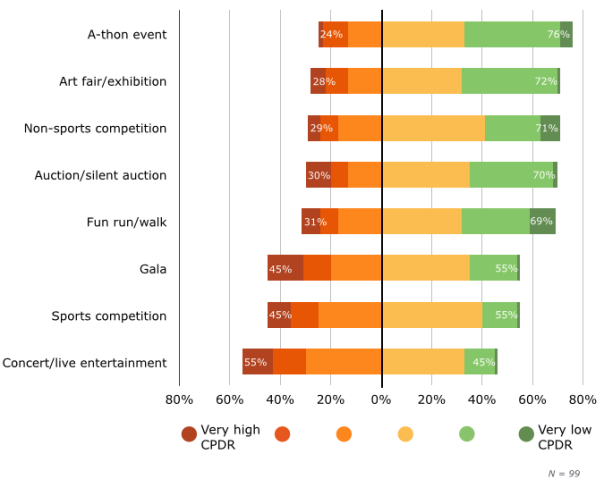
 In other words, most of us run at least one special event as part of our comprehensive resource development program. While this was foreseeable and expected, what was surprising to me was that different size non-profit organizations get more bang-for-their-buck from different types of events. And what floored me was that regardless of organizational size most respondents reported that “fun runs and walks” universally receive a high return on investment (ROI).