May 2013 Nonprofit Blog Carnival

carnival masksStep right up . . . step right up! It is time for the May 2013 Nonprofit Blog Carnival.

You will be amazed by what many non-profit experts had to say in an open letter they composed to non-profit board volunteers.

What is even more unbelievable is how some of this month’s carnival participants were able to skillfully weave Dr. Seuss inspired ideas into their posts.

“Unless someone like you cares a whole awful lot, nothing is going to get better. It’s not.” ~Dr. Seuss

Jeff Brooks at Future Fundraising Now wrote his letter to board members who don’t like your fundraising program. Did I mention how much he seems to like eating green eggs and ham?

The always positive and upbeat Marc Pitman (aka The Fundraising Coach) addressed the issue of board volunteers who are reluctant to fundraise. He included a neat link to a free asking styles profile tool at the end of his post. You gotta check it out!

On mBlog, Jenifer Snyder wrote her post to board volunteers on the value of getting more involved in mobile. I was especially impressed with this post because it is composed 100% in Dr. Seuss rhyme format. Big gold star for Jennifer!

Susan Chavez also earned a big gold star for writing her post in rhyme and offering social media advice to non-profit board volunteers.

Over at Wild Apricot blog, Lori Halley’s letter was written from the perspective of a new volunteer who openly wonders why veteran board volunteers sometimes resist new ideas and cloak themselves in the old fashion “that’s not how we do it here” defense.

Two Plus Two Can Be Five blog wrote their letter to board volunteers from the perspective of an ex-board volunteer who is one of those silent volunteers who has much to offer but never gets properly engaged. They ask the always powerful question: “Have you ever wondered why people resign from the board and move on like I’m going to?”

Sandy Rees at Get Fully Funded blog also took inspiration from a variety of different Dr. Seuss quotations. Her letter was written to new board volunteers and offered a treasure trove of advice on how to be a great non-profit board volunteer. She ends her post with an awesome training link that speaks to the topic of basic board roles and responsibilities.

Terri Holland wrote her letter from her own perspective as a fundraising professional. She ticks off four very common things that get in between boards and resource development staff, and she asks for their understanding and cooperation. This post is very honest and refreshing.

While not in the form of a letter, our friends at Big Duck blog offered “Three tips to help reinvigorate your board meetings“. This post reads like a letter to board volunteers. I included it in the Nonprofit Blog Carnival because I thought some of you might want to share it with your board governance committee and board president.

love stampLove letters to board volunteers

One of my favorite bloggers of all time, Joanne Fritz at about.com, wrote “A Love Letter to My First Board of Directors“.  Joanne undoubtedly speaks for all of us who’ve had the luxury of hindsight to look back at our past experiences.

Over at Non Profit Evolution, Dani Robbins also penned a love letter to her former board and exclaimed from the mountaintops: “I am the leader I am today because of the tools you gave me.  I promise to pay it forward.”

At the Laramie Board Learning Project blog, Dr. Debra Beck penned an Open letter to an exemplar board expressing her appreciation to a board for allowing her to study their work, their learning processes and their motivations to serve (and serve well) for her doctoral dissertation research.

But wait . . . there’s more!

As many of you know, DonorDreams blog dedicated the entire month of May to non-profit professionals and volunteers who wanted to write anonymous letters to their boards.

There were a ton of great entries, and I encourage you to click over and start reading. However, for those of you with limited time for reading blogs, the following were the top six most popular posts:

Again, these submissions were not from bloggers. These letters were from real, live non-profit professionals and board volunteers. Their honesty is a window upon which you can see the things with which the non-profit sector struggles every day.

dr suessSo what should you do next?

Dr. Seuss reminds us:

“You have brains in your head. You have feet in your shoes. You can steer yourself in any direction you choose. You’re on your own, and you know what you know. And you are the guy who’ll decide where to go.”

In yesterday’s DonorDreams post titled “I meant what I said and I said what I meant! ~Dr. Seuss,” I encouraged everyone who wrote letters (and those of you who have unwritten letters in your heads) to take it a step further and TAKE ACTION. Take a moment to click over to this post and give some consideration to what you’re next steps should be. Architects for change (as was Dr. Seuss) would consider this moment of reflection necessary if you plan on growing the organizational capacity of your agency.

Our fellow blogger Febe Galvez-Voth at www.thecaseforsupport.com might have summed it up best when she submitted the following Dr. Seuss inspired entry about developing your organization’s case for support (which I encourage you to read in a broader context of developing a case for addressing any of these board issues):

Wherever you are

State your case
On a bus in a fuss
Tell the world that you care
Tell the world why you share

State your case
In a chute in a suit
Make your smarts lead the way
Make your smarts sway the nay

State your case
In a home with a gnome
Speak with love and respect
Speak with love and connect

State your case
In a room with a broom
Lead away from the fray
You’ll go up, up and away

State your case!

carnival2“Today was good. Today was fun. Tomorrow is another one.” ~Dr. Seuss

OK . . . I am stretching this quotation from Dr. Seuss a little far. There is not another Nonprofit Blog Carnival tomorrow, but there will be another one in June (as there is every month).

Lori Halley at Wild Apricot blog will be next months host the next Nonprofit Blog Carnival. The theme will be “Data for Good“. Click here for more details and how to submit your blog entry for consideration.

As I say at the end of all my blog posts . . .

Here’s to your health!

Erik Anderson
Founder & President, The Healthy Non-Profit LLC
www.thehealthynonprofit.com 
erik@thehealthynonprofit.com
http://twitter.com/#!/eanderson847
http://www.facebook.com/eanderson847
http://www.linkedin.com/in/erikanderson847

Dear board volunteers . . . digging in your heels doesn’t help us!

mardi gras mask7DonorDreams blog is honored to be hosting the May 2013 Nonprofit Blog Carnival. The theme this month is “Dear board volunteer . . .” and the idea is “If you could write an anonymous letter to a nonprofit board about something they do that drives you crazy, what would that letter look like and what suggested solutions would you include?” If you are a blogger and would like more information on how to participate and submit a post for consideration, please click here to learn more.

I wanted to expand the Nonprofit Blog Carnival concept in May. So, I reached out to real non-profit people and asked them to also write an anonymous letter to their board volunteers. These folks are executive directors, fundraising professionals, board members, donors, community volunteers, consultants and front line staff. I promised everyone anonymity in exchange for their submissions.

We will celebrate May’s Nonprofit Blog Carnival on Wednesday, May 29, 2013.

I hope you enjoy this real look at real issues that our community deals with on a daily basis.

Here is today’s letter:

Dear Board Members,

We have spent the last six months discussing board member responsibilities, attributes and expectations.  We agreed in today’s climate, a healthy, engaged and responsive board is the foundation for sustainability.  In order for our organization to thrive and grow, a new kind of board leadership is a must.   Clear expectations were defined, a Governance Committee was established. 

Now as we are in “ execution” phase, there appears to be push back on the direction of the board, its structure and responsibilities. 

Honestly, this is so so  frustrating and am wondering why we (the board & me) spent six months developing a plan when there was no intention of using it.   This type of behavior is probably why you have had three Executive Directors in the past four years. 

I am committed to raising board engagement to a higher level and creating a meaningful board membership experience but I need your help.  If we truly want to impact the lives of the children we serve, we must change.  We have the right mission for the right reason, let’s not let our kids down.

I know that change is not easy, but we need to push forward towards a solution. Here are just a few simple suggestions that I have:

  1. let’s move a few of our more resistant board volunteers off of the board and onto another task force or advisory council,
  2. let’s shake up our board leadership,
  3. let’s add a few fresh faces by recruiting two or three new board volunteers, and
  4. let’s find a donor who is willing to make a challenge gift that is tied to implementation of our original plan.

Sincerely,
G. U. Dummie

If you have some advice for the author of our anonymous letter, please be respectful and share it in the comment box at the bottom of this post.

Here’s to your health!

Erik Anderson
Founder & President, The Healthy Non-Profit LLC
www.thehealthynonprofit.com 
erik@thehealthynonprofit.com
http://twitter.com/#!/eanderson847
http://www.facebook.com/eanderson847
http://www.linkedin.com/in/erikanderson847

Dear board volunteers . . . There is no “I” in board.

mardi gras mask4DonorDreams blog is honored to be hosting the May 2013 Nonprofit Blog Carnival. The theme this month is “Dear board volunteer . . .” and the idea is “If you could write an anonymous letter to a nonprofit board about something they do that drives you crazy, what would that letter look like and what suggested solutions would you include?” If you are a blogger and would like more information on how to participate and submit a post for consideration, please click here to learn more.

I wanted to expand the Nonprofit Blog Carnival concept in May. So, I reached out to real non-profit people and asked them to also write an anonymous letter to their board volunteers. These folks are executive directors, fundraising professionals, board members, donors, community volunteers, consultants and front line staff. I promised everyone anonymity in exchange for their submissions.

We will celebrate May’s Nonprofit Blog Carnival on Wednesday, May 29, 2013. In the meantime, I hope you enjoy this real look at real issues that our community deals with on a daily basis.

Here is today’s letter:

Dear Board Members,

I am thrilled that you hired me as your Execute Director and  entrusted me with developing this organization and moving us to the next level.  It remains an exciting opportunity for all involved. 

I have one little request to make:  please let me do my job without fear that you’ll undo the things I’m attempting to put into place.  It becomes difficult  when I begin initiating policies/procedures and practices that received BOD approval only to discover that there are conversations that occur outside the Boardroom that derail activities that are under way. 

It would also be helpful if each of you could remember that just because you have an idea or you have a strong reaction to something, you don’t necessarily get to have your way or make unilateral decisions.  We have processes for decision making within our bylaws and they are there for a purpose. 

Board meetings and committee meetings are venues for dialogue and discussion.  If you disagree, speak up so that you are heard.  If you oppose a decision, please respect your colleagues on the Board and honor the group decision.  If you continually  find yourself in disagreement with your colleagues on the Board, perhaps it is time to resign.  It could be a sign that your job as a Board member is now done.

Sincerely,
New-to-the-party Patty

If you have some advice for the author of our anonymous letter, please be respectful and share it in the comment box at the bottom of this post.

Here’s to your health!

Erik Anderson
Founder & President, The Healthy Non-Profit LLC
www.thehealthynonprofit.com 
erik@thehealthynonprofit.com
http://twitter.com/#!/eanderson847
http://www.facebook.com/eanderson847
http://www.linkedin.com/in/erikanderson847

Dear board volunteer . . . Please invest in my potential and development.

mardi gras mask5DonorDreams blog is honored to be hosting the May 2013 Nonprofit Blog Carnival. The theme this month is “Dear board volunteer . . .” and the idea is “If you could write an anonymous letter to a nonprofit board about something they do that drives you crazy, what would that letter look like and what suggested solutions would you include?” If you are a blogger and would like more information on how to participate and submit a post for consideration, please click here to learn more.

I wanted to expand the Nonprofit Blog Carnival concept in May. So, I reached out to real non-profit people and asked them to also write an anonymous letter to their board volunteers. These people are executive directors, fundraising professionals, board members, donors, community volunteers, consultants and front line staff. I promised everyone anonymity in exchange for their submissions.

We will celebrate May’s Nonprofit Blog Carnival on Wednesday, May 29, 2013. Up to that fun-filled day, I will publish real anonymous letters every day right here at DonorDreams blog.

I hope you enjoy this real look at real issues that our community deals with on a daily basis.

Here is today’s letter:

Dear Board of Directors,

Thank you for your commitment and dedication to the mission of our non-profit organization. I am very proud of the tremendous strides that we have taken as a board and as an organization in the last three years. As you all know, developing our board into a high functioning and high profile board has been a key objective in our three-year strategic plan. We have worked diligently at achieving that objective by implementing a standing governance committee to focus on the core governance, composition, and performance of our board.

The governance committee has suggested, and you have adopted policies and procedures around assessing the performance of individual board members as well as the board as a whole. These actions have resulted in:

  • 100% board giving for the last three years,
  • the development of an annual special event that raises the necessary revenue to sustain our summer program that was formerly funded solely by federal grant dollars,
  • 100% board member completion of the individual commitments on the Board Commitment Form,
  • a 71% increase in reserve funds, and
  • a 415% increase in giving for our annual campaign.

As they say, what gets measured gets done.

As we reflect on our amazing successes in board development, I can’t help but wonder why the same amount of effort has not been given to developing my capacity as the Executive Director of this organization.

It is difficult for me to comprehend why setting my annual goals, and assessing my performance, is only completed when I harass you enough to do it. Why can’t you ever get a task force together to complete this critical task, and why do you apply a rubber stamp to my recommendations? I am baffled by this because the vast majority of you are successful leaders in your respective business fields, and a number of you have built very successful companies.

I’m certain your road to achievement as a leader has included successfully establishing performance criteria and appraising the performance of your subordinates and employees. Similarly, I’m sure that our goal setting and performance measurement successes as a board have not escaped your attention.

Just imagine what we could accomplish together if you were to form a task force to come along side me in setting my annual objectives and completing a thoughtful performance appraisal and professional development plan. Take a moment to envision the amazing alignment we would have if the full board took sufficient time to review my goals and approve my performance appraisal and professional development plan.

Engaging the full board in this process would certainly take care of any misperceptions that exist about what the Executive Director’s role is vs. the board’s role.

Thank you for being deliberate in creating a high performing, high profile, strategic board of directors. Please consider taking the next step in our organization’s development by spending the necessary time to develop the leadership of the organization. I can promise you that you will not be disappointed with the return on your investment.

Sincerely,
ROI Roger

If you have some advice for the author of our anonymous letter, please be respectful and share it in the comment box at the bottom of this post.

Here’s to your health!

Erik Anderson
Founder & President, The Healthy Non-Profit LLC
www.thehealthynonprofit.com 
erik@thehealthynonprofit.com
http://twitter.com/#!/eanderson847
http://www.facebook.com/eanderson847
http://www.linkedin.com/in/erikanderson847

Dear board volunteers . . . A few observations and requests from a new member.

mardi gras mask9DonorDreams blog is honored to be hosting the May 2013 Nonprofit Blog Carnival. The theme this month is “Dear board volunteer . . .” and the idea is “If you could write an anonymous letter to a nonprofit board about something they do that drives you crazy, what would that letter look like and what suggested solutions would you include?” If you are a blogger and would like more information on how to participate and submit a post for consideration, please click here to learn more.

I wanted to expand the Nonprofit Blog Carnival concept in May. So, I reached out to real non-profit people and asked them to also write an anonymous letter to their board volunteers. These people are executive directors, fundraising professionals, board members, donors, community volunteers, consultants and front line staff. I promised everyone anonymity in exchange for their submissions.

We will celebrate May’s Nonprofit Blog Carnival on Wednesday, May 29, 2013. Up to that fun-filled day, I will publish real anonymous letters every day from real non-profit professionals right here at DonorDreams blog.

I hope you enjoy this real look at real issues that our community deals with on a daily basis.

Here is today’s letter:

Dear Board Members:

I’m absolutely thrilled and honored to be serving with each of you and to be of service to this fine organization. I consider my board service to be a privilege. I hope each of you feel the same way.

I do have some observations after serving on this board for the past seven months. They are as follows:

  • Madame Board chair, respect your fellow board members. While you were a teacher during your professional days, you are no longer dealing with students. Your fellow board members, or at least this board member, is a professional. Treat me as you would like to be treated. If you are having a bad day, please keep that to yourself. Frankly, I couldn’t care less if you are crabby. Do you really want that fact recorded in our board minutes?
  • Let’s try and have some fun with our board service. Our organization does not deal with life and death situations. It’s ok to interject some humor in or discussions.
  • We need to hold our CEO accountable. Setting stretch goals, providing regular feedback on performance and completing a written performance evaluation is important to our work and central to us meeting our outcomes. Let’s not shy away from having the difficult and uncomfortable conversations with our CEO. We will be a better organization in the long run as a result.
  • While fundraising is not central to our mission there is not one single reason why we cannot develop a culture of fund and friend raising in our organization.
  • WE NEED A STRATEGIC PLAN. Let’s plan our work and work our plan.
  • Twitter, Facebook, and Pinterest are here to stay. Our clients use social media. We need to be optimized across multiple communication channels. A website is great, but it’s no longer enough. The sooner we understand social media, the sooner we will reap the many benefits it has to offer us.
  • Just because an organization is 4X larger or 4X smaller than we are, does not mean that we can’t learn from them.
  • Can we please try to recruit fellow board members strategically?
  • Can we do something socially as a board so we can get to know one another?

That’s all for me. Just some random early observations from your newest board member. In spite of the above, each of you, in your own way, has energized me around our mission and the importance of our work.

All the best,
The new guy

If you have some advice for the author of our anonymous letter, please be respectful and share it in the comment box at the bottom of this post. If you are a blogger looking to participate in this month’s Nonprofit Blog Carnival and want to learn more, then please click here.

Here’s to your health!

Erik Anderson
Founder & President, The Healthy Non-Profit LLC
www.thehealthynonprofit.com 
erik@thehealthynonprofit.com
http://twitter.com/#!/eanderson847
http://www.facebook.com/eanderson847
http://www.linkedin.com/in/erikanderson847

The key to your non-profit’s success? LEADERSHIP!

leadership3Welcome to O.D. Fridays at DonorDreams blog. Every Friday for the foreseeable future we will be looking at posts from John Greco’s blog called “johnponders ~ about life at work, mostly” and applying his organizational development messages to the non-profit community.

In a post titled “Dr. Pepper’s Shadow,” John talks about:

  • how we view leaders,
  • how our leaders’ words and deeds are hugely influential, and
  • how leaders can have an unintended impact on all types of situations.

I know that I’m oversimplifying John post, but everything he says points to how important leadership is to any organization. Like it or leave it . . . I believe it is likely the biggest factor in determining your successes and failures.

I’ve worked with non-profit organizations that have great programs, great mission, great vision, great staff, great systems, great policies and practices and great history, but they find themselves “in the tank” because leadership is lacking. As John talks about in his post, the leaders in my example are casting a “long shadow” and its impact is negative.

I’ve also worked with non-profit organizations that have serious gaps and deficiencies. They lack resources, their technology is bad, their systems and policies are poor or nonexistent. . . and they seem to overcome all of it. In these cases, it is always the leader who makes a huge difference.

leadership1

I’m also not just talking about a non-profit organization’s executive director. I’m also referencing board leadership.

The reason I am on a leadership kick this morning is because of an online article I read a few weeks ago about J. C. Penney at NPR.com.

Here is the story in a nutshell:

  • J.C. Penney’s hires a new CEO.
  • The new CEO boldly casts a new vision and changes everything!
  • Everyone follows the new CEO. (He has a LONG shadow)
  • The new strategy doesn’t seem to work and a lot of money is lost.
  • The board fires the new CEO and stock prices go up as investor confidence rises.
  • The board hires the previous CEO and stock prices go down.

There is a lot going on with this story, and I suspect John can carve two or three different blog posts out of it. However, I will point to the one obvious thing . . . “LEADERSHIP! Everyone places tremendous importance on this idea and that person casts a long shadow!”

leadership2

Now there are all sorts of ideas floating around about leadership. Servant leadership, situational leadership, democratic leadership, charismatic leadership, bureaucratic leadership, and the list goes on and on. There are also all different kinds of leaders.

One point of view on leadership that I’ve become enamored with in the last few years comes from organizational psychologist and management consultant, Noel Tichy, who has worked with a number of troubled and successful companies throughout the years. Here is what he has to say about successful organizations and leadership in the introduction of his book, “The Leadership Engine“:

“The answer I have come up with is that winning companies win because they have good leaders who nurture the development of other leaders at all levels of the organization. The ultimate test of success for an organization is not whether it can win today but whether it can keep winning tomorrow and the day after. Therefore, the ultimate test for a leader is not whether he or she makes smart decisions and takes decisive action, but whether he or she teaches others to be leaders and builds an organization that can sustain its success even when he or she is not around. They key ability of winning organizations and winning leaders is creating leaders.”

Uh-oh . . . I may be starting to border on another hot topic and age-old question . . . “Can leadership be taught or are leaders born?” John tackled this question (with regards to a servant leadership paradigm) in his post titled “Born, Not Made“.

I going to stop here and remain at 50,000 feet with my original observations:

  • leadership is important,
  • everyone looks at the leader and they cast a long shadow, and
  • leadership seems to be the great equalizer (and it can make or break your organization).

Does your non-profit organization have great leaders sitting in the CEO and board president’s chairs? How do you know if they are great leaders? Have you ever seen a great organization with bad leadership at the helm? Do you have a “point of view” around leadership like Noel Tichy or John Greco? If so, what is it?

Please use the comment box below to share your thoughts, opinions and experiences. We can all learn from each other.

Here’s to your health!

Erik Anderson
Founder & President, The Healthy Non-Profit LLC
www.thehealthynonprofit.com 
erik@thehealthynonprofit.com
http://twitter.com/#!/eanderson847
http://www.facebook.com/eanderson847
http://www.linkedin.com/in/erikanderson847

Boys & Girls Club of Elgin about to have their “Lion King moment”

cathy malkani3Welcome to O.D. Fridays at DonorDreams blog. Every Friday for the foreseeable future we will be looking at posts from John Greco’s blog called “johnponders ~ about life at work, mostly” and applying his organizational development messages to the non-profit community.

In a post titled “Born, Not Made,” John questions an assumption he made early in his professional career about whether or not leaders are born or made. He also introduces the concept of “servant leadership” and sets it apart from other ideas pertaining to leadership. John frames the central question as: “Can caring, and a willingness and commitment to serve, be learned and/or developed?

This November 2012 post came back to me because I’ve had “leadership on the brain” for the last few weeks.

On Monday, April 15, 2013, the Boys & Girls Club of Elgin will have its “Lion King moment” as it holds its new executive director on high and introduces her to the community. Click here or on the YouTube video below to remember what that moment looks like.  😉

[youtube=http://www.youtube.com/watch?v=2YHzhevY1Jk]

Her name is not Simba. It is Cathy Malkani. I’ve known her for more than a decade. She has been an executive director of a Boys & Girls Club before. She and I worked together at Boys & Girls Clubs of America on a 3-year project in Indiana called the Lilly Endowment Capacity Building Initiative. She was the leader of that project.

Cathy isn’t just a Boys & Girls Club professional. She replicated her leadership and success in other places like a homeless shelter named Hebron House of Hospitality in Waukesha, Wisconsin as their resource development director.

I’ve seen Cathy lead, and I’ve seen it up close and personal. While I think she is a “different kind of leader” — servant leader — the bottom line is that it doesn’t matter what I think. The reality is that the Elgin area community gets their opportunity in the next few weeks to make that assessment for themselves. Essentially, the Club (and Cathy) are entering into a critical period of time because:

“You only get one chance to make a first impression.”

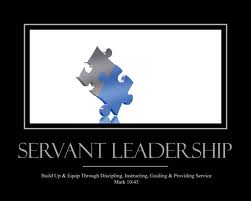
servant leadershipHaving watched the Boys & Girls Club of Elgin’s board search for its new leader, I am struck by how important “process” was in making this decision. After all, if you believe that leaders are born and not made, then it becomes fascinating to watch a volunteer board do the following:

  • identify and recruit an applicant pool,
  • develop interview questions designed to tease out an applicant’s leadership skills, and
  • ultimately decide who they will hoist above their heads and proclaim their leader.

I am also a believer that leadership is situational. So, I found it interesting to watch this non-profit board decide what their agency needs at this point in time and how they matched those needs up with a variety of different well-qualified candidates.

Do you think leaders are born? Or do you think they are made? Have you seen non-profit organizations go through an executive search? Do you have any observations or best practices to share from that experience? Please use the comment box below to share.

ALSO . . . please use the comment box to welcome Cathy and wish her well. Do you have any good advice about what her first 90 days should look like?

Here’s to your health!

Erik Anderson
Founder & President, The Healthy Non-Profit LLC
www.thehealthynonprofit.com 
erik@thehealthynonprofit.com
http://twitter.com/#!/eanderson847
http://www.facebook.com/eanderson847
http://www.linkedin.com/in/erikanderson847
The Millennials are coming: Non-profits will either evolve or die!

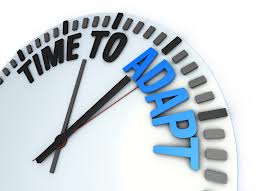
adaptWelcome to O.D. Fridays at DonorDreams blog. Every Friday for the foreseeable future we will be looking at posts from John Greco’s blog called “johnponders ~ about life at work, mostly” and applying his organizational development messages to the non-profit community.

In a post titled “Survival Is Not Mandatory,” John talks about our always changing world and workplaces and how we need to evolve in order to remain viable and relevant. His conclusions are simple: 1) Evolve or die and 2) Survival is not mandatory.

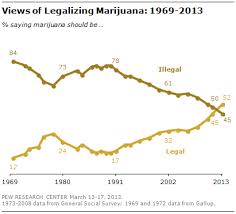
Sometimes timing is everything. When I read this blog post, I was on the treadmill with my new iPad with Morning Joe on the television in the background. The television talking heads were droning on about marijuana legalization and they flashed the following graphic on the screen:

marijuana legalization

My first reaction was “Huh, it’s interesting that the opinion lines recently crisscrossed.” My second reaction was “Hmmmm, where have I seen another graphic like that?” And within moments, I remembered that the other similar graphic was this one about same-sex marriage:

gay marriage

These two thoughts were colliding in my mind as my feet trudged along on the treadmill, and then my eyes went back to my iPad and John’s blog post about change. My first thought was “What is driving all of this immediate change so quickly?” And my second thought was “I wonder what implications these trends may have for non-profit organizations, fundraising, resource development and philanthropy?”  Almost immediately, I remembered seeing the following chart in a Giving USA Spotlight newsletter:

generations age ranges

It was at this point I realized the meteor has hit our planet, the weather patterns are changing, and change is starting to happen rapidly. The change we’re experiencing in our society is exponential.

If you are scratching your head and find yourself saying “HUH,” then I encourage you to look more carefully at the previous graphic. The oldest members of the Millennial generation are already in their 30s. Combine this with the fact that the Millennial generation is almost as large as the Baby Boomer generation (e.g. 79 million Boomers vs. 75 million Millennials) and then factor in the 51 million GenXers, and you have the recipe for rapid change.

Still not convinced? The consider the fact that every day for the next 19 years it is estimated that 10,000 Baby Boomers will retire EVERY DAY. In 2014, Millennials will make up 26% of the workplace and this number will soar to 36% by 2020.

Let’s face the grim realities here:

  • Every single day there are a number of Silent/Greatest generation and Baby Boomer generation individuals who are dying and retiring.
  • Every single day there are a number of Millennials who reach voting age and enter the workforce.

LOL . . . I am reminded of that famous quotation by Ross Perot speaking to that “giant sucking sound”. In this instance, I don’t think we’re talking about NAFTA. In this example, that giant sucking sound is the vacuum being filled by Millennials.

So, what is the end result? What does all of this mean for non-profit organizations? Fundraising? Philanthropy?

Well, I am not a fortune-teller, but the following thoughts have crossed my mind:

  • The workplace characteristics for non-profit organizations will change quickly.
  • The donor profile will change quickly.
  • The client profile will also change quickly.

I suspect most “best practices” won’t change (e.g. face-to-face solicitation is the most effective way to secure donations), but I can imagine that strategies and tactics need to adapt and evolve. For example . . .

  • We know that once a donor retires their charitable giving habits seem to change. With 10,000 Baby Boomers retiring every day, I suspect resource development plans need to evolve because at this point in time Boomers make up the bulk of most agencies donor databases. (Did you know that 69% of Boomers donate to charity compared to 33% of Millennials? Source: Center on Philanthropy Panel Study)
  • We know that direct mail is effective with Baby Boomers much more so than it is with Millennials.
  • I suspect that fewer Millennials physically own checkbooks than their Baby Boomer counterparts.
     (I wonder how eBanking impacts traditional charitable giving systems?)
  • We know that Millennials volunteer at higher rates than any other generation.

John ends his post by simply stating “But survival is not mandatory.” This revelation is striking because it causes me to wonder: Which non-profits are going to adapt? Which agencies are going to die? How will those who survive evolve and adapt? When will that process start? When will resource development plans start to reflect these changes? Who will step up and lead on these issues?

If you are feeling overwhelmed, I can appreciate that, but paralysis is the enemy of evolution and adapting.

My best suggestion to those of you who don’t know what to do or how to proceed is commit yourself to learning more. Click here to read a great publication titled “Charitable Giving and the Millennial Generation” from the Giving USA Foundation at The Center of Philanthropy at Indiana University. There are a lot of great “AH-HA” moments in this publication. Hopefully, it will get you and your organization pointed in the right direction.

As many of you know, I am a GenXer. As I finish this blog post, I suddenly have a song running through my head and I can’t get it to stop. Upon a little reflection, I now realize that this song is my generation’s anthem and characterizes our lifelong struggle with Baby Boomers and Millennials. Click here if you want to get inside my head and enjoy what I am sure will become my generation’s rally cry.  😉

Please scroll down to the comment box and weigh-in with any thoughts you may have about the questions I posed a few paragraphs ago. We can all learn from each other.

Here’s to your health!

Erik Anderson
Founder & President, The Healthy Non-Profit LLC
www.thehealthynonprofit.com 
erik@thehealthynonprofit.com
http://twitter.com/#!/eanderson847
http://www.facebook.com/eanderson847
http://www.linkedin.com/in/erikanderson847
Non-profit lessons in a pot of split pea soup

split pea soupAfter last weekend’s Easter celebrations, I had a lot of ham leftovers. So, I decided to do what I normally do . . . I went to the store and bought all of the ingredients for split pea soup. This is what my mom did when I was a kid, and this is what I now do as an adult. Unfortunately, this year’s undertaking went horribly wrong, but the good news is that I walked away with a story that all non-profit organizations will appreciate.

I worked on this pot of soup all day long on Monday. Split peas, celery, carrot, onion, garlic, bay leaf, salt, pepper, marjoram, and leftover ham from Easter. Boil . . . then simmer . . . then gently heat throughout. Stir, stir, stir some more. Taste, stir, taste, stir . . . you get the idea.

As this process unfolded, I kept retreating to my home office to work on projects for clients. Long story short, I got really wrapped up in something work-related and forgot to stir the soup for an hour-and-a-half. Needless to say, I burned the soup. Here was what I ended up doing between 6:00 pm on Monday night and 11:00 am on Tuesday morning in an attempt to remedy the situation:

  • Call Mom and cry . . . then ask for her expert advice.
  • Transfer soup from burned pot to new pot.
  • Add water.
  • Add more spicing.
  • Add more onion, celery and carrot.
  • Add more peas.
  • Add more ham.
  • Add more spices.
  • Go to Google and search: “I burned my split pea soup.”
  • Read lots of crazy internet content about how to fix a pot of burned split pea soup.
  • Deep breath . . . add a heaping tablespoon of peanut butter to the soup.
  • Cry some more because now I had a pot of burned peanut butter soup.
  • Sleep and dream about burned peanut butter (supposed to be split pea soup)
  • Wake up to attend a meeting at a local coffee shop. Bringing a mug of my burned soup to the meeting and  ask friends to taste it and weigh-in with their opinions.
  • Call Mom and brother fromon my way home from the Tuesday morning meeting to beg for any advice they may have been holding back on.

burned soupLet me stop here and bridge this topic over to our work as non-profit and fundraising professionals.

As I look back upon my time on the front line, I dealt with a ton of burnt pots of split pea soup. Here are just a few examples:

  • Hiring the wrong person to do a job.
  • Recruiting the wrong person to help with a fundraising campaign.
  • Recruiting the wrong person to serve on the board of directors.
  • Asking the wrong board members to serve on the wrong standing committee.
  • Investing way too much time cultivating a prospective donor who had no intention of ever making a contribution.

In each of these business examples, I did the same thing as I did with my pot of soup. I kept sinking more time, energy and resources into fixing a situation that just wasn’t fixable.

In the case of making the wrong hire, it was additional meetings, coaching, corrective action plans, and more corrective action plans.

In the case of the fundraising volunteer, it was additional meetings, taking tasks off their plate and doing it myself, and recruiting a co-chair and other volunteers to supplement the work I originally had counted on them to do.

My partner (and the love of my life) is a corporate sales tax guy. He hangs around accountants all day long, and he is constantly telling me:

“Sunk costs are never a consideration!”

As much as it pains me to say, he is right.

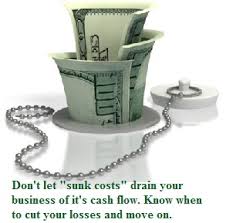
sunk costsAs for my pot of burned pot of split pea soup, my mother and brother convinced me to throw it out and start from scratch on Tuesday morning.

All of those sunk costs kept making the pot of soup bigger and bigger, which is what made throwing three gallons of soup in the trash so difficult. If I had only listened to what my partner is always telling me, there would’ve been a lot less food (and money) going in the garbage.

As it relates to your non-profit organization, it is important to remember that your time is money. This means hiring the right people and recruiting the right volunteers is very important. Failing to do so is the equivalent of making an ever expanding pot of burned split pea soup.

You might as well open your wallet and start burning dollar bills. It is the same thing! And what non-profit organization has enough money laying around to do that?

How do you make sure you are hiring and recruiting the right people? How do you know when to pull the trigger and cut your losses when it comes to volunteers and staff? Please use the comment box below to share stories or best practices because we can all learn from each other.

Here’s to your health!

Erik Anderson
Founder & President, The Healthy Non-Profit LLC
www.thehealthynonprofit.com 
erik@thehealthynonprofit.com
http://twitter.com/#!/eanderson847
http://www.facebook.com/eanderson847
http://www.linkedin.com/in/erikanderson847
Where will your fundraising journey take you?

road forwardWelcome to O.D. Fridays at DonorDreams blog. Every Friday for the foreseeable future we will be looking at posts from John Greco’s blog called “johnponders ~ about life at work, mostly” and applying his organizational development messages to the non-profit community.

In a post titled “Ultimate Conquest,” John talks about the concept of conquering ourselves and our quest for self actualization. He starts by sharing a story about a king and his three sons. The king sends these three princes out into the world to “conquer dragons, maidens and black-hearted knights.” Each of princes returns to the kingdom having had a different experience. I won’t ruin the story for you, and I encourage you to click over and read it for yourself.

As I read John’s post, I realized that inside my fundraising soul I have many of the same experiences as the three princes.

When I worked for the Boy Scouts, it really was the first time I had serious fundraising goals and expectations. I learned so much from that job. All of my inexperience contributed to fear, and the way I conquered my fear was to approach fundraising as a competition. I am very proud of those years. I excelled and built an annual campaign that doubled in size over a three-year period. I received many accolades and recognition for my work. What I didn’t realize was that it was simply the first phase of my journey because I had only learned that donors were something to conquer.

The next leg of my journey brought me to Boys & Girls Club of Elgin as the executive director. I was a young executive director, and I thought that I had “made it.”  LOL   If I only knew then what I know now.

During my years at Boys & Girls Club of Elgin, I honed my skills as a fundraising professional. I was no longer afraid of donors, and I was adding more and more fundraising experiences to my repertoire. I was no longer the knight of annual campaigns, but I was writing grants, developing direct mail appeals, organizing special events, and building capacity with a capital campaign in mind. Much like the second prince in John’s post, I worked on becoming more nuanced and polished.

I remember thinking at the end of my tenure at Boys & Girls Club of Elgin that I had finally made it.   LOL   Again, if I only knew then what I know now.  That experience was only one leg of my journey.

When I accepted an internal consulting job at Boys & Girls Clubs of America, my view of fundraising expanded yet again. I no longer wanted to conquer donors or nuance contributions out of them.  The amazing team of individuals with whom I worked helped me see that there is a difference between “fundraising” and “resource development”. Whoa!  They also exposed me to the difference between “transactional fundraising” and “donor-centered fundraising”. I also started to understand the difference between “resource development” and “philanthropy”.  Huh!

As I look back over the better part of two decades, I understand that hindsight in 20/20. More importantly, I see three very distinct experiences, but I understand that they are three legs of the same journey.

I am not naive enough to believe I am at the apex of this mountain that I am climbing. However, I do feel confident enough now to say I recognize that I am on a fundraising journey. While I cannot see very far down the path in front of me, I am excited about my new realization that the non-profit world is my playground and this voyage is going to take a lifetime.

Have you had a similar experience with your fundraising career path? Where are you at? What have you learned? Where do you want to go? Did John Greco’s post trigger any great thoughts about you or our profession? Please scroll down and share some of your thoughts in the comment box.

Here’s to your health!

Erik Anderson
Founder & President, The Healthy Non-Profit LLC
www.thehealthynonprofit.com 
erik@thehealthynonprofit.com
http://twitter.com/#!/eanderson847
http://www.facebook.com/eanderson847
http://www.linkedin.com/in/erikanderson847