
Fighting the Physics
By John Greco
Originally published on April 9, 2012
Re-posted with permission from johnponders blog
 “Grab a piece of paper. Make your best paper airplane.”
And the management workshop immediately takes off!
“Okay, let ‘em fly!”
Some take flight spectacularly. Others not so much. This usually causes some guffaws, and some good natured ribbing. I generally pick one of the more “flight-challenged” ones —
“Okay, Bill, come on up to the front of the room. Here’s what I want you to do. I want you to fly your plane right down the center of the room. Aim right for Debbie, right at her! and have it land on the table right in front of her. Can you picture that? Be positive. You can do it! Okay, keep the vision of that flight in your mind, and let it fly.”
The airplane generally goes anywhere but down the center of the room. Debbie is momentarily relieved.
“Bill; let’s try again. You can do this! I believe in you. Remember the vision? Right down the center of the room, right at Debbie. But this time, let me give you a quick training lesson. Hold your airplane a third of the way from the point, between your thumb and forefinger. Flex your elbow, pull it back, envision the flight, and then advance your arm and release. Okay, try it.”
The airplane again goes anywhere but down the center of the room. Debbie starts to realize she has nothing to fear.
“Okay, Bill, let’s get serious. I’ve got twenty dollars here (as I pull a twenty out of my pocket) and it is all yours if you simply fly your plane down the center of the room, right at Debbie, and have it land right in front of her. Envision the flight, use the technique I showed you, and think of that twenty. Okay, go!”
The airplane now goes … not down the center. And not by Debbie; she’s pretty relaxed and smiling now…
“Alright Bill. (My tone has changed.) “Bill, I told you I believe in you, and still do, but this is your plane to fly. I asked you to envision your plane flying down the center, to Debbie. I trained you. I even motivated you with a twenty in cash. I’m running out of patience. I need you to fly your plane down the center of the room at Debbie. Or else. Do it.”
Nothing different; no improvement whatsoever.
“I don’t understand. I believed in you Bill. I helped you envision success. I trained you. I motivated you. And then I threatened you. And now I need to fire you…”
 Often in these sessions, after one or two unsuccessful flights I see the “pilot” start adjusting the paper plane: a different fold there, a bending of the wings, sharper folds at the point… When I see this, I react —“Whoa!” What are you doing?”
“Adjusting the plane so it will fly better.”
Hmmm. Yes indeed. Adjusting the plane to fly better.
Paper planes — and organizations — fly as they are designed. Their performance is fundamentally by design.
And when we want a certain type or level of performance from a paper plane or organization that is not designed to produce that performance, we are in fact “fighting the physics.”
Fighting the physics is what we do when we expect results from a system that has not been designed to produce those results. It reflects an ignorance of cause and effect; it points fingers and places blame on the people in the system instead of the design of the system.
- We fight the physics when we expect teamwork while rewarding individual achievement.
- We fight the physics when we encourage innovation while emphasizing sacred cows, third rails, and CLMs (career-limiting moves).
- We fight the physics when we expect speed and responsiveness in customer service while structuring multiple layers, enforcing centralized decision making and requiring formal communication channels.
- We fight the physics when we expect efficiency while not investing in repeatable processes and enabling technology.
Now; there’s nothing wrong with positive thinking; research supports the benefits of a positive mental attitude. Research also supports how envisioning an outcome can help actualize the vision. No doubt that when we have a skill or knowledge gap, training makes a difference. Incentives, be they monetary or otherwise, certainly do get our attention. As do threats.
But if the organization plane was not designed to fly down the center of the room and land in front of Debbie, no amount of positive thinking, envisioning, training, motivation, and threats will fundamentally and substantially improve it’s performance.
Fighting the physics always results in the physics winning.
Debbie is safe.
We are not.

 A CEO who had begun to practice his own form of “management-by-walking-around” learned from his employees that the company inhibited innovation by subjecting every new idea to more than 275 separate checks and sign-offs. He promptly appointed a task force to look at this situation, and it eliminated 200 of the obstacles. The result was a higher innovation rate.
 Phenomenal!: “What assumptions am I making and what biases do I hold that are manifesting themselves in the culture of this organization, leading to an approval process with 275 signoffs and associates that are reticent to challenge that process?
 Two men were walking through the woods when a large bear walked out into the clearing no more than 50 feet in front of them.
 Ha!
Ha! But here’s something we can predict: embedded in these cultures we will find organizational policies and/or management practices that pit one associate against another … we will find policies and/or practices that recognize and reward individual achievement without also recognizing and rewarding teamwork and team results … and we will find organizational initiatives that at best only temporarily solves problems (because they only address symptoms) without real and substantial effort and action to fundamentally address the root causes of problems.
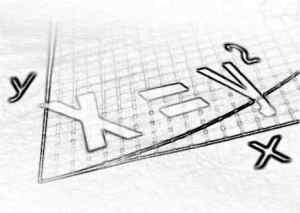 “I regard it in fact as the great advantage of the mathematical technique that it allows us to describe, by means of algebraic equations, the general character of a pattern even where we are ignorant of the numerical values which will determine its particular manifestation.”
 (I feel compelled to counter a possible negative perception of this last point by noting that isn’t it a very good thing if a manager sees when an associate or team is struggling, and at the right time and in the right way enters the picture and provides just the right amount of help to get back on the right track? Less freedom is not always a bad thing!)
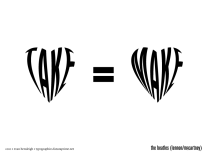 I look forward to seeing the ones that you’ve run across!
 An African farmer heard tales about people who had made millions by discovering diamond mines. These tales so excited the farmer that he could hardly wait to go prospecting for diamonds himself. He sold the farm and spent the rest of his life wandering the African continent searching unsuccessfully for the gleaming gems that brought such high prices on the markets of the world. Finally, worn out and in a fit of despondency, he threw himself into a river and drowned.
 Jerry, the financial analyst, can make a mean bouillabaisse. Mary, the executive admin, is a Toastmasters organizer. Julie, in inside sales, does graphic design for her church’s marketing pieces. Peggy, in tech support, is a stand up comedian. Bill, in logistics, does resumes on the side for family and friends. Susan, in customer support, is on the board of a local non-profit. Judy, a software tester, volunteers at the local hospice. Christian, a call center agent, paints. John, an industrial engineering manager, blogs. Damian, a research analyst, is an actor in a local drama troupe.
 Sometimes I think the universe speaks to us, and lately it has been begging me to write this blog. Over the last few months, I’ve spoken with a good handful of non-profit professionals who have shared stories of scandal and crisis that would make your toes curl. These stories have ranged from incidents on the front line that made the local newspaper to outright embezzlement.
 For the record, I agree with my United Way friends. If you don’t know about
  You can probably spend the rest of your life writing policies, but let’s not get carried away. Here are a few questions I suggest you ask as you start going down this road:
 That July afternoon in Coleman, Texas was particularly hot — 104 degrees according to the Walgreen’s Rexall’s thermometer. In addition, the wind was blowing fine-grained Texas topsoil through the house. But the afternoon was still tolerable; even potentially enjoyable. A fan was stirring the air on the back porch; there was cold lemonade; and finally, there was entertainment. Dominoes. Perfect for the conditions. The game requires little more physical exertion than an occasional mumbled comment, “Shuffle ‘em,” and an unhurried movement of the arm to place the tiles in their appropriate positions on the table. All in all, it had the makings of an agreeable Sunday afternoon in Coleman. That is, until my father-in-law suddenly said, “Let’s get in the car and go to Abilene and have dinner at the cafeteria.”
 My first exposure to this story was as I was unknowingly about to experience it…
 I was very new to the company.
 David was a tenured college professor. While an expert in his field, he knew very little about computers; just enough in fact to get on a network and ask for help. Fortunately, a more experienced user came to his aid, never failing to give just the right advice.
 A few short years ago, we couldn’t have even imagined such a scenario. In the past, proximity and commonality brought us together. We had family and close friends; help came from familiar places.
 And I already see that I’m not adapting fast enough to keep pace with the innovations. The technology school bus isn’t waiting for me!
 I know that this may sound silly, but I think it needs to be said for the record. Non-profit executive directors (e.g. CEOs) are not the undead. They do not live forever. They will leave your agency some day. And every board should be preparing for that eventuality.