
 Last week, British voters stunned the world in a number of different ways. First, they voted in a non-binding referendum to invoke Article 50 of the Lisbon treaty, which triggers a process to disentangle Great Britain from the European Union (EU). Second, global financial markets have reacted poorly to this news because it injected a large amount of uncertainty into all things financial (apparently there is now a projection by some economists that there is a 30% to 50% chance the United States will now enter into another recession because of this vote). Finally, and most importantly, many people were stunned by reporting in the days following the referendum that there appears to be a growing number of voters who felt misinformed and regretted their vote.
As I listened to last week’s news coverage, I couldn’t help but worry about what this all means for the American non-profit sector.
Of course, the risk of another recession obviously spells trouble for non-profit organizations who are still digging out from the 2008 economic crash. However, this isn’t really what concerns me the most.
The fact that voters felt misinformed and ignorant about what they were voting on is a chilling realization and one that should concern every non-profit professional.
If you stop and think about this phenomenon for a few minutes, it isn’t really surprising.
- People are busy
- Many people report feeling as if our world is getting faster and faster
- Information pours into our lives at breakneck speed (e.g. network television, radio, Google, Facebook, Twitter, cable television, data reports in the workplace, email-email-email, etc)
- There appears to be a blurring of the lines between opinions and facts in the media
- There is a media outlet (and internet link) validating every point of view . . . so if you believe it, then you can reinforce it thus hardening your opinion and becoming less likely to hear opposing viewpoints
 Communications experts refer to this experience as “information overload.”
You may be asking yourself, “So what?”
Well, there are consequences . . .
- Anxiety
- Decreased productivity
- Tuning out and unplugging
I’m sure some of you have heard the old marketing adage that it takes at least seven times of someone hearing/seeing an advertisement before it actually breaks through the noise and registers with them. This is a concept called effective frequency.
OK, so now you might be asking yourself, “What does any of this have to do with my non-profit organization?”
Let me attempt to answer this question with a few questions for you to consider:
- What are the consequences of your donors not hearing your post-solicitation stewardship messaging?
- What problems could result if your board members aren’t reading the reports and materials you send them prior to making decisions in the boardroom?
- What could happen if staff aren’t processing and reacting appropriately to outcomes data, properly reading/implementing program curricula, or understanding the deliverables written into grant agreements?
If your answers were:
- increased donor turnover
- fewer dollars raised
- bad decision-making
- poor programming
- decreased productivity and performance
. . . then you are likely on the same page with me.
Please don’t get me wrong. I’m not saying this is absolutely happening in your organization, but I am asking you to weigh the possibilities.
There are more theories and studies showing us the internet is rewiring our brains and changing: a) how we read and b) how we process information. (If you want to read more, click here … here . . . and here)
 So, if you are still with me, you might be wondering what can be done to improve the likelihood that donors, board volunteers and staff are hearing (and understanding) what your organization needs them to know. While I am not a communications expert, here are a few thoughts:
- Use more pictures and graphics
- Tell more stories to convey your messages and contextualize your outcomes data
- Segment your donors and do a better job at targeting your messaging
- Use multiple communications channels (e.g. in-person, phone, mail, email, outdoor advertising, Facebook, Twitter, etc) and stop over reliance on email and mail
- Integrate infographics, dashboards and scorecards into your boardroom materials
- Redesign your meetings (board and staff meetings) to be more interactive / participatory
How does your organization communicate with its stakeholders? How do you know if your key messages are being properly received and understood? Please use the comment box to share your thoughts and experiences. We can all learn from each other.
Here’s to your health!
Erik Anderson
Founder & President, The Healthy Non-Profit LLC
www.thehealthynonprofit.com
erik@thehealthynonprofit.com
http://twitter.com/#!/eanderson847
http://www.facebook.com/eanderson847
http://www.linkedin.com/in/erikanderson847
 For the last few decades, the non-profit sector has been focused on data in an effort to convince donors to continue their philanthropic support. I still remember being a new executive director sitting in my first United Way meeting and learning about constructing logic models and differentiating between inputs, outputs, outcomes and pre- and post-test survey tools. All of this was piled on top of a slew of other data metrics my national office was asking for such as: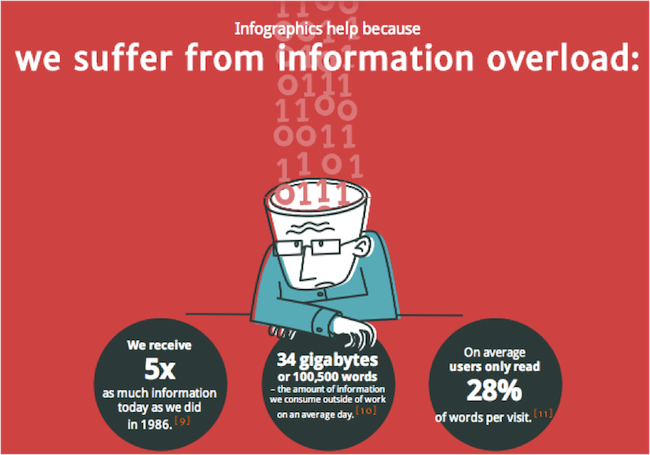
 Last month I sat down with an executive director and two board members to explore how I might be able to help their organization grow their organizational capacity. Over the course of an hour, we talked about all kinds of awesome things such as:
 In recent months, I’ve been reminded of the power of donor databases and Customer Relationship Management (CRM) systems. For-profit corporations grasped the importance of gathering customer data a long time ago, which is why they invested in these systems before many non-profit organizations started doing so. I will divide the remainder of this blog post up into sections and share a few personal stories about my experiences in recent months. At the end of this post, I’ll share a few resources to help you with your search.
![IMG_20150414_215128628[1]](https://donordreams.files.wordpress.com/2015/06/img_20150414_2151286281.jpg?w=169) My husband and I like to take cruises every other year and visit fun places. Over the years we’ve traveled to the Caribbean, Greek Islands, Scandinavian peninsula (and St. Petersburg, Russia), Alaska, and recently the Panama Canal (and Central America).
My husband and I like to take cruises every other year and visit fun places. Over the years we’ve traveled to the Caribbean, Greek Islands, Scandinavian peninsula (and St. Petersburg, Russia), Alaska, and recently the Panama Canal (and Central America).![IMG_20150414_191147999_HDR[1]](https://donordreams.files.wordpress.com/2015/06/img_20150414_191147999_hdr1.jpg?w=300) While some people think this level of interaction is creepy, I believe the vast major of people (including myself) find this comforting and convenient. I prefer to think of it differently. I’m in a 10 year relationship with Princess Cruises, and they better know my preferences just like my husband better know my eye color.
While some people think this level of interaction is creepy, I believe the vast major of people (including myself) find this comforting and convenient. I prefer to think of it differently. I’m in a 10 year relationship with Princess Cruises, and they better know my preferences just like my husband better know my eye color. When I returned from my cruise at the end of April, I immediately hit the road on a business trip. Whenever I visit this one particular client, I always stay at the same hotel — Marriott SpringHill Suites.