
I try to keep an eye open for opportunities to learn new things every day. Last week, I learned something about house party events that was so simple, but potentially game changing if you take it to heart. What I learned was . . .
House party events aren’t just a fundraising strategy.
 As a young non-profit professional, who was just learning his craft, I was first introduced to the idea of a “house party” event format as a fundraising technique. The idea was simple. Ask someone to host a small party in their home. Work with them to identify a guest list of potential donors from their list of friends and colleagues. Make a group ask during the get together and collect pledge cards. My former employer used to call these “leadership circle” events.
Personally, I didn’t like the house party strategy for fundraising. Early experiences demonstrated to me that donors were very effective at hiding in group settings. For example, someone who had the willingness to support your organization and the capacity to do so with a substantial gift, usually ended up making a smaller contribution when asked as part of a group in contrast with a one-on-one in-person meeting.
Fast forward to much later in my career, when I was working as an internal consultant for a large national non-profit organization. I was re-introduced to house parties. Instead of using it as a solicitation vehicle, local affiliates where encouraged to use the strategy for new prospect identification and cultivation. At first, this tool was branded “House Party of Hope,” and later it was re-branded “A Party with a Purpose.”
Again, house parties were still being used as a resource development activity. So, I never saw this strategy in any other light. That is until just last week when we hosted a house party in our basement.
The purpose of our house party was to introduce the newly hired CEO for a statewide organization to our circle of friends. The stated purposes of this get together were:
- Introduce the new CEO to his organization’s constituency
- Introduce the organization’s constituency to the new CEO
- Use a facilitated question/answer format with the group to collect stories to help the organization craft a shared vision, set goals, and develop a new strategic plan
 Last week’s experience helped me see house parties in a whole new light. No longer was this strategy simply a tool in a non-profit person’s resource development toolbox. The more I thought about it, the opportunities seemed to be endless. Here are just a few of my thoughts:
- Host a house party to validate a final planning document with any number of stakeholder and constituency groups
- Host a house party to engage potential collaborative partners in a discussion about what is possible
- Host a house party to engage staff, build team dynamics, address workplace challenges, start a new program, etc
- Host a house party to collect stories from clients/constituents to gauge your organization’s impact, develop a marketing campaign, identify additional needs, etc
- Host a house party to educate the community and initiate a call to action focused on your organization’s public advocacy agenda (Note: I believe I once read the American Medical Association did this in the 1950s or 1960s to defeat national healthcare legislation moving its way through Congress)
- Host a house party to identify new potential board volunteers as a precursor to the board development committee building prospect lists
I literally believe the sky is the limit with regard to how a house party strategy can be used to advance any non-profit organization’s agency.
If you are interested in learning more about house parties, click-through the following links for a treasure trove of resources and reading materials:
- Boys & Girls Clubs of America: A Party with a Purpose
- Facebook: The Fundraising Houseparty
- Convio: Using House Parties to Engage Constituents
- Ramparts magazine: “Huelga! Tales of the Delano Revolution“
Has your organization ever used a house party strategy? What were your objectives? Were your objectives met? Please use the comment box to share your thoughts and experiences. We can all learn from each other.
Here’s to your health!
Erik Anderson
Founder & President, The Healthy Non-Profit LLC
www.thehealthynonprofit.com
erik@thehealthynonprofit.com
http://twitter.com/#!/eanderson847
http://www.facebook.com/eanderson847
http://www.linkedin.com/in/erikanderson847
 Oh, well let me count the reasons . . .
 I have no idea why this is so scary for so many non-profit staff and board volunteers. It doesn’t have to be a confrontation. Here are a few talking points:
 If the reasons given by your board volunteer aren’t things beyond anyone’s control (e.g. family member illness, work-related challenges, etc) and they simply don’t feel comfortable with solicitation, then ask them to get heavily involved in cultivation (e.g. engaging new prospective supporters) and stewardship (e.g. showing existing donors gratitude and return on investment) activities. (Note: don’t simply let them focus on other non-fundraising activities like programming or marketing)
 Sometimes we can’t fix the problem. Board members are people, too. Their parents get sick. Their marriages falter. They end up with a new boss who demands more from them.
 Have you ever stopped whatever you doing, took a deep breath, and observed the world around you? (And I mean really take a deep look.) I did this just the other day, and what I saw kind of surprised me. Everywhere I looked I saw
 If I’ve seen it once, I’ve seen it over and over again. An organization puts the right people around the table and engages everyone in developing the right written plan for their fundraising campaign or event. They recruit the right people in the right way to work pledge cards or solicit event participants or secure sponsorships. They even go about assigning prospects/donors to volunteer solicitors very effectively. And then it happens . . . solicitation materials are distributed and everything comes to a screeching halt.
 A report meeting is simply a face-to-face meeting of volunteer solicitors, who come together to report their progress to each other.
 If you’ve recruited the right volunteers with the right skill sets and experiences to work on your fundraising campaign, then these people are likely very busy.
 We need to keep in mind that no one likes fundraising just for the sake of getting their friends to give them money. The reason volunteers sign-up to do what many people consider difficult and intimidating is because they are truly bought into your mission.

 Last week, British voters stunned the world in a number of different ways. First, they voted in a non-binding referendum to invoke
  Communications experts refer to this experience as “
 So, if you are still with me, you might be wondering what can be done to improve the likelihood that donors, board volunteers and staff are hearing (and understanding) what your organization needs them to know. While I am not a communications expert, here are a few thoughts:
 Anyone watching television or engaged in community conversations in recent months knows that our communities are entering into another period of time punctuated by values. Some people are talking about life, liberty and happiness. Others of us are focused on equality versus freedom (which are two values that are somewhat mutually exclusive). Perhaps, this elevated values debate is because our country is heading into a divisive Presidential election year. Or maybe it is because big policy debates are underway about LGBTQ and gun rights issues. Regardless, all of this talk has me thinking about the role of values and your non-profit organization’s resource development program.
 All of this gets me thinking about the countless discussions I’ve been a part of throughout the years with non-profit staff, boards and fundraising volunteers where difficult fundraising decisions were being made. The following are just a few examples:
 I’ve always taken the AFP ethics/values statement to heart, embraced my organization’s set of shared values, and superimposed my own set of individual values. As an Eagle Scout, my individual values have always been rooted in the 12-points of the Scout Law (e.g. trustworthy, loyal, helpful, friendly, courteous, kind, obedient, cheerful, thrifty, brave, clean and reverent).
 Last week I found myself in New Orleans at Boys & Girls Clubs of America’s national conference sitting in an exhibitor booth trying to make new friends and connect with old ones. On Wednesday, right before the exhibitor area opened, I was visited by a fellow exhibitor from
  “Hey, you got peanut butter in my chocolate!”
 For the last few decades, the non-profit sector has been focused on data in an effort to convince donors to continue their philanthropic support. I still remember being a new executive director sitting in my first United Way meeting and learning about constructing logic models and differentiating between inputs, outputs, outcomes and pre- and post-test survey tools. All of this was piled on top of a slew of other data metrics my national office was asking for such as: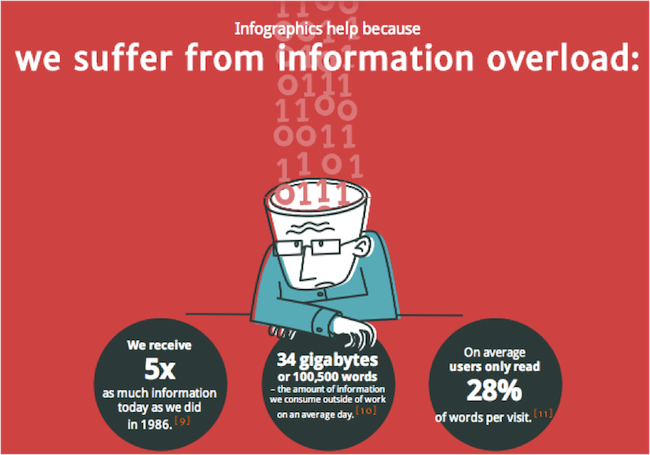
 I’m so honored to be hosting the April 2016 Nonprofit Blog Carnival. When announcing April’s carnival theme in my April 4th
  Joe Garecht at The Fundraising Authority blog reached out to some of the non-profit sector’s best consultants, speakers and authors and asked them to answer this month’s carnival question in his post
  I love the fact that Bill Murray makes a cameo appearance in this month’s Nonprofit Blog Carnival thanks to Empower Nonprofits‘ Jeremy Koch. Jeremy will tell you everything Bill Murray taught him about how to