
Jerry’s Trip to Abilene
By John Greco
Originally published on March 15, 2012
Re-posted with permission from johnponders blog
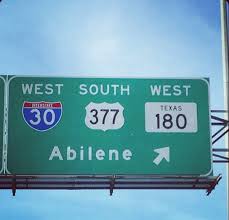 That July afternoon in Coleman, Texas was particularly hot — 104 degrees according to the Walgreen’s Rexall’s thermometer. In addition, the wind was blowing fine-grained Texas topsoil through the house. But the afternoon was still tolerable; even potentially enjoyable. A fan was stirring the air on the back porch; there was cold lemonade; and finally, there was entertainment. Dominoes. Perfect for the conditions. The game requires little more physical exertion than an occasional mumbled comment, “Shuffle ‘em,” and an unhurried movement of the arm to place the tiles in their appropriate positions on the table. All in all, it had the makings of an agreeable Sunday afternoon in Coleman. That is, until my father-in-law suddenly said, “Let’s get in the car and go to Abilene and have dinner at the cafeteria.”
I thought, “What, go to Abilene? Fifty-three miles? In this dust storm and heat? And in an unconditioned 1958 Buick?”
But my wife chimed in with, “Sounds like a great idea. I’d like to go. How about you Jerry?” Since my own preferences were out of step with the rest, I replied, “Sounds good to me,” and added, “I just hope your mother wants to go.”
“Of course I want to go,” said my mother-in-law. “I haven’t been to Abilene in a long time.”
So into the car and off to Abilene we went. My predictions were fulfilled. The heat was brutal. Perspiration had cemented a fine layer of dust to our skin by the time we arrived. The cafeteria’s food could serve as a first-rate prop in an antacid commercial.
Some four hours and 106 miles later, we returned to Coleman, hot and exhausted. We silently sat in front of the fan for a long time. Then, to be sociable and to break the silence, I dishonestly said, “It was a great trip, wasn’t it?”
No one spoke.
Finally, my mother-in-law said, with some irritation, “Well, to tell you the truth, I really didn’t enjoy it much and would rather have stayed here. I just went along because the three of you were so enthusiastic about going. I wouldn’t have gone if you all hadn’t pressured me into it.”
I couldn’t believe it. “What do you mean ‘you’all?” I said. Don’t put me in the ‘you’all’ group. I was delighted to be doing what we were doing. I didn’t want to go. I only went to satisfy the rest of you. You’re the culprits.”
My wife looked shocked. “Don’t call me a culprit. You and Daddy and Mama were the ones who wanted to go. I just went along to keep you happy. I would have had to be crazy to go out in heat like that.”
Her father entered the conversation with one word: “Shee-it.” He then expanded on what was already clear: “Listen, I never wanted to go to Abilene. I just thought you might be bored. You visit so seldom I just wanted to be sure you enjoyed it. I would have preferred to play another game of dominoes and eat the leftovers in the icebox.”
After the outburst of incrimination, we all sat back in silence. Here we were, four reasonably sensible people who — of our own volition — had just taken a 106-mile trip across a godforsaken desert in furnace-like heat and a dust storm to eat unpalatable food at a hole-in-the-wall cafeteria in Abilene, when none of us had really wanted to go. To be concise, we’d done just the opposite of what we wanted to do. The whole situation simply didn’t make sense.
 My first exposure to this story was as I was unknowingly about to experience it…
Three colleagues and I were all out-of-towners in Memphis for business. After a stressful day at work we had just had a nice dinner. While leaving the restaurant Don suggested “You guys want to continue our discussion while we drive around Memphis a bit? Jude responded with a lukewarm “okay;” I said I’m up for it, even though I was tired and wanted some down time. Then mild-mannered, soft-spoken Laura chimed in with “sounds like we might be taking a trip to Abilene …”
I didn’t get the reference.
Thankfully, Don knew exactly what she meant, and we went back to our respective hotel rooms for the evening.
The lesson never has left me.
That might be because I have since seen teams of smart and committed people going on their own trips to Abilene… and some of these teams included me. None of them, quite obviously, included Laura.
Yes; I have been in Abilene-bound meetings and I have been on Abilene-bound teams. Have you as well? Have you seen some of these trips being taken, and perhaps you might admit your participation as well? … Odd, isn’t it?
Odd, unsatisfying, and unhelpful.
There’s a powerful social dynamic at play here. I need to bone up on what exactly that is, but, for now, I just know that I do not want to take any more trips to Abilene.
I need to take a trip and find Laura… or, I need to become Laura.

 Last week I was out to lunch with two male non-profit friends in downtown Chicago when the topic of women board volunteers came up. This happens from time-to-time, and when it does I always bite my tongue because I tend to have strong opinions on this subject. So, I took a deep breath and prepared for what I assumed was going to be one of those “difficult and uncomfortable conversations“. Boy oh boy . . .was I wrong (and pleasantly surprised).
 Sometimes I hear something that hits me just right, and it takes days to get it out of my head. This happened on Tuesday during the Fox West Philanthropic Network’s
  Dani suggested that board volunteers who are “strategic thinkers” will have an easier time making the transition from traditional fiduciary modes of governance to more strategic and generative modes.
 If you’re scratching your head while reading this list and asking “what does THAT mean,” then click the link and read the CEB Blog post. It really is quite good. If you want to learn more, then I suggest you start Googling around. 😉 You also might want to
  Boards meetings can quickly go from productive to destructive in any number of ways. The following are just a few lessons I’ve learned throughout the years and thought board volunteers might benefit from reading:
 When you don’t know where you’re going any road will get you there
 Time of Death: 2 hours after we started talking about this
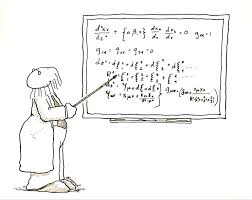 It seems like I’ve been on the road a lot this month, and this allows me to interact with all sorts of talented and amazing non-profit professionals. In fact, just last night I was at dinner with another non-profit consultant who shared with me his “formula” for a successful board volunteer.
 The human element
 Just the other day a friend started talking with me about non-profit directors and officers (D&O) insurance. During the course of that conversation, all sorts of things were discussed and at one point I made a mental note to do a little research. Having just finished my homework, I honestly can say that I completely understand why people don’t like insurance companies — this stuff is complicated.
 The list is long, but the following things are typically excluded from the average D&O insurance policy:
 I shared some of my research with a group of amazing non-profit consultants tonight. The consensus of this group of very smart people was that board volunteers never ask the hard questions about their D&O insurance policies until it is too late.
 I believe there is a misconception out there about strategic planning because I keep running into executive directors who think just because the current plan is expiring that is must be time to begin work on a new strategic plan. I also oftentimes run into folks who believe it is a perfect time to start planning when their agency is experiencing instability, blurriness, and confusion. In my humble opinion, there is a time and place for strategic planning and embarking on this journey at the wrong time can be at best frustrating and at worst damaging.
 As I had hoped, I found a section titled “Key Questions to Assess Readiness and Capacity”. Here are those questions:
 We’re not ready, but we still need a plan!
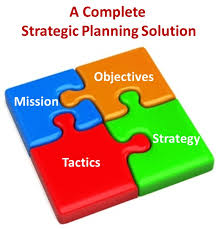 Welcome to the final post in our five-part series on Governance. We have already discussed the Board’s role in
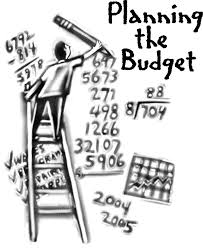 The following is a thumbnail sketch of what my process looked like:
 I am not suggesting that my process is the right way to put a non-profit budget together. However, I do believe strongly in the following few budget construction principles: