
 This month DonorDreams is hosting the nationally acclaimed Nonprofit Blog Carnival, and this month’s theme is: “If you could go back in time and give your younger-fundraising-self one piece of advice, what would it be?” In addition to asking other non-profit bloggers to submit posts for consideration, I am also focusing this month’s DonorDreams blog posts on the topic. The April 2016 Nonprofit Blog Carnival is scheduled to go live on Thursday, April 28, 2016. So, mark your calendars because this month promises to be full of fun submissions.
Today’s time machine post involves a younger me who learned valuable lessons about inspiring and managing special event volunteers. Enjoy!
 As many readers know, I was once an executive director for a non-profit organization that ran a Duck Race fundraiser. For those of you who don’t know what a Duck Race is, it is simply a raffle where serial numbers on the bottom of little rubber ducks correspond to numbered adoption papers sold to donors. The first 10 ducks that cross a water raceway finish line win prizes. The challenge from a revenue perspective is essentially two-fold:
- Sell lots of sponsorships
- Sell lots of duck adoptions
The key to selling lots of duck adoptions is also simple. Organize as many volunteer teams as possible. Encourage them to sell to their friends, family and co-workers AND set up adoption tables in high foot traffic areas (e.g. outside of grocery stories, in malls, etc).
The big challenge from a non-profit fundraising professional’s perspective is:
- inspiring volunteers to sell duck adoptions
- creating a culture of fun
- being creative with accountability
- instilling a sense of urgency
- keeping people focused on the goal
Being a young fundraising professional, I made the decision to use weekly update reports in an effort to inspire competition between duck adoption teams as well as foster a sense of accountability and urgency.
Of course, as we got closer and closer to the event and the duck adoption totals weren’t exponentially jumping, my weekly reports ended up doing the opposite as they were intended. Not only were volunteers uninspired, but some board members started whispering about whether or not I knew what I was doing.
<Sigh>
 In the 1986 box office flop Howard the Duck, Howard gets transported from his home world of “Duckworld” by a dimensional-jumping device. If I had access to that device today, I would totally transport myself to a place where I could share the following nuggets of advice with my younger-fundraising-self:
- reporting can cut both ways with volunteers (esp. when falling short with goals)
- always find good news to spotlight regardless of how small it may be
- perceived negativity is like a flu virus (very catchy and spreads quickly)
- “who” issues the report is important (peer-to-peer accountability is powerful and reports should come from the volunteer event chair and not staff)
- positive incentives and fun recognition items are important to tie to a reporting tool
I would also put my arm around my younger-fundraising-self and tell me that using “reporting tools” to create accountability and “goal setting” to create urgency are best practices, but these tools must be used in conjunction with the following volunteer engagement strategies:
- well run, in-person meetings
- mission-focused messaging and activities
- training
- setting expectations upfront
- helping people feel organized and being personally organized
- celebrate success (both big and small successes early and often)
<Sigh>
Where is a dimensional-jumping device when you need one? 😉
If you are a non-profit blogger who wants to participate in this month’s Nonprofit Blog Carnival and submit a post for consideration on this month’s carnival theme, click here to read the “call for submissions” post I published a few weeks ago. It should answer all of your questions and clearly explain how to submit your entry. If not, then simply email me and I’ll be happy to help.
Here’s to your health!
Erik Anderson
Founder & President, The Healthy Non-Profit LLC
www.thehealthynonprofit.com
erik@thehealthynonprofit.com
http://twitter.com/#!/eanderson847
http://www.facebook.com/eanderson847
http://www.linkedin.com/in/erikanderson847
 So you have your RSVP list. You know who is coming. What do you do with that information?
  Much like you can create a pre-event V.I.P. list, you can do the same after the event.
 Albert Einstein defined insanity as doing the same thing over and over again and expecting different results.
  Sarah
Sarah My neighbor owns and operates a home business, and last week he received a letter from a local non-profit organization asking him to sponsor a
  Last week I wrote a post titled “
 In other words, most of us run at least one special event as part of our comprehensive resource development program. While this was foreseeable and expected, what was surprising to me was that different size non-profit organizations get more bang-for-their-buck from different types of events. And what floored me was that regardless of organizational size most respondents reported that “fun runs and walks” universally receive a high return on investment (ROI).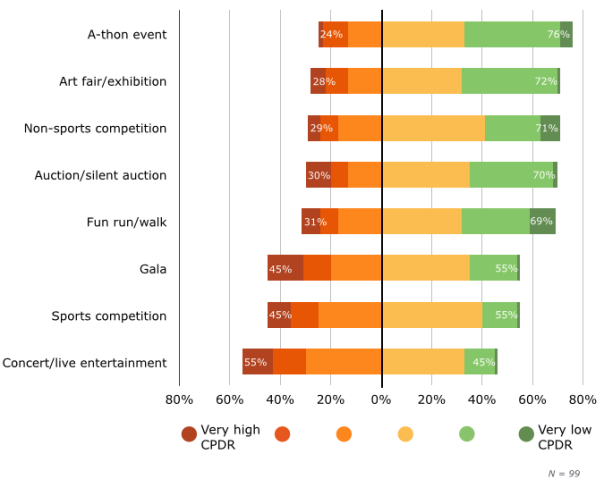
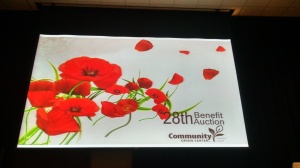 A few months ago, my husband and I attended the
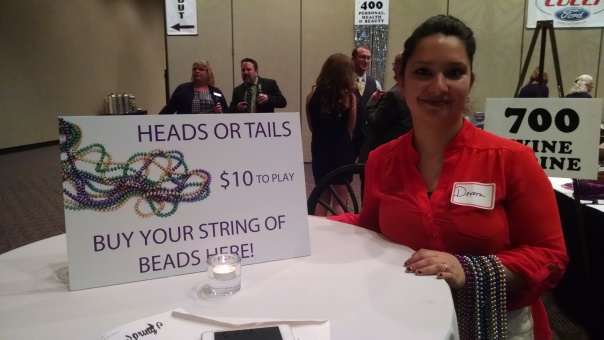
 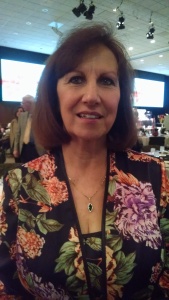 Karen and her husband Dan are the co-chairs of this event. They have volunteered and co-chaired for countless years. The following are just a few reasons I decided to include Karen’s picture as photo evidence of a best practice:
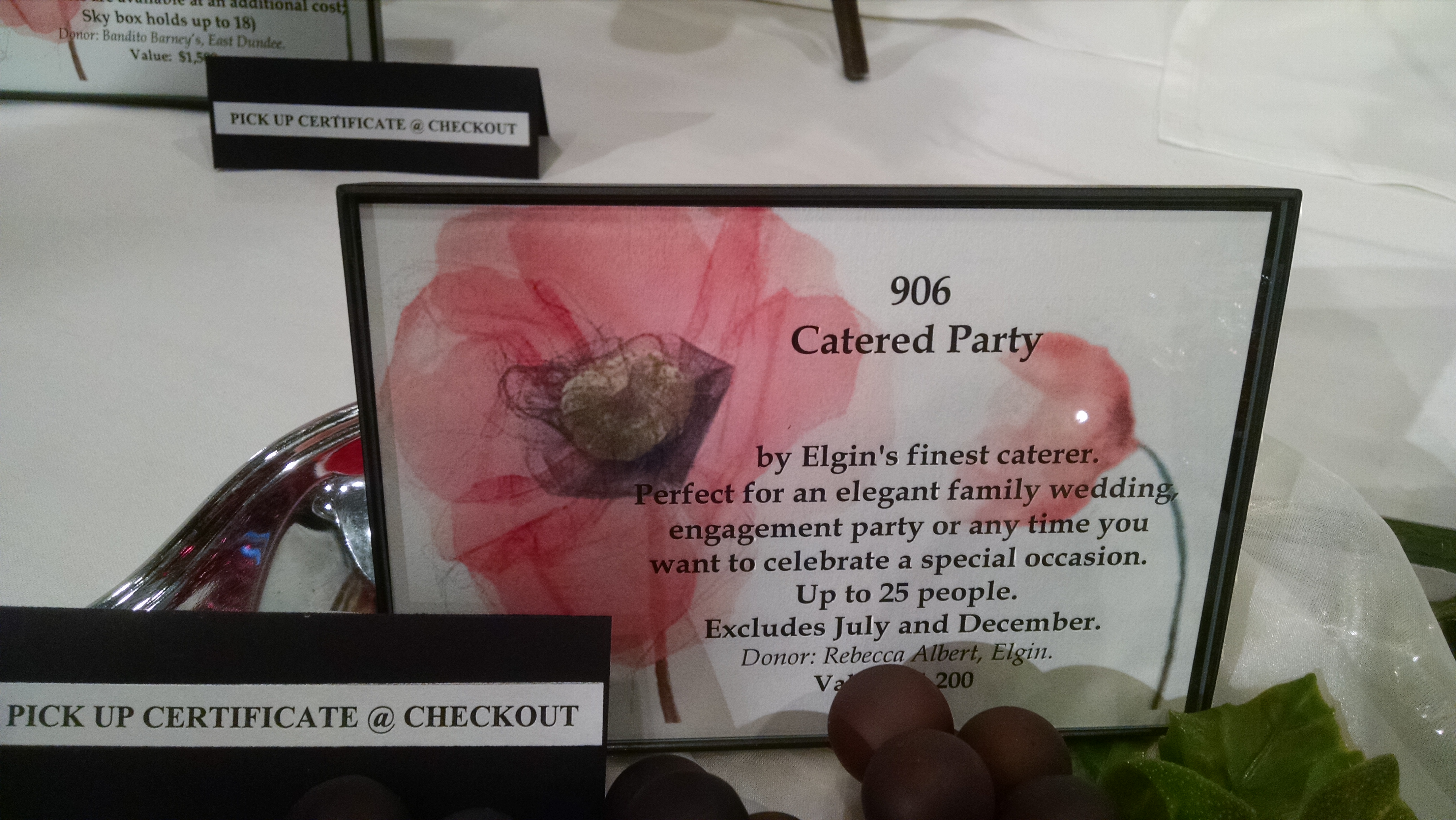
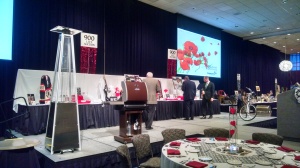 Charity auctions are funny and quirky events. There is a weird “bargain hunter” mentality that is pervasive. I am a firm believe that you need to offer donors more than just a simple silent auction opportunity.
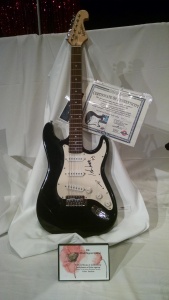 The following are just a few tips you might want to consider:
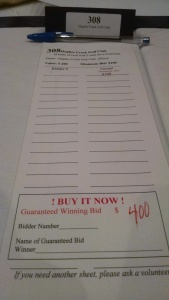 I love the idea of adding a “guaranteed winning bid” to the bid form. You need to be careful about where you set that number, but I suggest setting it around 50% above fair market value.
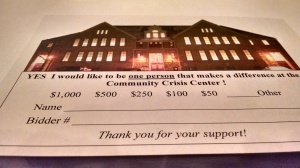 When running a charity auction, there are always winners and losers at the end of the evening. There are donors who want to support your mission but couldn’t because they were outbid. Of course, the Community Crisis Center had a solution for this. They placed pledge cards in the middle of every table.
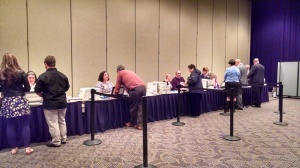 Nothing is worse than having to stand in long lines at the end of the evening to figure out what you won, pay your bill and collect your winnings. I just love how this organization does their checkout.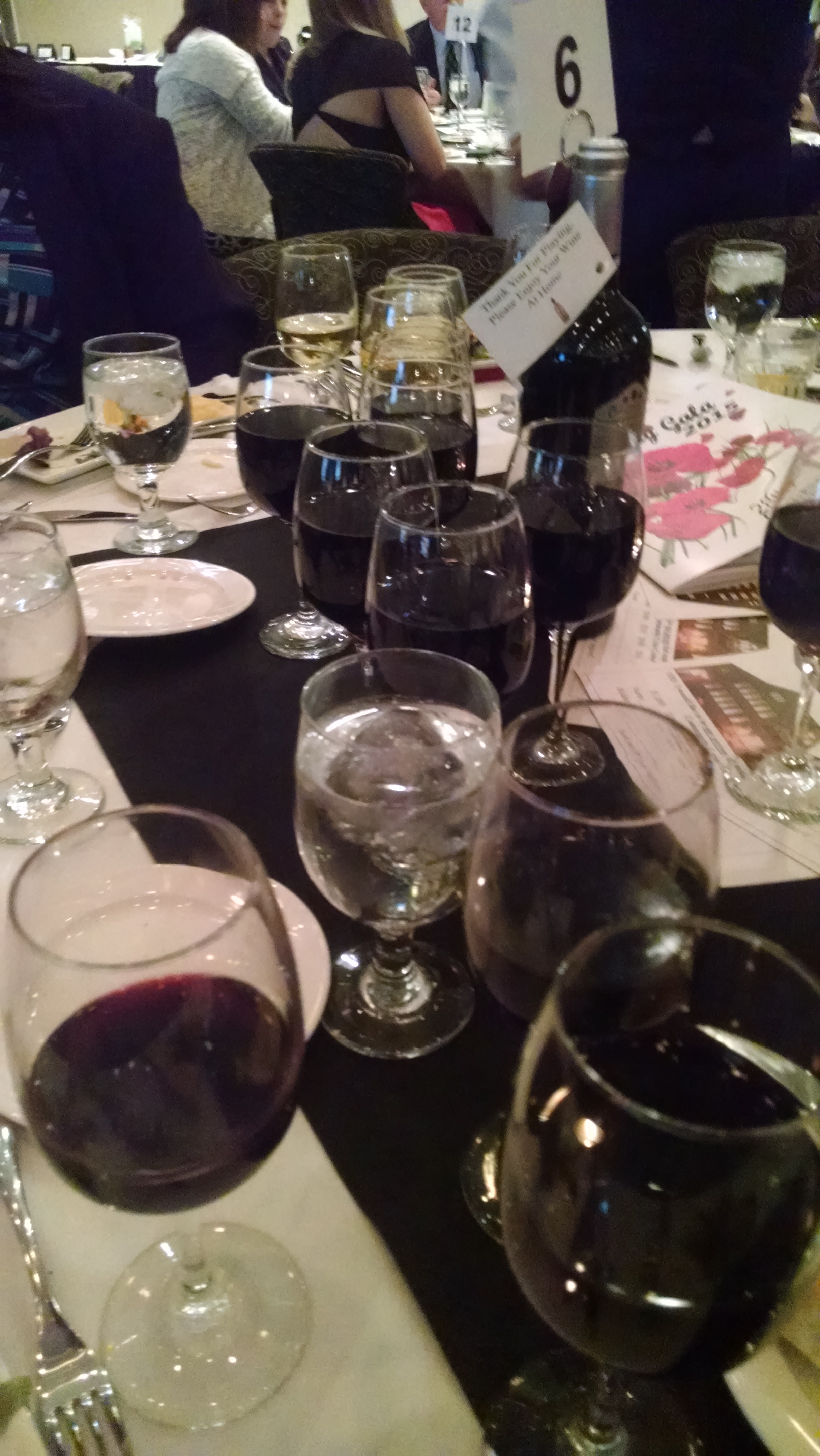
 An event hosted by a nonprofit is often fighting an uphill battle even before the first committee meeting is scheduled. A finite amount of funds and resources are often all that is available to these worthy causes, which makes raising money for cancer research or underprivileged children even more crucial. However, the lack of resources can leave those involved frustrated, overworked and unsure of how to make an event impactful while working under such budgetary conditions.
 How can you improve our donations?
 What goals do you hope to achieve with your fundraising campaign? In addition to raising funds, what else do you hope to accomplish: spread awareness, gain new supporters, strengthen relationships, etc. Jot down your goals as this will shed light on the activities that will follow.
 Who is your target market and where can you find them? Are they active online? If so, make sure you have a fundraising website that’s attractive and easy to navigate. Then not only will you want to make sure your message gets broadcast through online channels, but also make sure it’s easy for people to share your message. Use social sharing widgets & post cool imagery and videos that draw people in. Give people an incentive to help you spread the word. Award people who raise the most funds or drive the most traffic to your website. Look to relevant social media groups that are already invested in your cause and may be more likely to give back. Don’t forget about online channels such as online community groups, local email lists, online calendar of events listings, etc. Leverage existing connections by asking them to tap into their networks.
 I was having breakfast this week with a friend and fellow consultant and we were discussing resource development efforts, including events and grants. By now I’m sure you are well aware, I’m not a huge fan of organizations hosting multiple events. Events are expensive, labor intensive and don’t usually generate a lot of income.
 Grants, which are often 30% to 50% of an agency’s budget, more if they receive United Way funding, are one way. Yet, they too come with a cost. Most agencies get somewhere between 50% to 80% of the grants they submit. That means that the time spent on writing the 20% to 50% of the grants that don’t get funded is time lost. For the grants that are secured, there are reports to be written, dollars to be tracked, objectives to reach and programming to introduce. All of which is as it should be, and none of which is without cost.
 I’ve seen it happen way too often. A fundraising professional or the executive director says to a group of people — using at a board meeting — something like this: “We need volunteers to help with our special event fundraiser. Who can help?” At first, there is an awkward silence and no hands go up. Then there are a few reluctant hands. Whenever I see this happen, I’m always left wondering if those were the right people for the job and how many of those people are clowns?
 I was sitting in the bleachers at Wrigley Field. I was there with my father and my partner. The quality of baseball on the field was terrible, there was a constant drizzle of rain falling from the sky, and the fans were obviously getting antsy. Suddenly, one of the fans got to his feet and yelled at the top of his lungs:
 I’m sure some of you are probably skeptical and for good reason. I mean how crazy and distracting would it be to have a committee of people who all want to be the center of attention. Crazy . . . I’m sure! However, I can’t help but dream about the type of event those folks would build in the name of securing more recognition and attention all to benefit my agency.