![IMG_20151124_165228090[1]](https://donordreams.files.wordpress.com/2015/11/img_20151124_1652280901.jpg?w=169) First, let me start by wishing you and your non-profit organizations a very Happy Thanksgiving! My plane landed at a crazy, busy O’Hare airport yesterday and now I have the luxury of three straight days at home with family and friends (and let’s not forget the turkey and trimmings . . . Mmmmmm!) Since it is Thanksgiving Day, I was going to simply re-post an old blog such as:
First, let me start by wishing you and your non-profit organizations a very Happy Thanksgiving! My plane landed at a crazy, busy O’Hare airport yesterday and now I have the luxury of three straight days at home with family and friends (and let’s not forget the turkey and trimmings . . . Mmmmmm!) Since it is Thanksgiving Day, I was going to simply re-post an old blog such as:
- Does your non-profit really give thanks at Thanksgiving?
- Gobble Gobble … pass the stewardship please?
- Thanksgiving, donor stewardship and social media
But after giving it a little thought over my first cup of coffee this morning, I decided to share a quick story about what happened to me on Tuesday.
I was on the road visiting clients and decided my spirits might be lifted if I did a little volunteer work. So, I rolled up my sleeves and helped serve a few hundred plates of turkey, stuffing, mashed potatoes & gravy, and corn to children participating in an after-school program. It did my soul good and reminded me that I work with non-profit organizations for a reason.
My fellow food server was a board volunteer whose name was Bob. As we scooped the stuffing and potatoes and plated the turkey, Bob regaled me with countless stories about his volunteerism. The following is a quick synopsis of a few noteworthy stories:
- Bob has served on the board for . . . ummmm . . . let’s just say he has served for many decades
- He has raised countless dollars for the organization (via special events, talking with elected officials, and simply soliciting friends in his circle of influence)
- He has served the organization in many volunteer capacities both internally and externally (via national organization committees)
- He helped get this organization’s first Thanksgiving dinner for its kids/members off the ground
- He encouraged his son to volunteer for an organization with the same mission in a different state
- He shared pearls of wisdom with me such as “Boards either have vision or they don’t” and “It doesn’t matter what type of fundraising campaign or event you choose to run because your success will be determined by who you have sitting around the table.”
Bob has cultivated a legacy of volunteerism that all of us should celebrate!
As I think back to my time on the front line as a middle manager and ultimately an executive director, I sometimes fell into the trap of lamenting things that volunteers didn’t do such as:
- miss a committee or board meeting
- drag their feet on soliciting prospects/donors and turning in their completed pledge cards
- fail to do something they committed to doing
![IMG_20151124_165234801[1]](https://donordreams.files.wordpress.com/2015/11/img_20151124_1652348011.jpg?w=300) Bob’s gift to me this Thanksgiving (and he didn’t even know he was giving me this gift) is a reminder about how special and important volunteers are to all of our organizations in spite of our human imperfections.
Bob’s gift to me this Thanksgiving (and he didn’t even know he was giving me this gift) is a reminder about how special and important volunteers are to all of our organizations in spite of our human imperfections.
Seriously, without board members or fundraising volunteers, where would we be? How could we afford to operate our business models?
As the Thanksgiving meal started winding down, the organization’s staff invited a few kids to step up to the microphone and share with a packed gymnasium full of people an answer to the following question: “What are you thankful for this Thanksgiving season?”
One child stepped up the microphone and said he was thankful for his “Xbox“. That response got lots of little kid giggles. A second child, who must have been 7-years-old, confidently stepped to the microphone and boldly said “I am thankful for my mom, my dad and my brother.” That response got a big ‘ol “Awwwww” from the crowd.
If the microphone would’ve been passed in my direction, I think I would’ve said, “I am thankful for people like Bob, who understand non-profits and get what volunteerism is all about.”
Happy Thanksgiving, everyone! Enjoy the food, but more importantly enjoy the fellowship. And thank you to all of the board members and volunteers for all that you do for our clients and organizations.
If this blog post has you thinking that you should invest a little more time, energy and effort in “volunteer appreciation,” then I suggest you click over to what Wild Apricot blog’s “Volunteer Appreciation Guide” and check it out. I promise that you’ll find lots of good stuff to compliment your turkey, potatoes and stuffing. 🙂
Here’s to your health!
Erik Anderson
Founder & President, The Healthy Non-Profit LLC
www.thehealthynonprofit.com
erik@thehealthynonprofit.com
http://twitter.com/#!/eanderson847
http://www.facebook.com/eanderson847
http://www.linkedin.com/in/erikanderson847
 In terms of traditional types of giving, past donations are strong indicators of future giving. That trend logically carries over to planned giving.
  This factor is in reference to those whom your organization positively affected. The range is fairly broad here. A planned gift might be left to a university by a dedicated alumnus.
  Let me start by stating in no uncertain terms that planned giving prospects do not have to be wealthy.
  Factor four encompasses the large gift loophole for planned giving donors. Although they are often comparable in size, unlike major gifts, planned gifts do not inherently require wealth.
  You’ve probably noticed a theme among three of the traits listed above:
 Sarah
Sarah So you have your RSVP list. You know who is coming. What do you do with that information?
  Much like you can create a pre-event V.I.P. list, you can do the same after the event.
 Albert Einstein defined insanity as doing the same thing over and over again and expecting different results.
 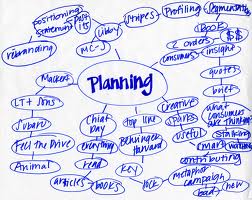 Welcome to the fifth and final part of this ongoing series of posts on how to write your non-profit organization’s annual resource development plan. As I’ve previously mentioned, this series was inspired by how many DonorDreams blog readers were clicking on the “
 Please keep in mind that “planning” is a key role/responsibility of your non-profit board. With this in mind, the task force / committee I suggested you recruit in the first blog post
  While most resource development plans are aligned exclusively with the organization’s annual budget, it is important not to forget about the strategic plan.
 Just a few quick words on this subject.
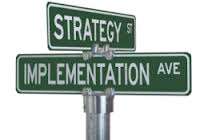
 How many times have your developed a plan, adopted it, put it on your organizational bookshelf, and watched it collect dust? Unfortunately, this is all too often a common occurrence.
 Welcome to the fourth part of this ongoing series of posts on how to write your non-profit organization’s annual resource development plan. As I’ve previously mentioned, this series was inspired by how many DonorDreams blog readers were clicking on the “
 Identify all of the fundraising campaigns, events, and activities you plan on doing in the upcoming year. Here are a few examples: golf outing, gala dinner & auction, direct mail, major gifts initiative, annual campaign, grant writing, etc.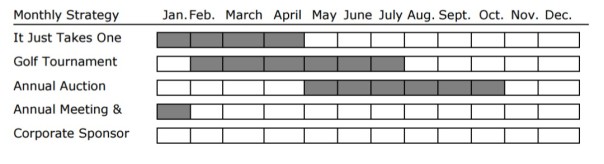
 Now that you have all of the right people sitting around the table, the next thing you want to do is engage the group in assessment activities.
 Resource Development Quality statements
 Other Questions Your Volunteers Will Want Answers To
 A number of years ago, I served on an amazing team of resource development professionals at Boys & Girls Clubs of America (BGCA). Our team’s mission was to provide consulting services and tools to local affiliates to help them increase their individual giving. One of the tools the team created was an online software wizard to assist Clubs with writing their annual resource development plans. While it was an awesome tool, it wasn’t embraced or used by those on the front line.
 You’re busy. I get it! But it will be one of the biggest mistakes of your life if you lock yourself in your office and bang out your organization’s annual resource development plan.
 It is a basic truism for some organizational development professionals that “Culture trumps strategy“. In the last few months, this expression has been front and center in my mind. I guess the reason it bothers me is because of its implications, which is none of what I bring to the table as a non-profit and fundraising consultant matters unless the organization’s culture is ready to receive it and act upon it.
 I’ll stop Googling now. Because I think I get it now.