
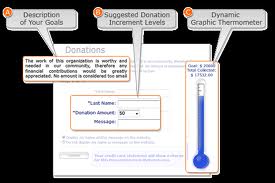
 Jeff Bezos has been on my mind lately. Of course, he is the 49-year-old owner of Amazon.com, and this internet pioneer recently purchased one of the iconic old media newspapers — The Washington Post — for $250 million. It was no more than a few days after this announcement that I was talking to a non-profit board volunteer about fundraising when I was reminded of this famous Jeff Bazos quotation: “A company shouldn’t get addicted to being shiny, because shiny doesn’t last.”
Here is how the fundraising conversation with the board member went:
- Board member: “Erik, I am so happy with our agency’s foray into online fundraising. I especially LOVE these ‘personal pages’ where I set-up my online page and email a link to everyone in my email address book.”
- Erik: “Why do you like this new fundraising strategy so much?“
- Board member: “For starters, it is so easy and doesn’t take much time. Who has time to do fundraising the way we used to do it? Chasing down friends — who also don’t have time — and ask them for money when they don’t really want to be asked.”
- Erik: “Ummmm … well, hopefully there wasn’t a lot of ‘chasing’ and ‘forcing’ going on. Fundraising should be more about connecting people’s philanthropic wishes with opportunities. We’re not stalking people and stealing their money.“
- Board member: “Well, I just hated sitting down with my friends. It was so uncomfortable. Now, with these new ‘personal pages,’ I don’t have to do that anymore.”
- Erik: “Ummmm … that can’t be entirely true, right? I mean you should still be sitting down with large donors because it isn’t very respectful to ask donors of a certain size to simply ‘click and give,’ right?“
- Board member: “I guess, but I’m not really focused on ‘those donors’. Staff can take care of those individuals.”
- Erik: “How do you ask donors to consider making a specific sized contribution that is commensurate with their capacity and willingness to give to your agency?“
- Board member: “I really don’t worry about that either. I just ask them to give whatever they feel like donating, and the contributions rolled in! I can’t believe it, but my response rate has been approximately 30%. Many people are giving $25 and $50. A few people even donated more than $100. The biggest contribution was $200. I just can’t believe it!“
- Erik: “I have some concerns about taking the personal touch out of your organization’s resource development program. Hopefully, these personal pages are simply one small strategy focused on the very bottom rung or two of your range of gifts chart. Or is it your agency’s new ‘donor acquisition’ strategy… like direct mail?“
- Board member: “Oh Erik … this is the future of fundraising!“
I’m not going to provide too much commentary in today’s post because I suspect you can read between the lines.
 I am a huge proponent of using technology and integrating it into your non-profit organization’s fundraising program, but it shouldn’t be introduced in a way that undercuts the other best practices embedded in your resource development plan.
If your board members are ultra-reluctant fundraisers and you can’t introduce something like “personal pages” into your fundraising tool box without killing your annual campaign, then I suggest taking a pass on those opportunities for now. Timing is everything. Right?
Moreover, the Jeff Bezos quotation reminds us that shiny objects don’t remain shiny forever. So, what happens when those personal pages (or whatever the new online fundraising tool you’re using) become burdensome to volunteers and they resist using it?
My suggestion is that you fix the underlying problems and stop trying to deal with symptoms. If your volunteers are reluctant fundraisers, then help them overcome their fears or recruit additional board members who aren’t reluctant. Don’t just paper over their fears or blind them with shiny objects.
Please don’t misunderstand what I’m trying to say. I am not opposed to online giving. I am not against peer-to-peer web-based personal pages. I am concerned about misuse and unintended consequences.
Has your agency started using personal pages to support board volunteer’s peer-to-peer solicitation with their circle of influence? If so, what has been the result? Have individual board members raised more, less or about the same in year-to-year comparisons? Have you seen any ill effects of introducing a shiny new object into your fundraising tool box?
Please scroll down and share your thoughts and experiences in the comment box below.
Here’s to your health!
Erik Anderson
Founder & President, The Healthy Non-Profit LLC
www.thehealthynonprofit.com
erik@thehealthynonprofit.com
http://twitter.com/#!/eanderson847
http://www.facebook.com/eanderson847
http://www.linkedin.com/in/erikanderson847
 More than a year ago, I stumbled upon a fun article published in the Stanford Social Innovation Review (SSIR) titled “
 So, the conversations I’ve been referencing throughout this post have to do with board development and not the actual revenue models.
 I am sicker than a dog and my mind is foggy, which is why I couldn’t post yesterday. However, the thought of not posting two days in a row is inconceivable to me. So, I find myself sitting here staring at a blank screen wondering what I should type. Rather than wax poetic about a current event or best practice, I’m going to share with you a question that another blogger touched upon a few months ago. Ever since reading it, I just haven’t been able to get it out of my head. Are you ready? Because here it is:
 As many of you know, I subscribe to many different blogs and eNewsletters, and I do a lot of reading. A few weeks ago, I received an eNewsletter called theInsider in my email inbox. It is a connection back to my Boys & Girls Club family. I’ve always loved this publication because there has never been a time after reading it that I didn’t have something to mentally chew on. The July 29th edition planted the following one very powerful thought in my head:
 This is the short list I’ve managed to come up with:
 Welcome to O.D. Fridays at DonorDreams blog. Every Friday for the foreseeable future we will be looking at posts from John Greco’s blog called “
 Do you see it? Culture eats strategy!
 Hmmmm … looking back at that meeting, I think he was cooking up a hearty breakfast for me.
 I suspect many of you are nodding your heads right now. However, stop and think about your last week and where you spent your time. I suspect that many of you focused lots of time, energy and resources on the pebbles, sand and liquid in your non-profit jar such as:
 As you can probably imagine, I subscribe to a lot of things — everything from eNewsletters to blogs — and I do a lot of reading. It helps me be a better non-profit consultant, and equally important it helps me be a better thought-leader / blogger. This brings me to an article written by Cody Switzer in The Chronicle of Philanthropy titled “
 Cody’s article about the
 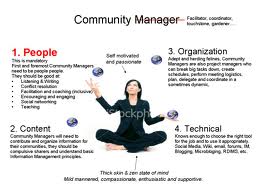 This person isn’t a “technology person” working in your IT department. In fact, they don’t need to have many of those skill sets because you either already have an a) IT person on your payroll, b) relationship with an IT consulting firm or c) utilize “in-the-box” technology (e.g. Press Publisher, 1and1.com, etc) that comes with a toll-free help desk when things get dicey.
 I’ve seen it happen way too often. A fundraising professional or the executive director says to a group of people — using at a board meeting — something like this: “We need volunteers to help with our special event fundraiser. Who can help?” At first, there is an awkward silence and no hands go up. Then there are a few reluctant hands. Whenever I see this happen, I’m always left wondering if those were the right people for the job and how many of those people are clowns?
 I was sitting in the bleachers at Wrigley Field. I was there with my father and my partner. The quality of baseball on the field was terrible, there was a constant drizzle of rain falling from the sky, and the fans were obviously getting antsy. Suddenly, one of the fans got to his feet and yelled at the top of his lungs:
 I’m sure some of you are probably skeptical and for good reason. I mean how crazy and distracting would it be to have a committee of people who all want to be the center of attention. Crazy . . . I’m sure! However, I can’t help but dream about the type of event those folks would build in the name of securing more recognition and attention all to benefit my agency.
 These five bullet points are just the tip of the iceberg. The fact of the matter is that we started planning next year’s Duck Race in the immediate days and weeks after wrapping one up. This special event raffle was a year-round affair.