
 There has been lots written throughout the years about the psychology of philanthropy. Most of the stuff I’ve read has been right on target with regards to why people open their wallets/purses and give money to a non-profit organization. I’ve been asked to revise a whitepaper titled “Why People Do and Don’t Give Money” for a national organization’s online fundraising toolbox to which their local affiliates have access. So, I thought I’d ask you and the rest of the DonorDreams blog community for a little help this morning. Would you please be so kind and give me one minute (or less) of your time at the end of this post?
The fundraising whitepaper starts off with this simple opening paragraph that frames the rest of the document:
“Knowing what motivates donors to make a philanthropic gift helps you determine where your prospect falls in this spectrum. Once you understand where they are coming from, you can plan your solicitation strategy accordingly.”
The following are just a few of the 17 bullet points listed, explaining the motivations of some donors:
- They have a need to be philanthropic, to do good
- They like your organization’s mission and believe in your cause
- They like making a difference
- They like and have respect for the solicitor
- They are asked to give!
Then there is a list of another 11 bullet points listing reasons people don’t make donations. Here are three of the reasons provided:
- They are pressured in any way
- They are promised any kind of favor in return or there are strings attached to their gift
- They do not have the money at the moment
Here is where I’m asking you to please take a minute out of your busy day and help me with this small project. Please scroll down and answer the following two questions in the comment box below:
- Please share one reason you suspect people donate to your agency. (e.g. something that motivates the donor to contribute)
- Please share one reason you suspect donors won’t give to your agency. (e.g. a strategy you don’t use because you know it doesn’t work)
I will take your responses and weave it into a beautiful resource development tool for countless other fundraising professionals to use.
Why should you do this?
Simply stated, this is your opportunity to pay something forward today. Many of us have been the recipients of awesome coaching and mentoring from other professionals along our career paths. I believe those “debts of gratitude” should be repaid joyfully every time the opportunity presents itself. 🙂
Here’s to your health!
Erik Anderson
Founder & President, The Healthy Non-Profit LLC
www.thehealthynonprofit.com
erik@thehealthynonprofit.com
http://twitter.com/#!/eanderson847
http://www.facebook.com/eanderson847
http://www.linkedin.com/in/erikanderson847
 After spending a nice long Labor Day weekend in Michigan at a friend’s summer cottage on Saginaw Bay, I am now faced (as are you) with the long slide towards the end of the year. Not only can I not wear white clothing now that Labor Day has come and gone, but my fundraising friends should be starting to engage board, staff and fundraising volunteers in developing their agency’s written 2015 resource development plan.
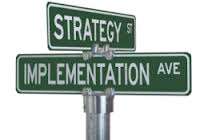 Having two degrees in planning, I tend to get overly excited about developing plans, and some of my past resource development plans have been 50 and 75 pages in length (Yeah, I have gotten carried away). Those plans included elements such as:
 Jeff Foxworthy has made a career out of answering a simple question: “You know you’re a redneck when . . .” This morning I thought I’d do something similar with: “You know you’re fundraising campaign has gone viral when . . .” by describing how last week unfolded for me as it relates to the
  Fellow blogger and fundraising genius — Jeff Brooks — publishes a blog post titled “
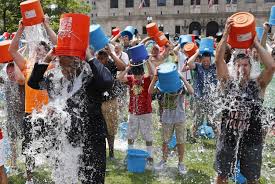 The day is winding down. The television is on, we’re into what will likely be the last show of the evening before going to bed, and my phone starts to blow-up. Needless to say, one of my former Boys & Girls Club of Elgin board presidents and good friend, Tim Williams, just completed the
  Many years ago I traveled the Midwest region as an internal consultant working for a large national non-profit organization. For part of my time there, I worked with countless local affiliated organizations on planning and implementing an annual campaign focused on face-to-face solicitation strategy. Some agencies took to it like a duck to water, and others just struggled. Every once in a while (typically when I’m contemplating the origins of the universe), I think back to those days and wonder what the difference was between those two realities.
 I have a confession to make. For years, one of the ideas I’ve shared with clients is that a postcard can be an effective stewardship strategy. The truth is that I’ve doubted the effectiveness of this strategy primarily because I had never seen it done well. Today, I’m able to say that I’ve seen the light and officially have become a believer thanks to my alma mater — University of Illinois (UIUC).

 Last week I was walking our dog, Betrys, when I came across a lemonade stand in my neighborhood. A mom was helping her two young sons set-up as I approached. It was in that moment that the 3-year-old boy learned a valuable lesson that every fundraising professional learns sooner or later in their career. So, I decided to take a minute to blog about it this morning.
 Our job as fundraisers is to understand the rules of engagement when it comes to fundraising:
 On Tuesday, I wrote a post titled “
 What if your spouse or friend approached you and said, “I am really hungry and I need you get me food and make a meal before I starve.” However, they didn’t tell you:
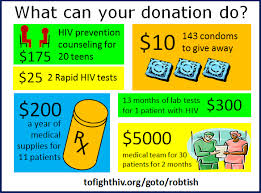 A few observations:
 A client called and asked for a little help with their upcoming direct mail solicitation. As a result, all I’ve had on my mind over the last few days is direct mail. So, it only made sense to blog about it today. I’m breaking this post down into small sections, and I’m doing so in the order of highest importance (e.g. the first section has a bigger impact on the performance of your mailing than the second section, etc)
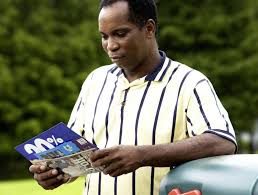 Perhaps, the biggest factor in the success of your direct mail appeal is your mailing list. The following are just a few donor segments that I’ve mailed to throughout the years:
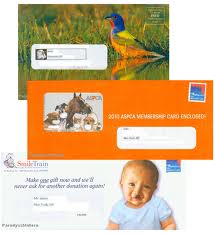 Your beautifully crafted letter means nothing if the recipient of your mailing doesn’t open the envelope. Right?
 Haha! You thought I was going to start with something like, “And God said, ‘Let there be light,’ and there was light.” (OK, the thought went through my head. Guilty as charged!)
 He who seeks finds
 Give to him who asks of you
 Craig Linton, blogger at
  Acknowledgement letters, emails, phone calls and gifts
 Inviting donors to take a tour
 Send chocolate covered strawberries