Non-Profit Trends and Predictions: Volunteerism

It has been an exhausting whirlwind of work the last few months. While I would never dare complain about work so as not to upset the consulting gods, I need to take a short break.  So, this week I will re-run some of the most viewed DonorDreams blog posts on fundraising and leadership. I hope you enjoy today’s post on volunteerism. Enjoy the flashback!  ~Erik

2012 Non-Profit Trends and Predictions: Volunteerism

Originally published on December 29, 2011

volunteersThis week I’m looking back upon 2011 for major trends, and then looking forward to 2012 with an eye towards making a few predictions. Today, we are looking at non-profit volunteer recruitment, retention and management.

Throughout the course of 2011, I had the opportunity to write about non-profit organizations and volunteerism. I’ve kept my eyes open for signs of what non-profits are doing with volunteers, and I see indicators everywhere pointing to:

2012 continuing non-profit agencies’ focus on volunteerism.

Here is what I’ve seen that leads me to this conclusion:

  • My fellow Generation Xers continue to increase the amount of time they spend volunteering. (I personally suspect this has less to do with their charitable outlook on life and a lot more to do with the fact that they’re in the heart of their child rearing years)
  • I see my parents’ Baby Boom Generation starting to retire, and they just don’t know what to do with themselves when they wake up in the morning. They are volunteering because they don’t see themselves as being old and they want to keep busy.
  • I see my Millennial generation friends standing in the unemployment line, and then turning around in search of volunteer opportunities that they hope might just turn into a job opportunity (or at the very least turn into a great reference or a referral).
  • I see my former employer — Boys & Girls Clubs of America — partnering with one of their major corporate supporters to fund a volunteer management pilot project in an effort to develop a program to teach their local affiliates to become better with volunteer recruitment, retention and management.
  • I see corporations demanding volunteer opportunities and projects from their philanthropic partners in an effort to drive down their employee turnover rates and grab onto what marketing professionals call “the halo effect”.
  • Let’s not forget about the research out there on the Millennial generation that shows this emerging generation is very much into volunteerism unlike any other recent generation.
  • According to a recent Guidestar survey, many non-profit agencies are trimming staff or putting a cap on hiring plans in 2012. Not surprisingly, the same survey showed that 65-percent of all non-profit respondents are looking for volunteers for program work and 54-percent are looking for volunteers for administrative work.
The reality is literally this simple . . . donors are saying they want to see non-profits do more with less . . . volunteer recruitment and management helps accomplish exactly this . . . and in the final analysis volunteers turn into new donors a lot easier than cultivating new prospects from scratch.

Investing in volunteerism could just turn out to be the non-profit sector’s version of an economic stimulus plan that pulls agencies out of their economic doldrums.

Volunteer recruitment, retention and management isn’t as easy as just putting out a call for volunteers. As with everything in life, it is science that requires planning and careful management.

Since the economic collapse four years ago, this trend has been taking form and the non-profits who are leading the way have been experimenting with such things as: volunteer databases, volunteer coordinators, various recruitment strategies, strategic alliances with agencies that specialize in volunteerism, recognition programs, orientation and training programs, placing value volunteer hours, and much much more.

As budgets get even tighter in 2012, the flood of non-profits who commit themselves to figuring all of this out will continue to propel this long-term trend.

Is your agency recruiting more volunteers? How has it gone about doing so? What challenges have you experienced along the way? How important is it to have a volunteer coordinator on your payroll to orchestrate recruitment, orientation, training, volunteer opportunity assignment, evaluation, retention, etc? How successful have you been at turning volunteers into new donors?

Please scroll down and use the comment box to weigh-in with your thoughts and experiences. We can all learn from each other.

Here’s to your health!

Erik Anderson
Founder & President, The Healthy Non-Profit LLC
www.thehealthynonprofit.com 
erik@thehealthynonprofit.com
http://twitter.com/#!/eanderson847
http://www.facebook.com/eanderson847
http://www.linkedin.com/in/erikanderson847

Fundraising, stonecutters and ignoring best practices

stonecutterWelcome to O.D. Fridays at DonorDreams blog. Every Friday for the foreseeable future we will be looking at posts from John Greco’s blog called “johnponders ~ about life at work, mostly” and applying his organizational development messages to the non-profit community.

In a post titled “All That Had Gone Before,” John gets philosophical. He points out how a stonecutter’s success is attributed to a series of chips just like your successes in the workplace is the result of the people who came before you. He says, “Our results today; our performance today; our effectiveness today; is not from what we have done today; but all that we’ve done before.”

I read this and immediate think of a recent fundraising training that I facilitated for a bunch of volunteer solicitors.

In my training, I talk about the 12 steps to making a successful face-to-face solicitation. If followed exactly without any corner cutting, each step is designed to quiet our “inner saboteur’s voice,” which is rooted in fear and the mistaken belief that we are “begging for money.”

I’ve conducted this training almost 100 times in my life (if not more), and it never ceases to amaze me how many people don’t want to slowly and methodically chisel away at their solicitations by following the 12 step process.  Here are some of the most recent things I’ve heard people say in the wake of this training:

  • I don’t need to make my own pledge before going out to solicit my friends. I know that it is the first step in the 12 step process, but I give my time and that should be enough.
  • If the donor indicates that they don’t want to meet with me, I’ll just solicit them over the phone. I know these people well enough so there won’t be a difference between a phone and in-person solicitation.
  • I know that I shouldn’t leave the pledge card behind with the donor, but I know this donor very well and they will send it in and everything will be fine.

These people used to frustrate me. After all, they don’t seem to understand these best practices were developed by countless numbers of volunteers and professionals before them. Ugh! However, after reading John’s blog post, I’m going to attempt to change my perspective.

From this point forward, I will simply look at these folks as inexperienced stonecutters who are trying to split that big rock in half with just one or two swings of the hammer. They choose to ignore all of the progress made by everyone who preceded them because they are simply apprentice stonecutters. Right?

As a non-profit and fundraising professional, how do you channel your inner stonecutter when working with donors? When working with fundraising volunteers? When working with your board? Please scroll down and share your thoughts in the comment box below. We can all learn from each other.

Here’s to your health!

Erik Anderson
Founder & President, The Healthy Non-Profit LLC
www.thehealthynonprofit.com 
erik@thehealthynonprofit.com
http://twitter.com/#!/eanderson847
http://www.facebook.com/eanderson847
http://www.linkedin.com/in/erikanderson847

Back to non-profit board basics: Fiduciary Responsibility

fiduciaryDani Robbins is the Founder & Principal Strategist at Non Profit Evolution located in Columbus, Ohio. I’ve invited my good friend and fellow non-profit consultant to the first Wednesday of each month about board development related topics. Dani also recently co-authored a book titled “Innovative Leadership Workbook for Nonprofit Executives” that you can find on Amazon.com. 

The book Governance as Leadership, by Richard P. Chait, William P. Ryan and Barbara E. Taylor, and the modes of governance contained within, changed the way I look at Board service and the capacity of Boards to move the needle of change in their communities.

Several recent blog posts have been dedicated to discussing how to move governing Boards from focusing primarily on the fiduciary mode toward becoming more strategic and generative. High functioning Boards manage in all three modes depending on the circumstances and the needs of the organizations, yet fiduciary is and must continue to be the foundation of Board governance.

As a quick reminder, those modes are as follows:

  • Fiduciary – the board is faithful to its mission, accountable for performance, and compliant with relevant laws and regulations. It exercises its legal responsibilities of oversight and stewardship.
  • Strategic – the board is responsible for strategic thinking and sets the organization’s priorities and course, and deploys resources accordingly.
  • Generative – the board’s work entails efforts to make sense of circumstances, to discover patterns and discern problems, and to make meaning of what’s happening.

Boards are made up of appointed community leaders who are collectively responsible for governing an organization. That includes:

  • Setting the Mission, Vision and Strategic Plan;
  • Hiring, Supporting and Evaluating the Executive Director;
  • Acting as the Fiduciary Responsible Agent,
  • Setting Policy and
  • Raising Money

Most of how that happens is at Board and committee meetings, which is really the point of today’s blog.

basicsThe minimum requirements to become a functioning governing Board operating in the fiduciary mode is this:

You must have a quorum at all Board meetings. The organization’s Code of Regulations (also called by-laws) will dictate the number of Board members required to be in the room to have a quorum; it is usually half or half plus one. When you do not have a quorum the Board will not legally be able to take action, which in addition to stymieing the organization’s capacity to function, will also be noted in your audit, and in turn will quickly become a concern for your funders.

Minutes must be taken at each meeting of the Board of Directors and approved at the following meeting. Those minutes should include who was in attendance (distinguish between Board and staff please), the approval of the prior meting minutes and the financial statements as well as any and all votes, including the complete motion that was made and by whom, who seconded and if it was a unanimous vote. Minutes should also include the name of any Board members who voted no as well as anyone who abstained. Only Board members can make motions. Staff can make recommendations but in most cases cannot vote.

Financial statements, including a profit and loss, variance against the budget and a balance statement must be presented, explained and voted upon at each meeting. The Treasurer, when presenting the financials, should review anything that is higher or lower than expected, and explain anything that is not immediately obvious. Board members should ask questions until they understand and are willing to have their name listed as voting yes in favor of accepting the financial statements as presented.

basics2Committee decisions should be presented by the Chair of the Committee (not by staff, other than occasionally by request of the Chair) and anything that requires a vote should be motioned by that Chair. As listed in a prior post the following need votes:

  • Any Policy – crisis communication and management, personnel, etc.
  • Past board meeting minutes;
  • Financial reports;
  • Agency Annual Budgets;
  • Plans – strategic, board development and/or resource development;
  • Changes to the strategic direction of the organization;
  • The hiring of an Executive Director;
  • Audits;
  • Campaigns;
  • Opening, closing or changing the signatures on bank accounts;
  • Changes to the mission or vision; and
  • Board Members and Officers being added, or renewed.

Board meetings should also include a report from the Executive Director (also called CEO). Any recommendations that are made must be motioned by a board member and should then follow the voting path outlined above.

Board Chair’s often make reports as well, yet do not make motions or vote themselves unless there is a tie to break.

The meeting ends with any old or new business.

There are myriad ways to move a Board from a strictly fiduciary Board toward a high functioning Board, but none can happen before a Board masters their fiduciary responsibility. Fiduciary responsibility is the price of admission to Board leadership, but it can’t end there. Strategic and generative leadership is what engages Board members and moves the needle for change in our communities. Isn’t that why we serve?

What’s been your experience? As always, I welcome your insight and experience.
dani sig

Carol Burnett’s advice to disengaged non-profit boards

carol burnettThe idea of engaging non-profit board volunteers is sometimes treated by thought-leaders as a simple idea; however, in reality it is really hard. A few days ago I had this conversation with a board volunteer, and he said something I found very profound. He said, “When one person is disengaged, it is as simple as challenging them to step-up and join the group. When a few people are leading and the rest of the group is disengaged, it is far easier for the few to step-back because that is the norm.”

Obvious? Yes! Did I know this before I heard it? Of course. But I had never heard it stated quite so succinctly.

During this conversation, he also related a great quote from a business consultant he recently heard speak at a conference. The quote was “If you can’t change your people, change your people.”  Upon hearing this, my mind first darted to Jim Collins, who famously talks about getting the right people on the bus and in the right seats.” Yet, surprisingly, my mind didn’t stay there.  The cosmic jukebox in my head started playing a song that I still can’t get out of my head. Click here or on the YouTube screen below and please join me in singing . . .

[youtube=http://www.youtube.com/watch?v=PjQuZCTLAv4]

Yeah, I think Carol Burnett gave some great advice to board development committees when she sang her iconic sign-off song.

Carol reminds us that time flies when you’re having fun. She says early in the song: “Seems we just get started and before you Know it
Comes the time we have to say, ‘So long’.” In this one simple sentence, I am reminded of the following truisms for the board development committee:

  • There is a beginning, middle and end to every board volunteer relationship.
  • It is the Board Development Committee’s responsibility to manage every aspect of that relationship during every step down that path.
  • In the beginning, expectations must be set or disengagement is almost inevitable (e.g. use job descriptions to recruit).
  • During every step of the way, year-end evaluation is essential in order to maintain engagement. These aren’t always “pat-on-the-back” meetings. Sometimes, committee members need to ask tough questions during evaluation meetings such as: “What can we do to get you more involved in our resource development program? Is there something we can do to help you feel more comfortable with your roles and responsibilities? Are you sure this opportunity is a good fit or would everyone be better served if you stepped off the board and joined a committee?
  • In the end, compassion and grace — like you hear in Carol’s voice — are the values that carry the day. Hopefully, the volunteer concludes that they’re ready to move along to tackle other opportunities related to your mission and organization. However, more oftentimes it is obvious to everyone except the board volunteer. Not only must the committee exercise compassion and grace, but they must be strong and do what needs to be done. Too often committee volunteers kick the can down the road, which creates problems for another day.

When the norm on the board is disengagement, I’ve too often seen a frustrated Board Development Committee take the discussion into the boardroom. Their intention is good. After all, they want to wake some people up and shake them from their sleepy disengaged slumber. However, I’ve never seen this strategy work. In fact, it always backfires in one of two ways:

  1. Tempers flare because it feels like finger-pointing and accusations are being made. 
  2. Committee members get frustrated because their “call to action” is met with a yawn of “disengagement”.

For me, it all comes back to that consultant’s quote that my friend shared with me: “If you can’t change your people, change your people.”  with a chaser of “I’m so glad we’ve had this time together.”

I believe taking this conversation into the boardroom is tantamount to the board development committee abdicating their responsibilities and giving up. I suggest the more direct option of one-on-one meetings with disengaged volunteers.

If you are looking for resources and more reading materials on the subject of volunteer management, board development, board engagement, and how to move board volunteers onto other opportunities, you may want to click on some of the following links:

What have you done or seen done when disengagement is the norm in the boardroom? Do you agree or disagree with my thoughts on individual meetings versus group discussion? Please scroll down and share your thoughts in the comment box. We can all learn from each other.

Here’s to your health!

Erik Anderson
Founder & President, The Healthy Non-Profit LLC
www.thehealthynonprofit.com 
erik@thehealthynonprofit.com
http://twitter.com/#!/eanderson847
http://www.facebook.com/eanderson847
http://www.linkedin.com/in/erikanderson847

Not fundraising? Not engaged!

questions_daniDani Robbins is the Founder & Principal Strategist at Non Profit Evolution located in Columbus, Ohio. I’ve invited my good friend and fellow non-profit consultant to blog the first Wednesday of each month about board development related topics. Dani also recently co-authored a book titled “Innovative Leadership Workbook for Nonprofit Executives” that you can find on Amazon.com. 

Multiple conversations about the same topic with the leadership of a variety of organizations tend to lead to blog posts. When that happens, it is usually prompted by a question, though the question is rarely about the actual issue at hand. The issue that is really the issue at hand is usually behind the issue that is being presented.

For those of you know me, it will come as no surprise to you that I spend a lot of time thinking about the situation behind the situation. (When you make your living telling people what you think, you’d better have thought extensively about whatever they might want to know.)

When it comes to Boards and fundraising (and quite a few other topics as well), the issue behind the issue is often “engagement”.

The question I am being asked a lot lately is “How can I get my Board to fund raise?”

If your Board is not fundraising the way you want them to, I submit you do not have a fundraising issue; you have an engagement issue and possibly a Board Development issue.

Boards that are engaged, raise money. Boards that are not, don’t.

What is the emotional energy of the people in the room during a Board meeting?

When I ask this question while facilitating a session, I set up the answer on a scale of 1-4, with one being “I can’t believe I left my office for this” and 4 being “I feel privileged to be in this room.” Where do your Board members fall?

Mission moments, generative discussions and strategic conversations are engaging. Upholding the fiduciary responsibilities, while critical for an organization is also, for the most part, disengaging. It’s boring. It’s necessary but it’s still boring and boring is disengaging.

Every time I facilitate a planning session with a Board, someone comes up to me and says something to the effect of “That was great! I’m so happy to be talking about strategy and issues and not about the building” (or the finances, or fill in whatever you are sick of).

engaging_daniWe engage Board members initially by talking to them about our organization’s mission, the impact it makes in our communities and our vision for changing our corner of the world. They join our Boards in order to help us do those things – and then we never talk with them ever again about any of it. Ever.

We talk with Board members about money — what we spent and why we need more of it. We talk with them about fundraising, and why they need to do more of it. We talk with them about the problems we’re having, and what we need from them to fix it.

We don’t talk with them nearly enough about what they want, about why they joined our Board, and what they hoped to get out of their service.

It is a great opportunity to change the discussion; change the topic; change the impact; change the engagement level.

Call a retreat. Take a survey. Add some client stories to the agenda. Have a strategic planning strategy session, and then continue to talk strategy throughout the year. Present a horizontal scan and discuss how it will impact your clients, not just your agency, but your clients. Introduce some generative discussions at a Board meeting. Here are a few ideas how from my favorite Board book Governance as Leadership:

  • “At the end of discussions give each member 2-3 minutes to write down any thoughts or questions that weren’t expressed.
  • Randomly designate 2-3 trustees to make the powerful counter arguments to initial recommendations.
  • Ask a subset of the Board to assume the perspective of different constituent groups likely to be affected by the decision at hand.”

Find out what people expect when they joined your Board and meet their expectations. You’ll be glad you did and so will your Board members. They might become so engaged, they might even start telling people about your agency, and asking people to support it.
dani sig

The Chicago Cubs Convention through non-profit eyes: Part Three

cubs logoThis last weekend I attended the Chicago Cubs Convention with my family.  As we drifted from session to session, I couldn’t help but see all sorts of blog themes and things that non-profit organizations could learn from this major league franchise. Over the last few days I’ve shared a few of these observations and hopefully stimulated a few new ideas for you and your agency. In Tuesday’s post, we talked about stewardship. Yesterday, we discussed shared vision, values, and culture. Today, I am ending this series with a few words about statistics and predictive value.

On Sunday morning, the last session of the entire convention was titled “Stats Sunday,” and the session description read as follows:

“You know what a pitcher’s ERA means and how to calculate a hitter’s batting average, but do you know what WAR stands for or how to find someone’s OPS? Baseball is full of new-age statistics. Jim Deshaies, Len Kasper and WGN’s Bob Vorwald will help break it down for us in this special offseason edition of “Stats Sunday.”

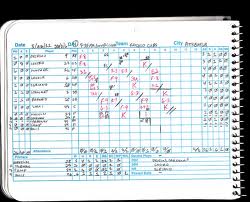
Essentially, this session was all about the things you learned about baseball scouting in the Oscar award nominated movie and best-selling book “Moneyball.”

During the hour-long session on new baseball stats (e.g. BABIP, OPS, OPS+, UZRWAR, WHIP, etc), we talked about at least 10 new statistics that help baseball scouts determine one simple question: “Will this ball player be a good addition to our team and help win more games?”

As I am apt to do, my mind started wandering during this session, and I found myself wishing that non-profits would someday develop a set of predictive statistics to improve the art of board development.

I have sat in countless board development and nominating committee meetings, and they all feel like that scene in Moneyball where Brad Pitt is talking to his “old-school baseball scouts” about free agents and they start sharing anecdotal evidence about girlfriends and physical attributes. If you don’t know what I’ve talking about, you might want to check out this YouTube movie trailer that contains a portion of that scene in it.

[youtube=http://www.youtube.com/watch?v=kFXDnhvd1WQ]

You know what I mean . . . what do the discussions sound like around your board development table?  Here are some of the things I keep hearing:

  • Are they too busy?
  • Do they serve on another board?
  • Will they say ‘YES’ if asked?
  • Who is the best person we should send to ask?
  • Do they have money? Do they donate to us or others?

Too many agencies are essentially asking: a) do they have a pulse? b) is their wallet thick? and c) will they agree to do it?

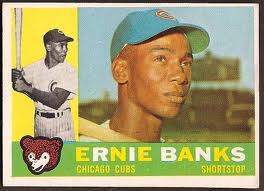
ernie banksI dare to dream about the day when board volunteers have their own “baseball-type card” with statistics on the back that measure a board member on the following concepts:

  • How active and engaged is this person in your mission?
  • How effective is this person at securing resources for your cause?
  • How many people in this person’s network have been exposed to your agency because of this person? How many became volunteers? How many turned into donors?

As the days have passed since attending this session, I now realize that smart non-profit thought leaders are working on projects like this. Of course, the board development metrics out there aren’t as fancy as what baseball scouts use, but here are a few interesting websites and resources that you may want to check out if you are thirsty for board development change and want to shake up your board development committee:

baseball scorecardDo a little daydreaming with me today. What would the back of a non-profit board volunteer’s baseball card look like? What would you like to measure? What type of predictive statistics do you wish existed that could be used in a board development committee meeting to help evaluate your volunteer prospect list?

Come on . . . take a few minutes and do some dreaming. Who knows where it might led for you and your organization. Many years ago someone just like you in Major League Baseball did the same thing and it transformed an entire industry.  Uh-Huh . . . you could very well be the next big non-profit thought leader. Please scroll down and share some of your amazing thoughts, ideas and questions in the comment section below. You don’t need to do this alone.  😉

Here’s to your health!

Erik Anderson
Founder & President, The Healthy Non-Profit LLC
www.thehealthynonprofit.com 
erik@thehealthynonprofit.com
http://twitter.com/#!/eanderson847
http://www.facebook.com/eanderson847
http://www.linkedin.com/in/erikanderson847
Managing the dualism of being a non-profit board volunteer

dissonanceI recently came to the conclusion that there is a strange dualism surrounding the roles and responsibilities for a volunteer serving on a non-profit board. These two different roles can compete with each other and create a weird destructive dysfunction if non-profit staff don’t do their job and keep things in check.

A few months ago I witnessed something that my mind just couldn’t process, and it has been rolling around inside my head ever since. Let me try to summarize it:

  • Non-profit staff recruit a volunteer to join their board.
  • The volunteer happily joins.
  • Staff work hard to get the volunteer engaged in various projects.
  • The volunteer happily gets engaged.
  • Staff try engaging the volunteer at an action plan level of a particular project (e.g. specific tasks, deadlines, etc).
  • The volunteer become the chairperson.
  • Instead of doing what is expected of a chairperson, the volunteer turns around and acts like staff works for them and starts re-assigning tasks to staff.

A little too abstract. OK, let me provide an example to clear things up.

Once upon a time, a board volunteer agreed to chair a special event committee. Once they agreed to provide leadership to the committee, they started tasking staff with doing things that might otherwise be considered the role of the chair. Here are a few examples . . . 1) please email the committee and tell them I wish to meet at a certain time and location, 2) please recruit the following volunteers to sit on my committee, 3) please check on a certain volunteer and make sure they are doing what they said they would do.

In this example, staff recruit a volunteer chairperson to help them accomplish some work. The end result is that the volunteer acts like staff works for them and sees their role/responsibilities as telling staff what to do. Staff scratch their head wondering why they needed to recruit a volunteer because they know what needs to happen . . . they needed help doing those things and not someone to tell them what to do.

Believe it or not, I see this happen all the time and I now have a theory.

The following is an excerpt from Guidestar on the subject of non-profit board roles and responsibilities:

“Nonprofit board members have two basic responsibilities—support and governance—each requiring different skills and expertise. In the role of “supporter” board members raise money, bring contacts to the organization, and act as ambassadors to the community. Equally important, the “governance” role involves protection of the public interest, being a fiduciary, selecting the executive director and assessing his/ her performance, ensuring compliance with legal and tax requirements, and evaluating the organization’s work.”

I think I see a weird dissonance starting to form between these two basic responsibilities.

Huh?

Well, one of the basic roles of a nonprofit board volunteer is “SUPPORT” . . . which I read as rolling up ones sleeves and helping get stuff done. The other role is “GOVERNANCE” . . . which I read as making sure certain things are getting done and providing some oversight.

Am I over-generalizing to make a point? YES, but I think I am still going somewhere.

If clarity isn’t established from the very beginning, it is reasonable to expect confusion. It is from here that I believe situations and examples that I provided earlier grow legs and get ugly.

If non-profit staff want to avoid these weird sand trap situations, they need to be serious about using best practices when it comes to volunteer identification, recruitment, and management.

  • Use a written job description
  • Seriously engage volunteers in orientation and continuous training opportunities
  • Invest time in evaluation and work on creating a culture of honest feedback

I think it is also important to mention here that providing a volunteer with a written job description is not where the magic occurs. Learning and understanding comes from the frank and honest discussion that occurs during the recruitment meeting. For example, the job description is the “MEANS” and not the “ENDS“.

Have you ever had to deal with a situation like this? How did you fix it? What tools and processes do you use to set expectations up front with volunteers to avoid confusion and role blurring down the road? Please use the comment box below to share your thoughts. We can all learn from each other.

Here’s to your health!

Erik Anderson
Founder & President, The Healthy Non-Profit LLC
www.thehealthynonprofit.com 
erik@thehealthynonprofit.com
http://twitter.com/#!/eanderson847
http://www.facebook.com/eanderson847
http://www.linkedin.com/in/erikanderson847

Dealing with bullies in your non-profit boardroom

bullyI was just talking to a group of volunteer board members and the topic turned to “bullies in the boardroom”. I suspect that you know what I am talking about. This person takes many different forms, such as:

  • The need to always be right.
  • They dominate the conversation.
  • They may talk over other people.
  • They get angry and aggressively assert their opinions.
  • They mock people who don’t agree.

As you might imagine, a conversation like this quickly turns to the question: “How do you handle board volunteers like this?

Being a former youth development professional, I decided to look for general resources on how to deal with bullies and see if there might be commonality between how to deal with a school yard bully versus a boardroom bully.

I actually found a really good blog post at wikiHow titled “How to deal with bullies” and there was some very nice advice that crossed over such as:

  • Show minimal reaction to bullying
  • Help others
  • Do not make jokes at your own expense to try to prove that there is nothing they can do to hurt your feelings

Of course, some of the other suggestions fell flat for me like “Take Karate”. LOL  If you have a moment, I really suggest that you click the wikiHow link and scan that article because bullying is a big deal issue in all walks of life.

There are two other thoughts that immediately come to mind when discussing this topic:

  1. Board development
  2. Firing board members

 Board Development

You can solve your agency’s bully problem before it even starts if you get serious about board development. Your recruitment process should not be hasty. It should feel like a dating process with multiple steps. For some reason, that song “Getting to Know” from The King & I comes to mind. Do I need to say any more?  Click here to visit the National Council of Nonprofits’s webpage if you need some basic board development tools for your agency.

Firing a volunteer

I always hate this discussion because I believe it should never get to this point. However, a bully in the boardroom is an intolerable situation, and it needs to always be dealt with. There is no easy way to do this, and it is always done with a nervous stomach. I could write page on this subject, but our friends at Nonprofit Hearts did a nice job with a post they titled “Firing a Board member with grace“. I suggest you click over and read what they have to say. They even do a nice job with dialog.

Have you ever had to deal with a bully in your nonprofit boardroom? What did you do that seemed to work? How did it turn out. We can all learn from each other. Please use the comment box below to share some of your thoughts and experiences.

Here’s to your health!

Erik Anderson
Founder & President, The Healthy Non-Profit LLC
www.thehealthynonprofit.com 
erik@thehealthynonprofit.com
http://twitter.com/#!/eanderson847
http://www.facebook.com/eanderson847
http://www.linkedin.com/in/erikanderson847

Is your non-profit board of directors engaged?

Dani Robbins is the Founder & Principal Strategist at Non Profit Evolution located in Columbus, Ohio. I’ve invited my good friend and fellow non-profit consultant to the first Wednesday of each month about board development related topics. Dani also recently co-authored a book titled “Innovative Leadership Workbook for Nonprofit Executives” that you can find on Amazon.com. 

involvement3It’s a new year, which is always a great time to take a look at processes and systems. I especially encourage you to look at the level of engagement of your Board. They are — or should be — your biggest donors and your best ambassadors. Are they?

One of the most obvious signs that a Board is disengaged is when you’re experiencing quorum issues. If you routinely have challenges with not having enough Board members in the room to make decisions, I recommend you take a look at how your board was built and how it is being developed.

Is your Board built intentionally?

Intentionally looks like this:

There is a Board Development (also called nominating or governance) Committee that assesses the strength of your current Board, looks at the gaps, and puts together a list of prospects that are later vetted and voted upon, to fill those gaps. The committee also plans for officer succession, Board education and evaluation.

Unintentionally looks like this:

A Board member invites someone to join the Board without a discussion with the Board Development Committee as to what the Board needs, or what the expectations for service are. The person is not vetted, or told of the commitment required. There is no formal process that is followed, no education and no evaluation. Yet, the person is voted upon and joins your Board.

Once the Board is in place, regardless of if it was intentional or not, the next question is:

Is your Board engaged and are members being developed?

involvement2Engagement looks like this:

The vast majority of Board members are in the room for most meetings; you have 100% Board giving; each member acts as an ambassador in the community; and your events and public meetings are well attended by members who bring friends and colleagues. The Board understands the organization’s mission, programs and impact; participates in robust discussions; and actively seeks ways to support the Executive Director and the organization.

Disengagement, on the other hand, looks like this:

People stop coming to meetings, which results in quorum issues. They stop coming to events. They stop volunteering for things. They stop giving or supporting the organization.

Once your Board becomes disengaged, quorum issues, which maybe the most obvious, are only the tip of the iceberg. The problems underneath the surface include a lack of understanding of some or all of the following:

  • their role,
  • the executive director’s role,
  • the finances,
  • the mission and strategic vision for the organization, and
  • how programs support that vision.

By now you may be wondering about the level of engagement on the Board you serve.

involvement1Some questions for your consideration:

  • Are Board and committee meetings productive, engaging and worth the time to attend?
  • Does the Executive Director meet individually, at least annually, with Board members?
  • Is there a plan that everyone is aware of and working toward?
  • Are there strategic and generative discussions happening in the boardroom?
  • Is there meaningful work for individual board members to do?

If the answer to any of these questions is “NO” or “I don’t know,” then I encourage you to put a plan in place to move your answers to “YES”. Talk to your Board members individually and ask about engagement. Ask about how they would like to be engaged, why they joined the Board and how you can make their experience more meaningful.

For the organizations with which I work I encourage:

  • a written plan detailing an intentional process to build and develop the board;
  • annual retreats to set or re-commit to strategic goals;
  • board training on everything from how to read the financials, to raise money, to the role and responsibilities of the Board; and
  • an annual evaluation process that assesses individual members as well as the entire board against the expectations and the organization’s aspirations.

Board engagement is critical to building an organization that moves the needle and impacts the community!

What’s been your experience? As always, I welcome your experience and insight.
dani sig

Follow-up: Non-profit volunteerism trends pointed up?

predictionsAt the end of 2011, I predicted in a year-end blog post that we would see an “increased focus by non-profit organizations on pursuing and securing volunteer resources“. Last week, I thought it would be fun to look back and determine if my prognostications where off-the-mark and by how much.

Here is some of what I found:

  • Corporations are focused more than ever on creating volunteer opportunities for their employees. According to some sources, approximately 85% of companies had a formal employee volunteer program.
  • In the 2012 Study of High Net Worth Philanthropy, it was reported that high net worth donors are volunteering their time in greater amounts.
  • Data in the third annual Millennial Impact Report indicates that this young generation is into volunteer work.
  • Retiring Baby Boomers are investing their new found time into volunteer opportunities.

According to the Corporation for National & Community Service:

In 2011, the number of volunteers reached its highest level in five years. 64.3 million Americans volunteered approximately 7.9 billion hours, valued at $171 billion. Two out of three citizens (65.1%, or 143.7 million citizens) served their communities by doing favors for and helping out their neighbors; more than half (56.7%) trusted all or most of the people in their neighborhood.”

If you haven’t visited this federal agency’s website yet, then you need to make a point to do so. It has lots and lots of data, statistics, reports and resources. Click here to visit that website.

So, is volunteerism a trend in the non-profit sector? Is this a larger trend? Was I right at the end of 2011?

I think so.

In the last year, I’ve seen more non-profit agencies utilize furloughs and layoffs to make their budgets work. At the same time, I’ve heard a number of board volunteers wonder out loud about what it will take to get more volunteers involved in their operations.

I also see government putting more money, time and resources into the idea of volunteerism. A few paragraphs ago I pointed you to a website  being run by a federal agency that is focused on promoting volunteerism and community service. I also see my home state of Illinois putting resources into a program they are calling “Serve Illinois“.  Additionally, my hometown of Elgin, Illinois got into the spirit of things and city hall created a volunteerism program and put it up on their website.

What do your eyes see? Are there more non-profits in your community putting together volunteer programs? Are you hearing large institutions like city government, United Way or others talking about investing in volunteerism? Please share your observations and thoughts in the comment box below.

Here’s to your health!

Erik Anderson
Founder & President, The Healthy Non-Profit LLC
www.thehealthynonprofit.com 
erik@thehealthynonprofit.com
http://twitter.com/#!/eanderson847
http://www.facebook.com/eanderson847
http://www.linkedin.com/in/erikanderson847