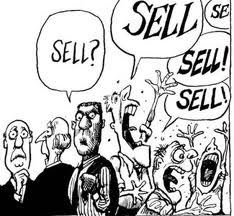
Change 101: Sell-Sell-Sell and then Strategy-Strategy-Strategy

Welcome to O.D. Fridays at DonorDreams blog. Every Friday for the foreseeable future we will be looking more closely at a recent post from John Greco’s blog called “johnponders ~ about life at work, mostly” and applying his organizational development messages to the non-profit community.

In a recent post, John talked about the importance of “selling problems,” and he wasn’t referencing issues that sales teams experience. He literally meant taking your organization’s problems / challenges and selling them as things that must be solved.

A few weeks ago, I attended Boys & Girls Clubs of America’s Midwest Regional Conference as an exhibitor and trainer. One of the sessions I presented was “Transformation: Driving Lasting Change at Your Club“. In that training, I shared with participants a six stage process for leading change that I learned at a change leadership training offered by Linkage Inc.

Here are the six stages to that change model:

  1. Make the case for change
  2. Enlist stakeholders to develop vision & strategy
  3. Communicate the vision and strategy
  4. Remove barriers
  5. Set milestones & acknowledge progress
  6. Reinforce the change

If you click over and read John’s post and then click back here to the six stage change model, you will see the first three stages all deal with “selling the problem”.

Of course, this all seems to easy when presented in blogs and six stage models. What could go wrong, right?

Well, there is always that little thing called strategy development that if done incorrectly can lead your organization down a path towards bigger problems.

Let’s look at a real world example that many non-profit organizations deal with at one time or another. This is the issue of fundraising efficiency and productivity.  Here is how I’ve seen this change initiative unfold too many times:

  • The agency needs to do better with its fundraising program.
  • The executive director sells the problem to the board. Facts, figures and charts all demonstrate the need.
  • The executive director and board members sell the problem to donors, who generous agree to help with their pocketbooks.
  • All of stakeholders agree that the strategy needs to be increased organizational capacity in the area of fundraising. The solution? Hire a fundraising professional! (or more fundraising professionals as the case may be)
  • The new fundraising professional joins the team, and the problem doesn’t get better (in fact it sometimes gets a little worse).

Huh? What happened?

In many instances, I’ve seen the executive director take a victory lap and then wash their hands of their fundraising responsibilities. The board does a similar celebration and then disengages from the resource development program. Board members think: “Phew! Thank goodness we hired that person to do all of our fundraising. Now I can focus on other things.”

Oooops! Maybe the problem was deeper and more complex.

When leading change, the first order of business for the non-profit executive director is “selling the problem”. As John points out in his example, if you can make this a self-discovery process for key stakeholders, it will be that much more powerful.

Immediately, after you secure engagement, strategy and vision development becomes critical because selling the right problem with the wrong solutions will get you nowhere fast.

I don’t mean to imply that the aforementioned strategy of hiring a fundraising professional is a wrong solution. However, understanding cause-and-effect is important and anticipating potential scenarios will help you avoid some heartache. Additionally, understanding the entire problem and being comprehensive in your strategy development is key.

Has your agency ever solved a problem without engaging key stakeholders in what the problem was in the first place? What was the result? Have you ever solved a problem and found yourself surprised that the solution didn’t solve the problem? What did you do? How did you correct course and change your change initiative? If you are a fundraising professional who has gone through what I just described, please share how you re-engaged your boss and the board and got things on track. Please use the comment box below to share your thoughts and examples.

Erik Anderson
Founder & President, The Healthy Non-Profit LLC
www.thehealthynonprofit.com 
erik@thehealthynonprofit.com
http://twitter.com/#!/eanderson847
http://www.facebook.com/eanderson847
http://www.linkedin.com/in/erikanderson847

How many undiscovered “diamonds” exist in your donor database?

Welcome to O.D. Fridays at DonorDreams blog. Every Friday for the foreseeable future we will be looking more closely at a recent post from John Greco’s blog called “johnponders ~ about life at work, mostly” and applying his organizational development messages to the non-profit community.

In a recent post, John re-told a story about an African farmer, who sold his farm to go in search of diamond mines, only to find out that the farm he sold turned out to be one of the worlds largest diamond mines. John applied the story in OD terms to your co-workers and all of their talents (aka diamonds that are unmined in your organization).

When I read this story, my mind naturally wanders to fundraising and all things having to do with donors. I think of your organization’s donor database and imagine all of the undiscovered diamonds that exist in those data records.

I commonly get asked by agencies how they can better mine those diamonds out of their donor database. After all, we’ve all heard stories about those $100/year annual campaign donors who go on to give millions of dollars to capital campaigns and endowment campaigns.

Of course, the easy 30 second answer is investing in donor analytics services like Blackbaud’s Target Analytics or WealthEngine.

I am a data-kinda-person, and these services are amazing, but . . .

The more complicated (yet amazingly simple) answer is exactly what John encourages you to do his post about the African diamond farmer. Before investing in expensive data analytics services, you really need to commit yourself to “getting to know people”. It starts with you and that is the easy part. The harder part is changing your organizational culture to embrace this idea.

I am by no means an “OD expert,” but it seems to me that changing your agency’s fundraising culture will entail some of the following:

  • hiring the right people (e.g. people who like people)
  • looking at all of your systems, identifying obstacles, and eliminating those barriers to change
  • aligning your systems (e.g. performance management systems, compensation, recognition, etc) with your new vision of “getting to know donors”

If you want to read more about change leadership, click over to John’s blog and thumb through a number of his posts on change and culture.

All of the data in the world won’t help you identify your donor database diamonds if you aren’t willing to get out of your office, sit down with your donors, and get to know them and understand their passions.

Do you subscribe to a donor analytics service, but find it a little disappointed that the big gifts aren’t magically appearing? What do you love about your analytics services? What don’t you like? How have you inspired your organizational culture to celebrate “getting to know” donors?

Please scroll down and share your thoughts and experiences in the comment box below. After all, we can all learn from each other.

Here’s to your health!

Erik Anderson
Founder & President, The Healthy Non-Profit LLC
www.thehealthynonprofit.com
erik@thehealthynonprofit.com
http://twitter.com/#!/eanderson847
http://www.facebook.com/eanderson847
http://www.linkedin.com/in/erikanderson847

Who is minding the gap at your agency?

Welcome to O.D. Fridays at DonorDreams blog. Every Friday for the foreseeable future we will be looking more closely at a recent post from John Greco’s blog called “johnponders ~ about life at work, mostly” and applying his organizational development messages to the non-profit community.

Today, we are talking about one of the most important things that your organizations must do if it wants to achieve its mission and vision of the future. We are talking about “minding the gap,” which is something John talked about in terms of strategic planning.

At the foundation of every good strategic plan (or any plan for that matter) is “gap analysis,” which John summarizes well when he says:

“Which is a pretty fancy way of saying that the team spends some time comparing the current situation with the future state.  Comparing actual performance with potential performance.  Comparing current capabilities to projected capabilities.”

When I read this, my mind wandered to the countless evaluation sessions and SWOT exercises in which I’ve participated and facilitated throughout the years. However, I then read this in John’s post . . .

“The team doing the gap analysis rarely delivers the plans necessary to actually bridge the gap and achieve the future state. Look; it’s not that the team is a bunch of do nothing know nothing stiffs.  Far from it; they are very often strong contributors, hand-picked for the job — logical, analytical; detail oriented, project planners and operational executioners.  Without them, the current state would be nowhere near as good as it is.”

Now this stopped me cold in my tracks on a Friday morning because it is a powerful and true statement. It also made my brain hurt because it raises all sorts of questions that are difficult to contemplate on only 1/2 cup of coffee such as:

  • Who do you involve in your gap analysis?
  • How do you assess who those right people are when building your prospect list?
  • How do you keep the gap assessment from feeling like a judgement on your current team?
  • Are there different groups who mind different gaps in your organization? For example, who is minding the program/operations gap? The board governance gap? The fundraising gap?
  • What role should donors play in minding the gap? How can we get over our fears around exposing donors to the data that comes out of minding the gap? (Ditto these questions for board members as it relates to staff and programming)

So, here is the take away for me this morning . . .

Spend lots of time getting the “WHO” right,
when it comes to gap assessment and planning.

If you get this wrong, then it will likely haunt you for years and years to come.

Do you have any strategic planning stories that you would like to share about how you determined who the right people were and put them in the right seat of your strategic planning bus? Please share your experiences in the comment box below.

Here’s to your health!

Erik Anderson
Founder & President, The Healthy Non-Profit LLC
www.thehealthynonprofit.com 
erik@thehealthynonprofit.com
http://twitter.com/#!/eanderson847
http://www.facebook.com/eanderson847
http://www.linkedin.com/in/erikanderson847

Non-profit board volunteers should all dress the same

Welcome to O.D. Fridays at DonorDreams blog. Every Friday for the foreseeable future we will be looking more closely at a recent post from John Greco’s blog called “johnponders ~ about life at work, mostly” and applying his organizational development messages to the non-profit community.

Today, I am focusing on a post that John wrote about “Decision Fatigue,” which is a fascinating organizational development concept that applies perfectly to so many different aspects of non-profit work life. I mean come on, John! It would be soooooo tempting to expand on the “Kissing while driving for non-profit agencies” post from March 9, 2012 and talk about the utter insanity behind most executive director’s day-to-day routines. But I won’t do that and instead decided to focus on the board of directors.

After reading John’s post this morning, I was transported back in time to March 20, 2000. I will never forget that day because it was my first day on the job as a newly minted executive director.

At the top of every new CEO’s “To Do List” is a whirlwind tour of meeting board members. This is one of the most important first tasks because you are trying to get a feel for:

  • what is going on throughout the organization
  • what personalities are sitting around the boardroom table
  • how decisions get made in the board room

When I stuck the thermometer in the turkey on March 20, 2000, it immediately registered “DECISION FATIGUE“.

This board had operated for more than six months without an executive director. Some of the people during our first meeting even told me of their plans to resign. Needless to say, within the first 90 days the board roster shrank from 20 people strong to 11 very weary individuals who bravely faced the future and simply said, “FORWARD!

The list of decisions that fatigued the board prior to hiring an executive director is endless, but here are just a few of those decisions they routinely faced:

  • Where are we meeting? What time?
  • What’s on the agenda?
  • Who is attending? Do we have quorum?
  • What materials should be distributed prior to the meeting? Who puts all of that together?
  • How do we make sure everyone is properly prepared for tough discussions and decisions at the upcoming meeting?
  • Do we have enough money in the bank to make payroll next week?
  • Which employee just quit? At which site did they work? What does that mean for operations? Is there paperwork that needs to get filled out? Who is doing THAT?
  • Who is doing what and with whom with regards to the annual campaign pledge drive that is scheduled to start next week?
  • Uh oh . . . I though we were just focusing on the pledge drive, but now we’re talking about special event planning for the dinner that is 12 weeks away. Who is doing what and with who regards to all of THAT?
  • Ummm . . . how does all of this mesh with the decisions happening at home and at my paying job?

This is just a small sampling of what was on those board member’s decision-making list.

One of the most interesting things I found in my first 90 days was the board decision made right before they hired me. It was the decision to stop meeting monthly and only meet every other month. When I asked why they made this decision, they said that their monthly meetings had gotten way out of hand and too long. Those meetings apparently lasted sometimes three or four hours!

Like you, I scratched my head, and asked how in the world that decision made any sense.

If you think about it for a moment and put yourself in their shoes, it makes perfect sense:

  • They were tired.
  • They needed more time between meetings to re-group.
  • This allowed them to “empower” the executive committee to make decisions for the board during the off-months (e.g. dump the tough work on a smaller group of people).

I don’t need to tell you how damaging that decision was to the agency’s health, but it made sense when you look at it through a “decision fatigue” filter. It took me almost three years to get them to reverse their decision and start meeting every month again.

It is the job of the executive director to help the board avoid “decision fatigue”.

Good non-profit executive directors support the work of their board by facilitating and assisting with everything including:

  • developing agendas
  • taking meeting notes
  • recruiting new board volunteers
  • supporting committee work
  • helping board volunteers process tough issues and position them for making tough decisions in the boardroom
  • supporting all of the planning work that occurs ranging from strategic planning to special events
  • And much, much more!

So, I titled this blog post the way I did because of the Vanity Fair article that John cited in his blog post. In that Vanity Fair interview with President Obama, they explain why the President is almost always seen in blue or grey suits. Of course, it has everything to do with decision fatigue, and this got me giggling about non-profit board volunteers as I envisioned a boardroom full of volunteers wearing the exact same thing.

Hmmmm . . . perhaps board tee-shirts might not be a bad idea.  😉

Is your board tired? Have you given any thought to why? What role have you played in their fatigue? What could you be doing differently? Here’s a thought . . . if this is something with which you’re struggling, use the comment box below to ask a few questions of your fellow non-profit peers and see what they have to say. Or if you have a great success story, please feel free to share that as well.

Here’s to your health!

Erik Anderson
Founder & President, The Healthy Non-Profit LLC
www.thehealthynonprofit.com 
erik@thehealthynonprofit.com
http://twitter.com/#!/eanderson847
http://www.facebook.com/eanderson847
http://www.linkedin.com/in/erikanderson847

Non-profit inside-the-box thinking: Sell-Sell-Sell ! ! !

As promised in last Friday’s post, I dedicated Tuesday, yesterday and today to challenging proponents of “outside-the-box thinking” and examining various “inside-the-box thinking” principles. This week’s posts were determined by DonorDreams blog subscribers who took the time to voice their opinions via a poll last Friday. Thank you to those of you who voted. Additionally, the foundation of these posts are rooted in Kirk Cheyfitz’s book “Thinking Insider The Box: The 12 Timeless Rules for Managing a Successful Business.” 

DonorDreams blog subscribers voted to hear more about chapter six of Cheyfitz’s book, which is titled “The Marketing Box: Unifying the Whole Business”.

I love how the author starts each chapter with a short sentence that serves as “food for thought”.  The following is how chapter six started:

You should be selling all the time.”

This is a complex chapter and a little mind-bending because the author contends that the average person’s idea about marketing is all wrong. Most people equate marketing with advertising, when in reality it is much bigger. He says in the book:

“Economists, academics, and marketing professionals have come to see marketing this way — as the single discipline that embraces and unites virtually every aspect of business activity. Marketing: Guides production . . . Governs distribution . . . Controls advertising, promotion and all marketing communications . . . Peter Drucker has written that business’s only purpose is “to create a customer,” and because of that, “marketing and innovation” are the two basic functions of business”.

Well . . . WOW! In a nutshell, Cheyfitz is saying:

Marketing is everything and

successful businesses do it all the time!

As I said in yesterday’s post, this concept is a little difficult to apply to non-profit corporations because the word “customer” usually conjures up images of clients and donors (or both) depending on which chair you sit in. Unlike yesterday, I won’t limit today’s blog to just talking about donors. I will attempt to GO GLOBAL.

I could probably write pages and pages on this topic because there is a lot of ground to cover. Instead, I will start a laundry list of examples and hand-off the baton to you so you can continue it in the comment section.

The following are just a few examples of  marketing (and you will see how it unifies everything we do):

  • How your program staff talks to and treats clients is marketing because it shapes the perceptions of your brand in the community among volunteers, donors, potential staff, prospective donors and future board members.
  • The decision to create a new program and write a big grant to get it off the ground is marketing. You are sending messages to people around you about what is important and what is a priority. These messages get picked up by volunteers, staff, clients, and donors. They in turn amplify these messages throughout the community. These actions and messages will even impact the long-term sustainability of your new program depending on donor perceptions.
  • Sticking with the creation of new programming from the last bullet point . . . talking with clients and prospective clients before making the decision to offer that new service is marketing. If your new program doesn’t fill a community need and your actual or potential clients, then it is your initiative will likely failure (which will likely have a ripple effect among donors, etc).
  • How and what the executive director says to or does with their staff is marketing. When they tell co-workers that the agency has challenges, it impacts staff turnover and in turn affects program quality and how the donor community’s perceptions of their investments.
  • Talking to volunteers and donors before developing another special event fundraiser is marketing. You need to determine if people will support this new idea before investing time and money into developing it.
  • What an executive director includes in the board packet and says in the boardroom is marketing. All of those messages get amplified by your community ambassadors (aka board volunteers) on the street when they’re networking.

Cheyfitz tells us that marketing happens pre-production, during production, and definitely after production. In non-profit terms, it happens before the donor writes the check, during the solicitation process, and in-between gifts for the duration of your relationship with that donor. More specifically, marketing happens during every waking moment of a non-profit professional’s life in their dealing with staff, volunteers, clients, board members, donors, and the community-at-large.

At the end of this chapter, Cheyfitz offers six different tips on how to build your organization’s box rather as opposed to thinking outside of it. I won’t ruin the surprise (because you should buy this book and read it), but I will share two of his tips to whet your appetite:

  1. Marketing (in other words everything you do) must unify every aspect of a business around one purpose: creating a customer.
  2. Every time a company touches a customer, there is an opportunity to win or lose that customer. These opportunities must be maximized, not avoided.

How does your organization see and approach “marketing”? Are you trying to thread the idea of marketing throughout everything you do? If so, can you share a few examples? How do you prepare others (e.g. staff, board members, etc) to communicate and demonstrate what your agency is all about? Please share your thoughts in the comment box below.

Here’s to your health!

Erik Anderson
Founder & President, The Healthy Non-Profit LLC
www.thehealthynonprofit.com 
erik@thehealthynonprofit.com
http://twitter.com/#!/eanderson847
http://www.facebook.com/eanderson847
http://www.linkedin.com/in/erikanderson847

Uh oh . . . you’re thinking outside-the-box again

Welcome to O.D. Fridays at DonorDreams blog. Every Friday for the foreseeable future we will be looking more closely at a recent post from John Greco’s blog called “johnponders ~ about life at work, mostly” and applying his organizational development messages to the non-profit community.

Today, I am not really “focusing” on John’s recent post about inside-the-box thinking, outside-the-box thinking, and just plain old reconstruction of your box thinking. Instead, I’m using his post as a springboard to set-up deeper discussions next Tuesday, Wednesday and Thursday on specific “inside-the-box thinking” topics pertaining to the non-profit community.

When I was a young executive director a decade ago, I decided a few years into my tenure that I probably didn’t know everything there was to know about running a non-profit organization and a business. So, I committed myself to becoming a lifelong learner about such things. I started reading various manuals that our national organization published. I used Google to search for online articles. I especially loved going to Borders book stores on weekends and purchasing business books.

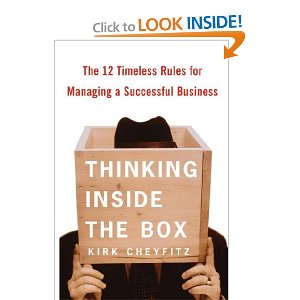
When John talked about the importance of organizational leadership and building new boxes where employees can be productive again, it reminded me of a book I once read and still sits on my bookshelf. The author is Kirk Cheyfitz, and the book is titled “Thinking Inside The Box: The 12 Timeless Rules for Managing a Successful Business“.

After reading a sentence or two from that short promotional passage on the inside cover, purchasing the book was a forgone conclusion. It was these words that hooked me and succinctly captures the essence of the book:

For the past decade and more, everyone in business was told that success in a rapidly changing world required constant “thinking outside the box.” The result has often been financially and ethically disastrous. Now, in a radical reassessment of what really works, this book shows that the business world lost its way when it forgot how to think inside the box.”

Hmmmm? Re-reading those same words today now makes me think about Wall Street, mortgage-backed securities, derivativesand the economic crash of 2008. However, I will resist the temptation of going down that rabbit hole this morning.

There are many things that stick with me 10 years after reading this book. One of the biggest things is what goes through my mind every time I hear a non-profit executive director say those magical words:

“Thinking outside-the-box”

I don’t conjure up images of “innovation” or “leadership” like many other people apparently do. The first thing that runs through my head is “uh-oh, they’re in trouble”.  For me, the phrase “thinking outside-the-box” represents all of the following:

  • magical thinking
  • hope (which is not a strategy)
  • abandonment of best practices

I believe there are some “business practices” that are timeless and always work regardless of which sector you’re working and in what boxes you find yourself. Abandoning those practices in the name of “outside-the-box thinking” is what gets you in trouble.

For example, the following are just a few of the chapter titles you will find in the book:

  • The Money Box: Cash Is Everything . . . If you don’t manage your cash, you won’t be managing anything for long.
  • The Box Top: Customers Are the Boss . . . Give customers what they want, not what you want to give them.
  • The Basic Box: Some Things Never Change . . . Know the difference between what will change and what won’t, and pay attention to the former.
  • The Marketing Box: Unifying the Whole Business . . . You should be selling all the time.
  • The People Box: Hire Smart or Manage Hard . . . When it comes to people, you can hire smart and get out of the way, or you can run yourself ragged micromanaging.

There are many more chapters with equally thought-provoking business practices. Every new non-profit executive director should read this book.

Next week I will choose three chapters and go in-depth on those subjects in a way that speaks to the challenges non-profit leaders face every day. I also will pull stories from my non-profit experiences to illustrate those points and have a little fund along the way.

Using the poll below, please vote for three ideas that interest you the most. If you’re a subscriber and reading this as an email, you may not be able to vote (you never know … please try). If you find that you can’t vote from the email copy of this post, please click the hyperlink blog post title, which will take you to my WordPress blog site and cast your vote there. I am genuinely interested in your opinion and need help shaping next week’s content. Please?

[polldaddy poll=6533936]

For the love of God, it is 2012 and it is a Presidential Election year. Please vote!

Have you ever done something that you and others considered “outside-the-box”? If so, what was it? Did it work? How do you know it worked? Would you have been better off building a different box per John Greco’s suggestion? Please weigh-in with your thoughts using the comment box below (and please take 5 seconds to cast your votes).

Here’s to your health!

Erik Anderson
Founder & President, The Healthy Non-Profit LLC
www.thehealthynonprofit.com 
erik@thehealthynonprofit.com
http://twitter.com/#!/eanderson847
http://www.facebook.com/eanderson847
http://www.linkedin.com/in/erikanderson847

Non-profit board work that moves the needle

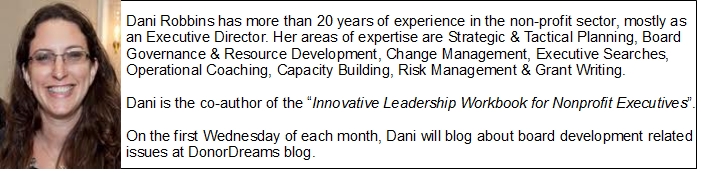
Dani Robbins is the Founder & Principal Strategist at Non Profit Evolution located in Columbus, Ohio. I’ve invited my good friend and fellow non-profit consultant to the first Wednesday of each month about board development related topics. Dani also recently co-authored a book titled “Innovative Leadership Workbook for Nonprofit Executives” that you can find on Amazon.com. 

I’ve given a lot of thought lately to how the work of the Board gets done. Mostly, it’s by decisions made in meetings and in-between meetings. Board members go to a lot of meetings, committee meetings, board meetings, and meetings with the executive director. Additionally, there’s work to do between meetings,  and it all leaves me wondering:  Where’s the strategy? Where’s the generative thinking? Where’s the advocacy? Where’s the impact? How do we know?

Boards approve things, they review things, they talk about things, but . . .

Are they the right things?

Boards have to have a quorum.  approve financials and meeting minutes, and a whole host of other things. Hopefully, Board members also represent the agency in the community, understand and talk about programs, support and evaluate the executive director, raise money, and give money. These are their fiduciary responsibilities. But surely, this isn’t all we have our Board members doing. They are the pillars of our community. They are smart, professional and talented people, but . . .

Are we correctly utilizing their collective brain power?

Have they decided upon a strategic direction? Have they discussed the underlying causes that created the issue the organization originally was created to address? I am hearing a resounding chorus of NO!

All too often, there is no plan, strategic or even tactical. There are no metrics. There is no discussion of root causes, alternative options or new ideas. There are talented people sitting in a room because they care about the mission of the agency –- and in certain, but by no means all cases — we are wasting their time. And as such we are wasting our resources.

Strategic planning has fallen out of favor. It kills me to say it, but it’s true. Most Board members have sat through at least one planning session, often more, that were long and boring; yet they sat there in an effort to decide the mission and direction of an agency. And as a prize for their dedication, they got to spend two hours debating if they were going to use the word “a” or “the” in the mission statement. Then, when they were – thankfully – finished after days or months and considerable expense, the plan sat on a shelf, collecting dust, never to be seen again.

It doesn’t have to be like that.

In the article, “Governance as Leadership; An Interview with Richard Chait,” Chait discusses his book “Governance as Leadership” (BoardSource) which “recommends reframing board work around “three modes” of governing. The first is the fiduciary mode, in which the board exercises its legal responsibilities of oversight and stewardship. The second is the strategic mode, in which the board makes major decisions about resources, programs and services. The third is the “generative” mode, in which the board engages in deeper inquiry, exploring root causes, values, optional courses and new ideas.”

You may be wondering how to add generative and strategic to your meetings.

Strategy” is all about connecting the resources to the goals, which, of course, requires having strategic goals.  If you don’t, I encourage you to read my previous blog about wheel spinning and begin to discuss planning.

Generative” is a much deeper conversation about the underlying issues and how to impact them.  Chait presents governance discussions as ones that “select and frame the problem.”   In other words, we’re no longer talking about impact or program outcomes or even the agency itself, we’re talking about how we  — our city, community, country or even world –- got here and what it takes to get out of here.

Chait explains it best when he says,

“Committees need to think not about decisions or reports as their work product, but to think of understanding, insight and illumination as their work products.”

In order to use the collective brain power of our Boards to move our agencies forward, we have to move into strategic and generative governance, while still meeting our fiduciary obligations. The board president and the executive director can, should, and I would submit, have the obligation to use the collective brain power of their board to move the needle. It’s why we’re here. In the absence of that, we approve things, we attend meetings and we go through the motions, but nothing happens.

I want something to happen . . . I want the world to change.

What’s been your experience? How have you utilized the talent on your Board to move the needle? I welcome your comments.

Don’t sing the ‘goodbye song’ to your non-profit donors

Welcome to O.D. Fridays at DonorDreams blog. Every Friday for the foreseeable future we will be looking more closely at a recent post from John Greco’s blog called “johnponders ~ about life at work, mostly” and applying his organizational development messages to the non-profit community.

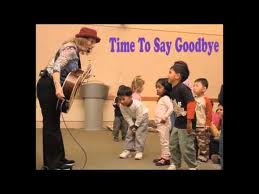
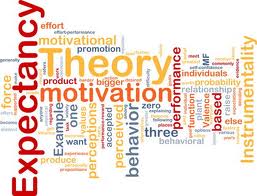
Today, I am focusing on a post that John wrote about attribution theory and contingency theory based upon a “classroom song” story that a friend shared with him over a fierce game of Scrabble. After reading his post, a song jumped into my head from my days at Grace Pre-School in Mount Prospect, Illinois. It goes something like this:

“Grace Pre-School is over and its time for us to go home;
Goodbye, goodbye;
Be always kind and good;
Goodbye, goodbye;
Be always kind and good.”

That was the song we sang at the end of the day when it was time to pack-up and go home. I can’t believe how four decades later that song sprung into my head as conveniently as if I had just sung it yesterday.

At the ripe old age of four, that pre-school song helped me bring the school day to a close. It reminded me to put my toys away, say goodbye to my friends, get my coat and bag, find my Mom, and leave the building without shedding a tear. It only worked within the confines of the church that housed my pre-school program. It didn’t result in me being “kind and good” . . . you can ask my Mom and she’ll tell you that I could be a terror on certain days.

To think that singing my pre-school — anywhere and anytime — would yield the same results or “cause” me to be “kind and good” is quite simply misattribution.

In the non-profit fundraising world, we do this all the time with donors and it goes something like this:

  • Contribution comes into the office,
  • The contribution is entered into the donor database,
  • The computer generates a thank you letter that is sent to the donor,
  • The donor gets added to a newsletter mailing list, and they receive a few newsletters,
  • Another solicitation is made that results in another contribution.

Cha-ching!  The donor is conditioned. The money rolls in. It is oh so simple. I can almost hear fundraising professionals singing a song that goes something like this:

[youtube=http://www.youtube.com/watch?v=Wq3tVrTFcKk]

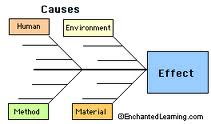
Cause and effect is such a great thing until you realize that you’ve attributed the wrong stimulus to the wrong results.

Penelope Burk, CEO of Cygnus Applied Research, does a great job in this interview with The Chronicle of Philanthropy of debunking the myths associated with singing the donor song. She points to research illustrating how the average non-profit loses 50% of donors somewhere between their first and second contribution to their agency.

Huh?  I wonder if those fundraising professionals mistakenly sang my pre-school “goodbye song” to their donors instead of the “money song”.  LOL

All kidding aside, Burk is the queen of “Donor-Centered Fundraising” which tells us that cookie cutter approaches to donor stewardship result in high turnover rates. Donors stop donating because they feel “over-solicited”.  Many fundraising professionals hear this and think that fewer solicitations are the remedy. This conclusion is simply not true. Burk does a great job of explaining the subtle nuances behind “over-solicitation” in The Chronicle of Philanthropy interview:

“. . . over-solicitation is not a frequency of asks in a set period of time; rather, it is being asked to give again before donors are satisfied about what happened with their last gift.”

Let’s bottom-line this . . .

  • Every donor is like a snowflake — they’re different.
  • Everyone has a different threshold for what they need to see in order to be satisfied about what happened with their last gift.
  • No one responds to the same stewardship activities the same way.

When Burk talks about being “donor-centered,” she is really saying that we need to get to know our donors individually. We need to craft stewardship strategies around donors’ needs and preferences in order to avoid “over-solicitation”.

Am I hearing some of you mutter words like “crazy” and “impossible“? If so, then I encourage you to dwell and explore the following ideas:

  • database contact records
  • segmentation
  • surveys
  • discussions
  • focus groups
  • stewardship plan

My parting advice to you is stop misattributing the “money song” to securing donations because you are losing half of your donors after their first contribution and 90% by the fifth gift. Read up on the concepts of “Attribution Theory” and “Contingency Theory” and stop singing the “Goodbye song” to your donors.

How does your non-profit organization customize its stewardship activities to individual donors? Do you just do so for your major gift prospects? Where do you store your individualized stewardship plans? What role does your donor database play in managing your Moves Management program? Can you share your success results? Did your donor loyalty rate improve?

Here’s to your health!

Erik Anderson
Founder & President, The Healthy Non-Profit LLC
www.thehealthynonprofit.com 
erik@thehealthynonprofit.com
http://twitter.com/#!/eanderson847
http://www.facebook.com/eanderson847
http://www.linkedin.com/in/erikanderson847
Reaching for the stars? Do your homework first!

Welcome to O.D. Fridays at DonorDreams blog. Every Friday for the foreseeable future we will be looking more closely at a recent post from John Greco’s blog called “johnponders ~ about life at work, mostly” and applying his organizational development messages to the non-profit community.

Today, I am focusing on a post that John wrote that was inspired by the following quotation from Robert Browning:

Ah, but a man’s reach should exceed his grasp, else what’s a heaven for?”

He uses Browning’s words to springboard off into two significant issues that every non-profit organization confronts during strategic planning.

  1. How lofty should the strategic goals be?
  2. What capacity building efforts need to be undertaken to support the new vision and strategic goals?

If you’re a non-profit professional who dislikes strategic planning, I suspect that John’s blog post might speak to you. I also suspect it will give you a much-needed new perspective before heading into your next strategic planning initiative.

While it is tempting for me to use John’s post to get on a soapbox and pontificate about strategic planning, I will resist doing so and instead talk about annual campaign planning.

As many of you know, I spent the last six years working with countless non-profit organizations on planning, implementing and evaluating annual campaigns. During the planning process, there are a variety of decisions that must be made including how big is the fundraising goal.

My approach has always been to starts off conservatively:

  • Identify prospective donors
  • Evaluate capacity to give and propensity to give
  • Set a suggested ask amount based upon what the prospect is likely to give (factoring in who is asking, giving history to the agency, and state of the relationship between the organization and prospective donor)

After going through all of these gymnastics, we have a spreadsheet with names and ask amounts. It is at this point that I urge the planning committee to sum the column of ask amounts and then divide by two.

Why divide by two? First, not everyone is going to say ‘YES’ to your request for a contribution. Second, not everyone who agrees to contribute will agree to the give at the suggested ask amount. Third, we sometimes miss the mark when setting suggested ask amounts.

This approach flies in the face of Robert Browning’s quotation and John Greco’s blog post.

But wait . . . there’s more!

Looking around the planning table, the sight isn’t pretty. Campaign volunteers are usually a little upset. All of that work and the goal seems small. The executive director or fundraising professional is wringing their hands and they look nauseated.

It is at this point that I like to introduce the idea of “reaching for the stars”.

In my opinion, timing is everything. To introduce the idea of reaching for the stars, before everyone has a realistic view of organizational and campaign capacity, is irresponsible.

Truth be told, this is my favorite part of the annual campaign planning process. Campaign volunteers are chomping at the bit to talk about what needs to be done to increase the size of the campaign goal. The following are just a few of the questions that get asked and answered:

  • How many more prospects need to be identified and added to our prospect list?
  • How many more volunteer solicitors need to be recruited?
  • Does the case for support need to be strengthened?
  • Is there more cultivation or stewardship activities that should be done prior to the solicitation that would maximize the chances of getting what we need to reach our campaign goal?

These are engaging and powerful discussions that are tons of fun to facilitate!

Finally, these conversations always end with a robust discussion about how the new annual campaign stretch goal should be included in the agency’s budget. This is where it gets interesting.

Some folks are conservative and advocate for budgeting the original smaller goal. Others want to go for it and budget the whole amount.

Over the years, I’ve given lots of different sounding advice to a number of different organizations. However, the common thread has always been that you need to have “skin in the game”. If you don’t hold yourself accountable to reaching the stretch goal, then you’ll never reach it.

Human beings normally don’t accomplish things unless we absolutely have to do so. Behind every audacious vision has been an urgent and pressing need to do it. So, whatever you end up budgeting, it needs to feel like a bit of a stretch.

In conclusion, I encourage you to set an annual campaign goal that is a bit of a stretch, but whatever you do don’t just pull the number out of the air or apply a percentage increase over last year. Do the hard work around prospecting and evaluating propensity and capacity, then conservatively divide everything by a factor of two or three.

It is only at this point that everyone will be ready to reach for the stars and focus on those capacity building questions that are necessary for success!

How has your organization set its annual campaign goals? What has worked or not worked for you? Please share your thoughts in the comment section because we can all learn from each other.

Erik Anderson
Founder & President, The Healthy Non-Profit LLC
www.thehealthynonprofit.com
erik@thehealthynonprofit.com
http://twitter.com/#!/eanderson847
http://www.facebook.com/eanderson847 http://www.linkedin.com/in/erikanderson847

Benchmarking: The non-profit sector requests your assistance!

Last week a friend and non-profit consulting colleague of mine, Kirsten Bullock, sent an email asking me to encourage DonorDreams blog readers to participate in a study that “. . . is investigating charitable contributions, fundraising methods, donor retention, and how tactics have changed in these challenging financial times.”

This study is organized and run by Nonprofit Research Collaborative. If you are someone who is suspicious of things like this, then I encourage you to click the link that I just provided and check this organization out for yourself. However, if you don’t have a lot of time to scratch around the internet, take heart in the fact that this organization and the study are supported by:

  • Association of Fundraising Professionals
  • Giving USA
  • blackbaud
  • National Center for Charitable Statistics
  • Campbell Rinker

If you have 10 minutes, then please click this link and complete the questionnaire.

Still asking yourself . . . WHY?

If you are still reading, then I assume that you’re mulling things over and probably wondering why you should click that link.  So, let me try to make the case in one simple word:

Benchmarking

According to our friends at Wikipedia, “benchmarking is the process of comparing one’s business processes and performance metrics to industry bests or best practices from other industries.”

Let’s be honest for a moment. Few people who work in the non-profit sector have time to collect data and crunch industry numbers. We’re under-resourced, and we’re usually thankful when our workday comes in under 12 hours.

So, when an organization like Nonprofit Research Collaborative takes up the cause and only asks for 10 minutes of your time, all of us should really support the cause.

Still not convinced? OK, let me try this another way . . .

  • At the end of the year, some of you will report to your board of directors that your donor loyalty rate is 64.8% . . . and they are going to ask if that is good or bad.
  • At the end of your annual campaign, some of you will report to your board of directors that of the 100 prospects and donors who received face-to-face solicitation visits by staff and volunteers 78 of them decided to make a pledge or contribute . . . and they are going to ask if that is good or bad.
  • At the end of the year, some of you will report to your board that your private sector fundraising efforts brought in 1% fewer dollars this year than last year . . . and they are going to ask if that is good or bad.

In order to answer your board’s questions, you need to provide context and that is what benchmarking is all about.

Every organization should commit itself to benchmarking activities. You should do it with your program outcomes. You should do it with your resource development program. You should do it with board development and so many other things that you do.

Not doing so essentially means that you’re collecting data for the sake of collecting data.

I assume that you don’t have the time to independently do benchmarking of the non-profit sector for comparison purposes. So, come on . . . what do you say? How about taking 10 minutes out of your crazy busy schedule, click this link, and complete this important survey.

Pretty please?  🙂

Has your organization ever completed a benchmarking project with another non-profit organization? Or how about with another company from a different sector? If so, please tell us about it in the comment box below. We’d love to know what motivated you and what you found out.

Here’s to your health!

Erik Anderson
Founder & President, The Healthy Non-Profit LLC
www.thehealthynonprofit.com 
erik@thehealthynonprofit.com
http://twitter.com/#!/eanderson847
http://www.facebook.com/eanderson847
http://www.linkedin.com/in/erikanderson847