
The Chicago Cubs Convention through non-profit eyes: Part Three

cubs logoThis last weekend I attended the Chicago Cubs Convention with my family.  As we drifted from session to session, I couldn’t help but see all sorts of blog themes and things that non-profit organizations could learn from this major league franchise. Over the last few days I’ve shared a few of these observations and hopefully stimulated a few new ideas for you and your agency. In Tuesday’s post, we talked about stewardship. Yesterday, we discussed shared vision, values, and culture. Today, I am ending this series with a few words about statistics and predictive value.

On Sunday morning, the last session of the entire convention was titled “Stats Sunday,” and the session description read as follows:

“You know what a pitcher’s ERA means and how to calculate a hitter’s batting average, but do you know what WAR stands for or how to find someone’s OPS? Baseball is full of new-age statistics. Jim Deshaies, Len Kasper and WGN’s Bob Vorwald will help break it down for us in this special offseason edition of “Stats Sunday.”

Essentially, this session was all about the things you learned about baseball scouting in the Oscar award nominated movie and best-selling book “Moneyball.”

During the hour-long session on new baseball stats (e.g. BABIP, OPS, OPS+, UZRWAR, WHIP, etc), we talked about at least 10 new statistics that help baseball scouts determine one simple question: “Will this ball player be a good addition to our team and help win more games?”

As I am apt to do, my mind started wandering during this session, and I found myself wishing that non-profits would someday develop a set of predictive statistics to improve the art of board development.

I have sat in countless board development and nominating committee meetings, and they all feel like that scene in Moneyball where Brad Pitt is talking to his “old-school baseball scouts” about free agents and they start sharing anecdotal evidence about girlfriends and physical attributes. If you don’t know what I’ve talking about, you might want to check out this YouTube movie trailer that contains a portion of that scene in it.

[youtube=http://www.youtube.com/watch?v=kFXDnhvd1WQ]

You know what I mean . . . what do the discussions sound like around your board development table?  Here are some of the things I keep hearing:

  • Are they too busy?
  • Do they serve on another board?
  • Will they say ‘YES’ if asked?
  • Who is the best person we should send to ask?
  • Do they have money? Do they donate to us or others?

Too many agencies are essentially asking: a) do they have a pulse? b) is their wallet thick? and c) will they agree to do it?
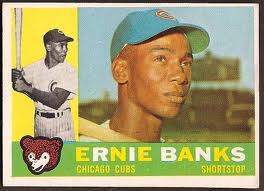
ernie banksI dare to dream about the day when board volunteers have their own “baseball-type card” with statistics on the back that measure a board member on the following concepts:

  • How active and engaged is this person in your mission?
  • How effective is this person at securing resources for your cause?
  • How many people in this person’s network have been exposed to your agency because of this person? How many became volunteers? How many turned into donors?

As the days have passed since attending this session, I now realize that smart non-profit thought leaders are working on projects like this. Of course, the board development metrics out there aren’t as fancy as what baseball scouts use, but here are a few interesting websites and resources that you may want to check out if you are thirsty for board development change and want to shake up your board development committee:
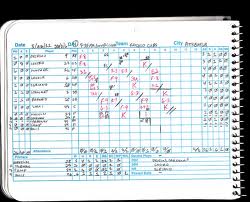
baseball scorecardDo a little daydreaming with me today. What would the back of a non-profit board volunteer’s baseball card look like? What would you like to measure? What type of predictive statistics do you wish existed that could be used in a board development committee meeting to help evaluate your volunteer prospect list?

Come on . . . take a few minutes and do some dreaming. Who knows where it might led for you and your organization. Many years ago someone just like you in Major League Baseball did the same thing and it transformed an entire industry.  Uh-Huh . . . you could very well be the next big non-profit thought leader. Please scroll down and share some of your amazing thoughts, ideas and questions in the comment section below. You don’t need to do this alone.  😉

Here’s to your health!

Erik Anderson
Founder & President, The Healthy Non-Profit LLC
www.thehealthynonprofit.com 
erik@thehealthynonprofit.com
http://twitter.com/#!/eanderson847
http://www.facebook.com/eanderson847
http://www.linkedin.com/in/erikanderson847
The Chicago Cubs Convention through non-profit eyes: Part Two

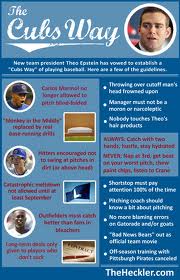
cubs way3This last weekend I attended the Chicago Cubs Convention with my family.  As we drifted from session to session, I couldn’t help but see all sorts of blog themes and things that non-profit organizations could learn from this major league franchise. I will use the next few days to share a few of these observations and hopefully stimulate a few new ideas for you and your agency. In yesterday’s post, we talked about stewardship. Today, I thought we could talk about shared vision, values, and culture.

In many of the sessions, it wasn’t uncommon for someone to reference something called “The Cubs Way Guide“. They always described this guide as an organizational manual that describes what they believe and how they do things.  Here is how President of Baseball Operations Theo Epstein described “The Cubs Way Guide” in February 2012 on the Cubs’ website:

“The Cubs’ way really boils down to the people — the players, obviously, but everyone, all the scouts and all the people in uniform in the Minor Leagues and the big leagues. For us to teach the game the right way, it’s more than words on the page. It comes down to how deep we dig to get connected to players to teach the game the right way, how much we care, how committed we are, how hard we work. There’s a lot that goes into this and building an organization.”

At Saturday’s convention, here are some of the phrases I heard people use to describe this manual and organizational resource:

  • It is a document that is a few inches thick.
  • It is what we believe as an organization.
  • It embodied the organization’s philosophy and approach.
  • It spells out how to prepare players for the big leagues.
  • It lays out for coaches at every level of the minor league and major league how to teach players how to play the game. Instruction can get as detailed as which foot hits the bag when players make a turn on the bases.
  • It lays out a vision and plan.

I walked away from each of these sessions wondering the same thing: “I wonder what such a manual might look like for a non-profit organization?

cubs way1After a few days of day dreaming about this topic, here are a few of my thoughts on what your organizational guide might contain:

  • Shared values
  • Shared vision
  • Code of ethics
  • Conflict of interest policies
  • Protocol on how to recruit community volunteers and prepare/position them for joining the board some day. (e.g. getting them involved in a committee, working a few pledge cards, etc)
  • Procedures on how to identify, cultivate, recruit, orient, train, rotate, recognize, and evaluate board volunteers.
  • Steps on how to hire new staff.
  • Rules on how to conduct outreach/recruitment of clients.
  • Etiquette on how to prepare for board meetings and committee meetings (e.g. agendas sent out a certain number of days before the meeting, meeting notes and action item memos going out a certain number of days after a meeting, elements of a productive board meeting, etc)
  • Code of behavior regarding how to engage, solicit and communicate with donors (e.g. Donor Bill of rights)

I suspect that I could make this list go on and on and on if I wanted.

If you started thinking to yourself when reading my list that you already have some of this in place at your organization, I suspect you are probably on to something. Some of this might already be included in your strategic plan, board development plan, resource development plan, stewardship plan, etc.

However, the genius of “The Cubs Way Guide” is:

  • It is all in one place, not in a series of documents sitting on a number of different book shelves.
  • It creates a central focus. It becomes the heartbeat of your organizational culture.
  • It is easy to reference.
  • It is easy to create training opportunities around it.

cubs way2

What are your thoughts about creating an organizational “How To Manual” for your non-profit organization? What would you include? Who would you involve in this project? What elements already exist that you might fold into such a manual? How would you use it to transform your organizational culture? Please use the comment box below to share your thoughts because there is nothing new under the sun and we can all learn from each other.

Here’s to your health!

Erik Anderson
Founder & President, The Healthy Non-Profit LLC
www.thehealthynonprofit.com 
erik@thehealthynonprofit.com
http://twitter.com/#!/eanderson847
http://www.facebook.com/eanderson847
http://www.linkedin.com/in/erikanderson847
The Chicago Cubs Convention through non-profit eyes: Part One

cubs6This last weekend I attended the Chicago Cubs Convention with my family.  As we drifted from session to session, I couldn’t help but see all sorts of blog themes and things that non-profit organizations could learn from this major league franchise. I will use the next few days to share a few of these observations and hopefully stimulate a few new ideas for you and your agency. Today, I want to drill down on the idea of stewardship.

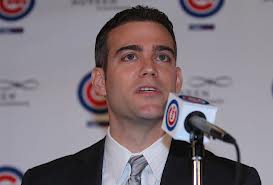
In one of the sessions that I attended, there sat Cubs General Manager Theo Epstein and the brain trust for the entire Chicago Cubs organization. There was a lot of talk about improving the stadium, improving the product of the field, and a lot of blah-blah-blah. I’ve attended a number of these conventions, and I always marvel at how I am paying them to market to me. I also can’t believe that the script never seems to change very much.

However, something struck me as very interesting this year. It was Theo’s second convention since being hired, and I heard him say this:

“The Cubs have a covenant with the fans.”

This isn’t the first time that I’ve heard him say this. I heard it at last year’s convention. I’ve heard it and read it in various media interviews. And this time it sparked the following questions and thoughts:

  • I wonder what he means by that?
  • He is emphasizing this point . . . this must be part of a larger narrative?!?!
  • This sounds and feels remarkably similar to non-profit stewardship efforts. Huh?

theoSo, I went back to the basics and looked up the word “covenant” and thefreedictionary.com defines it as follows:

“cov·e·nant  (kuv’e-nent)  noun. 1. A binding agreement; a compact.”

Of course, every time I hear this word it takes me back to my childhood and confirmation classes. There are obvious Biblical connotations.

I believe that when Theo talks about this covenant with Cubs fans, he is referring to:

  • Transparency,
  • Accountability,
  • Reporting,
  • Recognition, and
  • essentially demonstrating that the team is doing what they say they’re doing.

Isn’t this exactly what non-profit organizations mean when they talk about stewardship?  I believe so.

If you agree, then this raises another  interesting question: “With whom does your agency have a covenant?

I believe that non-profit professionals and board volunteers form a covenant with many different stakeholders such as: donors, clients, collaborative partners, staff, funding partners and institutions (e.g. United Way and other foundations), and the at-large community. While there are common threads that run through each of those covenants, there are also some unique promises being made by your organization.

Have you ever thought through this part of your social contract? If not, then I suggest this might be an interesting “generative discussion” at an upcoming board meeting.

After a little more thinking, I started identifying ways the Chicago Cubs try to hold up their end of this covenant. For example:

  • The annual convention is in part an accountability exercise where ownership, management and players open themselves up to answering questions (e.g. ticket pricing, player acquisition, organizational development philosophy, etc).
  • The Cubs talked a lot about investing time and resources last year in fan surveys and focus groups.
  • The Cubs publish a magazine called “Vine Line” in an effort to keep fans informed.

How is this any different that what some non-profit organizations do with newsletters, annual meetings, and donor communications.

As I always say . . . “We can all learn from each other.” And I do mean ALL because the Chicago Cubs Convention proves to me that there is more commonality between for-profits and non-profits than we care to admit.

What is your non-profit agency doing to fulfill its covenant? With whom do you think you have a covenant? What tactics are you using? Where do you find your inspiration and new ideas? Who do you see doing a good job with this?

Here’s to your health!

Erik Anderson
Founder & President, The Healthy Non-Profit LLC
www.thehealthynonprofit.com 
erik@thehealthynonprofit.com
http://twitter.com/#!/eanderson847
http://www.facebook.com/eanderson847
http://www.linkedin.com/in/erikanderson847

Are you a “Fred the Baker” type of non-profit leader?

building train tracksWelcome to O.D. Fridays at DonorDreams blog. Every Friday for the foreseeable future we will be looking more closely at a recent post from John Greco’s blog called “johnponders ~ about life at work, mostly” and applying his organizational development messages to the non-profit community.

In a post titled “Tracking,” John talks about the power of planning by sharing an amazing story about a stretch of mountains in the Alps that is next to impossible to pass. Instead of waiting for the train technology to catch up, Europeans decided years ago to build train tracks through that part of the mountains in anticipation that train technology will one day produce an engine with enough horsepower to get the job done.

Reading John’s post made me think of the countless non-profit executive directors and fundraising professionals who take on the role of “Fred the Baker” instead of embodying the spirit of those European planners who built those train tracks.

What? You don’t remember who Fred the Baker is? Check out this YouTube video and ask yourself this simple question: “Do I look like this every day and evening on my way to and from my non-profit job?”

[youtube=http://www.youtube.com/watch?v=petqFm94osQ]

The story that immediately comes to mind and is very common and why many non-profit organizations can’t seem to get a major gifts program off the ground. When asked what is stopping them from building the capacity to add a major gifts program to their fundraising program, the explanation looks and sounds remarkably like “Fred the Baker”:

  • The day-to-day, month-to-month routine is so fast and mundane that there is no time for planning.
  • In January, we do the dinner.
  • In February-March-April we do the annual campaign.
  • In May we do the golf outing.
  • Etc, Etc, Etc

I recently had the privilege of working with a group of non-profit volunteers who said . . . ENOUGH . . . let’s build some train tracks.

They understood the following:

  • They didn’t have the right staff in place to implement a major gifts initiative.
  • Their technology (e.g. donor database) needs a lot of work to support an initiative like this.
  • Their resource development practices and systems need to change (e.g. stewardship)
  • They might even need to change the people sitting around the table.

Yet, none of this stopped them from working on those train tracks. They made it a goal in their resource development plan to some day have a fully functional major gifts program. They then look realistically at what they could start doing rather than what they couldn’t do and came up with the following handful of objectives for this year:

  • Develop an internal case for support.
  • Develop a menu of gift opportunities.
  • Identify a small handful of potential major gift prospects.
  • Develop personal confidential personal strategy plans for each prospect.
  • Engage in implementing each plan and start cultivating.

They are laying train tracks for the future and doing what they can today in anticipation for what they want to happen tomorrow.

How are you ensuring that you and the folks at your agency are NOT “Fred the Baker”? Do you use the planning process (e.g. strategic plan, board development plan, resource development plan, marketing plan, program plan, etc) to lay future train tracks for your organization? Do you have a great success story that you want to share? Please scroll down and use the comment box to jump into this discussion because we can all learn from each other.

Here’s to your health!

Erik Anderson
Founder & President, The Healthy Non-Profit LLC
www.thehealthynonprofit.com 
erik@thehealthynonprofit.com
http://twitter.com/#!/eanderson847
http://www.facebook.com/eanderson847
http://www.linkedin.com/in/erikanderson847
Managing the dualism of being a non-profit board volunteer

dissonanceI recently came to the conclusion that there is a strange dualism surrounding the roles and responsibilities for a volunteer serving on a non-profit board. These two different roles can compete with each other and create a weird destructive dysfunction if non-profit staff don’t do their job and keep things in check.

A few months ago I witnessed something that my mind just couldn’t process, and it has been rolling around inside my head ever since. Let me try to summarize it:

  • Non-profit staff recruit a volunteer to join their board.
  • The volunteer happily joins.
  • Staff work hard to get the volunteer engaged in various projects.
  • The volunteer happily gets engaged.
  • Staff try engaging the volunteer at an action plan level of a particular project (e.g. specific tasks, deadlines, etc).
  • The volunteer become the chairperson.
  • Instead of doing what is expected of a chairperson, the volunteer turns around and acts like staff works for them and starts re-assigning tasks to staff.

A little too abstract. OK, let me provide an example to clear things up.

Once upon a time, a board volunteer agreed to chair a special event committee. Once they agreed to provide leadership to the committee, they started tasking staff with doing things that might otherwise be considered the role of the chair. Here are a few examples . . . 1) please email the committee and tell them I wish to meet at a certain time and location, 2) please recruit the following volunteers to sit on my committee, 3) please check on a certain volunteer and make sure they are doing what they said they would do.

In this example, staff recruit a volunteer chairperson to help them accomplish some work. The end result is that the volunteer acts like staff works for them and sees their role/responsibilities as telling staff what to do. Staff scratch their head wondering why they needed to recruit a volunteer because they know what needs to happen . . . they needed help doing those things and not someone to tell them what to do.

Believe it or not, I see this happen all the time and I now have a theory.

The following is an excerpt from Guidestar on the subject of non-profit board roles and responsibilities:

“Nonprofit board members have two basic responsibilities—support and governance—each requiring different skills and expertise. In the role of “supporter” board members raise money, bring contacts to the organization, and act as ambassadors to the community. Equally important, the “governance” role involves protection of the public interest, being a fiduciary, selecting the executive director and assessing his/ her performance, ensuring compliance with legal and tax requirements, and evaluating the organization’s work.”

I think I see a weird dissonance starting to form between these two basic responsibilities.

Huh?

Well, one of the basic roles of a nonprofit board volunteer is “SUPPORT” . . . which I read as rolling up ones sleeves and helping get stuff done. The other role is “GOVERNANCE” . . . which I read as making sure certain things are getting done and providing some oversight.

Am I over-generalizing to make a point? YES, but I think I am still going somewhere.

If clarity isn’t established from the very beginning, it is reasonable to expect confusion. It is from here that I believe situations and examples that I provided earlier grow legs and get ugly.

If non-profit staff want to avoid these weird sand trap situations, they need to be serious about using best practices when it comes to volunteer identification, recruitment, and management.

  • Use a written job description
  • Seriously engage volunteers in orientation and continuous training opportunities
  • Invest time in evaluation and work on creating a culture of honest feedback

I think it is also important to mention here that providing a volunteer with a written job description is not where the magic occurs. Learning and understanding comes from the frank and honest discussion that occurs during the recruitment meeting. For example, the job description is the “MEANS” and not the “ENDS“.

Have you ever had to deal with a situation like this? How did you fix it? What tools and processes do you use to set expectations up front with volunteers to avoid confusion and role blurring down the road? Please use the comment box below to share your thoughts. We can all learn from each other.

Here’s to your health!

Erik Anderson
Founder & President, The Healthy Non-Profit LLC
www.thehealthynonprofit.com 
erik@thehealthynonprofit.com
http://twitter.com/#!/eanderson847
http://www.facebook.com/eanderson847
http://www.linkedin.com/in/erikanderson847

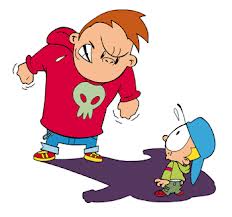
Dealing with bullies in your non-profit boardroom

bullyI was just talking to a group of volunteer board members and the topic turned to “bullies in the boardroom”. I suspect that you know what I am talking about. This person takes many different forms, such as:

  • The need to always be right.
  • They dominate the conversation.
  • They may talk over other people.
  • They get angry and aggressively assert their opinions.
  • They mock people who don’t agree.

As you might imagine, a conversation like this quickly turns to the question: “How do you handle board volunteers like this?

Being a former youth development professional, I decided to look for general resources on how to deal with bullies and see if there might be commonality between how to deal with a school yard bully versus a boardroom bully.

I actually found a really good blog post at wikiHow titled “How to deal with bullies” and there was some very nice advice that crossed over such as:

  • Show minimal reaction to bullying
  • Help others
  • Do not make jokes at your own expense to try to prove that there is nothing they can do to hurt your feelings

Of course, some of the other suggestions fell flat for me like “Take Karate”. LOL  If you have a moment, I really suggest that you click the wikiHow link and scan that article because bullying is a big deal issue in all walks of life.

There are two other thoughts that immediately come to mind when discussing this topic:

  1. Board development
  2. Firing board members

 Board Development

You can solve your agency’s bully problem before it even starts if you get serious about board development. Your recruitment process should not be hasty. It should feel like a dating process with multiple steps. For some reason, that song “Getting to Know” from The King & I comes to mind. Do I need to say any more?  Click here to visit the National Council of Nonprofits’s webpage if you need some basic board development tools for your agency.

Firing a volunteer

I always hate this discussion because I believe it should never get to this point. However, a bully in the boardroom is an intolerable situation, and it needs to always be dealt with. There is no easy way to do this, and it is always done with a nervous stomach. I could write page on this subject, but our friends at Nonprofit Hearts did a nice job with a post they titled “Firing a Board member with grace“. I suggest you click over and read what they have to say. They even do a nice job with dialog.

Have you ever had to deal with a bully in your nonprofit boardroom? What did you do that seemed to work? How did it turn out. We can all learn from each other. Please use the comment box below to share some of your thoughts and experiences.

Here’s to your health!

Erik Anderson
Founder & President, The Healthy Non-Profit LLC
www.thehealthynonprofit.com 
erik@thehealthynonprofit.com
http://twitter.com/#!/eanderson847
http://www.facebook.com/eanderson847
http://www.linkedin.com/in/erikanderson847
Is your non-profit board of directors engaged?

Dani Robbins is the Founder & Principal Strategist at Non Profit Evolution located in Columbus, Ohio. I’ve invited my good friend and fellow non-profit consultant to the first Wednesday of each month about board development related topics. Dani also recently co-authored a book titled “Innovative Leadership Workbook for Nonprofit Executives” that you can find on Amazon.com. 

involvement3It’s a new year, which is always a great time to take a look at processes and systems. I especially encourage you to look at the level of engagement of your Board. They are — or should be — your biggest donors and your best ambassadors. Are they?

One of the most obvious signs that a Board is disengaged is when you’re experiencing quorum issues. If you routinely have challenges with not having enough Board members in the room to make decisions, I recommend you take a look at how your board was built and how it is being developed.

Is your Board built intentionally?

Intentionally looks like this:

There is a Board Development (also called nominating or governance) Committee that assesses the strength of your current Board, looks at the gaps, and puts together a list of prospects that are later vetted and voted upon, to fill those gaps. The committee also plans for officer succession, Board education and evaluation.

Unintentionally looks like this:

A Board member invites someone to join the Board without a discussion with the Board Development Committee as to what the Board needs, or what the expectations for service are. The person is not vetted, or told of the commitment required. There is no formal process that is followed, no education and no evaluation. Yet, the person is voted upon and joins your Board.

Once the Board is in place, regardless of if it was intentional or not, the next question is:

Is your Board engaged and are members being developed?

involvement2Engagement looks like this:

The vast majority of Board members are in the room for most meetings; you have 100% Board giving; each member acts as an ambassador in the community; and your events and public meetings are well attended by members who bring friends and colleagues. The Board understands the organization’s mission, programs and impact; participates in robust discussions; and actively seeks ways to support the Executive Director and the organization.

Disengagement, on the other hand, looks like this:

People stop coming to meetings, which results in quorum issues. They stop coming to events. They stop volunteering for things. They stop giving or supporting the organization.

Once your Board becomes disengaged, quorum issues, which maybe the most obvious, are only the tip of the iceberg. The problems underneath the surface include a lack of understanding of some or all of the following:

  • their role,
  • the executive director’s role,
  • the finances,
  • the mission and strategic vision for the organization, and
  • how programs support that vision.

By now you may be wondering about the level of engagement on the Board you serve.

involvement1Some questions for your consideration:

  • Are Board and committee meetings productive, engaging and worth the time to attend?
  • Does the Executive Director meet individually, at least annually, with Board members?
  • Is there a plan that everyone is aware of and working toward?
  • Are there strategic and generative discussions happening in the boardroom?
  • Is there meaningful work for individual board members to do?

If the answer to any of these questions is “NO” or “I don’t know,” then I encourage you to put a plan in place to move your answers to “YES”. Talk to your Board members individually and ask about engagement. Ask about how they would like to be engaged, why they joined the Board and how you can make their experience more meaningful.

For the organizations with which I work I encourage:

  • a written plan detailing an intentional process to build and develop the board;
  • annual retreats to set or re-commit to strategic goals;
  • board training on everything from how to read the financials, to raise money, to the role and responsibilities of the Board; and
  • an annual evaluation process that assesses individual members as well as the entire board against the expectations and the organization’s aspirations.

Board engagement is critical to building an organization that moves the needle and impacts the community!

What’s been your experience? As always, I welcome your experience and insight.
dani sig

What your non-profit agency can learn from the congressional fiscal cliff debate?

procrastinationI hope your New Years celebration was fun, safe and full of family and friends. Welcome to 2013 and an exciting new opportunity for you and your non-profit organization.

Rather than host a party this year, John and I went over to our friend’s — Lynn & Maggie — house and spent the night rather than worrying about driving home on New Years Eve. When we woke up on New Years Day, we turned on CNN to see what (if anything) had happened with the congressional fiscal cliff negotiations and debate in Washington D.C.

While watching the coverage, Maggie innocently asked, “Why do these guys always wait to the last-minute to make such important decisions?

As I chewed on her question, I realized this isn’t just a problem that haunts Congress. I see my for-profit friends struggle with the issue of procrastination. I also see many of my non-profit clients struggle with it.

While there are likely many reasons for procrastination (e.g. not having enough resources to adequately staff your agency or not being able to construct a reasonable annual performance plan), I discovered after some clicking around online that our friends at Psychology Today believe it goes much deeper than what you may think.

Rather than ruin the surprise, click here to read what Psychology Today. (Spoiler alert: Freud was wrong. It wasn’t because of your mother, but it may have something to do with your father. Uh-oh!)

After reading the online article about ‘WHY‘ I started clicking around for some answers about ‘WHAT‘ to do about this. Click here to read a post over at Lifehack blog titled “11 Practical Ways to Stop Procrastination”.

Honestly, I don’t think Congress played a game of chicken with the fiscal cliff and continues to risk a double dip recession because they are chronic procrastinators. I suspect this continues to happen because when you’re engaged in a negotiation, time plays a role when it comes to gaining leverage.

However, non-profit professionals such as yourself shouldn’t ignore the awesome question that Maggie asked on the morning of New Years Day. If you or your employees are procrastinations or if procrastination is embedded in your organizational culture, you might want to make a New Years resolution to tackle it in 2013. Why? Because this kind of behavior leads to dysfunction, drama and nothing good for your agency.

I hope you enjoyed the two links pertaining to the ‘WHY’  and ‘WHAT’. If you have other online resources to share, please do so in the comment box below because I’ve made this one of my New Years resolutions, too.

[Editors Note: By the way, please remember that we’re still on an irregular blog posting schedule this week and won’t resume “normal and routine” until next week — January 7-11.]

Happy New Year and . . . Here’s to your health!

Erik Anderson
Founder & President, The Healthy Non-Profit LLC
www.thehealthynonprofit.com 
erik@thehealthynonprofit.com
http://twitter.com/#!/eanderson847
http://www.facebook.com/eanderson847
http://www.linkedin.com/in/erikanderson847
And now the rest of the story . . .

forest through the treesWelcome to O.D. Fridays at DonorDreams blog. Every Friday for the foreseeable future we will be looking more closely at a recent post from John Greco’s blog called “johnponders ~ about life at work, mostly” and applying his organizational development messages to the non-profit community.

In a post titled “Crushed!” John conveys a really funny story about an older lady and her balding fat dentist who was a fellow classmate with her back in the day. John uses this story to make one really awesome point which is “There are always, without fail, two perspectives — ours, and the rest of the world’s.

After reading John’s post three different times, a number of thoughts flooded into my mind:

  • I heard Paul Harvey’s voice echoing in my head saying: “. . . and now, the rest of the story.”
  • I conjured up the old expression: “You can’t see the forest through the trees.”
  • I thought back on a number of one-on-one interviews I did with donors throughout 2012 for a variety of clients.

When conducting those donor interviews, there were a number of times I caught myself thinking: “I wonder if the non-profit organization knows that this donor holds that particular opinion of them?

As I’ve said throughout 2012, there are a number of ways for you to step back and gain a better perspective of how donors perceive your non-profit organization and the work they are funding (or may not be funding for very much longer):

  • Surveys (either online surveys or paper surveys)
  • Focus groups
  • Interviews
  • A casual stewardship visit over a cup of coffee or lunch

Circling back to the funny story that John shared in his post, I will end my very last blog post of the year with these questions: 1) Do donors think your agency is big, fat, balding, wrinkled and ugly? 2) Do you really know if they are thinking that? 3) What are you doing (or plan to do in 2013) to hear “the rest of the story”?

Happy New Year. The next DonorDreams blog post will be January 2nd.

Thanks for your readership and your dedication to your non-profit organization’s clients.

Here’s to your health!

Erik Anderson
Founder & President, The Healthy Non-Profit LLC
www.thehealthynonprofit.com 
erik@thehealthynonprofit.com
http://twitter.com/#!/eanderson847
http://www.facebook.com/eanderson847
http://www.linkedin.com/in/erikanderson847

Have you forgotten year-end evaluations and performance plans during the year-end scramble?

setting the stageWelcome to O.D. Fridays at DonorDreams blog. Every Friday for the foreseeable future we will be looking more closely at a recent post from John Greco’s blog called “johnponders ~ about life at work, mostly” and applying his organizational development messages to the non-profit community.

It is that time of the year when non-profit leaders set the stage for the next year. This time of the year is always critical and tripping up usually means the next year won’t be a banner one. Here is just a small sampling of what is on the plates of many non-profit executive directors:

  • Budget construction
  • Resource development / revenue planning
  • Program planning
  • Year-end holiday fundraising and stewardship strategies
  • Working with the board development committee to complete year-end board volunteer evaluations
  • Developing annual performance plans for the upcoming year for staff
  • Completing year-end evaluations

Interesting enough, in my experience, it is the last three bullet points that get swept under the rug by so many non-profit organizations.

Today’s blog post is short and sweet because it is the end of the Mayan calendar and I have a few things to do before the world ends. So, please ask yourself the following questions:

  1. Are you anxious about evaluating your employees?
  2. Have you neglected to put 2013 annual performance plans together for your staff?
  3. Have you let your Board Development / Board Governance Committee off the hook yet again when it comes to year-end board evaluations?

If you answered ‘YES’ to any of these questions, then please “click-through” and read John’s most recent post titled “There Is No Crying In Performance Reviews!

Not only does he “hit the nail on the head,” but I don’t have any personal stories that are better than the ones he shares.

If you didn’t get a chance to read this month’s guest post from Dani Robbins, then you may want to click here and circle back to her thoughts on  year-end evaluations for board volunteers. I urge you to consider what Dani says and compare it to John’s post about employee evaluations. Does John’s organizational development insights and suggestions also ring true when it comes to year-end board member evaluations. If so, what can you do to support your Board Development Committee to have “AUTHENTIC” and “GENERATIVE” conversations with their peers?

Enjoy the last day of civilization as we know it (just kidding) . . . and Here’s to your health!

Erik Anderson
Founder & President, The Healthy Non-Profit LLC
www.thehealthynonprofit.com 
erik@thehealthynonprofit.com
http://twitter.com/#!/eanderson847
http://www.facebook.com/eanderson847
http://www.linkedin.com/in/erikanderson847