Is your non-profit board old? Paging all Millennials and GenXers?

young peopleRecently, I’ve heard at least three or four of my non-profit friends lament that their board lacks diversity in the area of age. It seems as if their boards of directors are primarily packed with Baby Boomer generation volunteers in their 50s and 60s.

At first, my response to each of my friends was:

DUH!!!

Isn’t it obvious that young people between 20- and 40-years-old are climbing life’s challenging career path trails? Not only are these individuals focused on career, but they are having children and raising families. In my opinion, these ingredients are a cocktail of NO TIME + NO MONEY.

So, I wasn’t surprised to learn the following facts in an article published in The Guardian titled “How can charities attract young trustees to their boards?“:

  • The mean age of a non-profit board member in the UK is 57.
  • Only 0.5% of board volunteers are between the ages of 18 and 24.
  • One-fifth of board volunteers surveyed said they lack age diversity on their non-profit board.

I am a fan of diversity and believe it is important, but I am not a fan of tokenism. You do yourself and your non-profit organization a great disservice when you recruit people to fill gaps just for the sake of filling gaps.

When your organization decides it is time to add more young people to its board of directors, your board development committee has its work cut out for itself because the prospects you identify, evaluate and cultivate must be able to hold their weight with other more experienced and better resourced board volunteers.

Young board members must be able to:

  • make a personal financial contribution;
  • be willing to attend board meetings, committee meetings and events;
  • have the ability and willingness to solicit their personal and professional network to support the organization.

In all honesty, I am a really big fan of getting young volunteers involved in special event planning, standing committees and task forces, and young professional groups first before asking them to join the board. However, if you’re determined to diversify your non-profit board of directors, your board development committee must have the following in place first:

  • comprehensive new board member orientation,
  • board volunteer training opportunities, and
  • new board member mentoring program.

Has your organization brought Millennial and GenX aged volunteers onto your non-profit board? How has it worked out for you? What lessons did you learn? What would you do differently? Please use the comment box below to share your thoughts and experiences. Why? Because we can all learn from each other.

Here’s to your health!

Erik Anderson
Founder & President, The Healthy Non-Profit LLC
www.thehealthynonprofit.com 
erik@thehealthynonprofit.com
http://twitter.com/#!/eanderson847
http://www.facebook.com/eanderson847
http://www.linkedin.com/in/erikanderson847


Fundraising, stonecutters and ignoring best practices

stonecutterWelcome to O.D. Fridays at DonorDreams blog. Every Friday for the foreseeable future we will be looking at posts from John Greco’s blog called “johnponders ~ about life at work, mostly” and applying his organizational development messages to the non-profit community.

In a post titled “All That Had Gone Before,” John gets philosophical. He points out how a stonecutter’s success is attributed to a series of chips just like your successes in the workplace is the result of the people who came before you. He says, “Our results today; our performance today; our effectiveness today; is not from what we have done today; but all that we’ve done before.”

I read this and immediate think of a recent fundraising training that I facilitated for a bunch of volunteer solicitors.

In my training, I talk about the 12 steps to making a successful face-to-face solicitation. If followed exactly without any corner cutting, each step is designed to quiet our “inner saboteur’s voice,” which is rooted in fear and the mistaken belief that we are “begging for money.”

I’ve conducted this training almost 100 times in my life (if not more), and it never ceases to amaze me how many people don’t want to slowly and methodically chisel away at their solicitations by following the 12 step process.  Here are some of the most recent things I’ve heard people say in the wake of this training:

  • I don’t need to make my own pledge before going out to solicit my friends. I know that it is the first step in the 12 step process, but I give my time and that should be enough.
  • If the donor indicates that they don’t want to meet with me, I’ll just solicit them over the phone. I know these people well enough so there won’t be a difference between a phone and in-person solicitation.
  • I know that I shouldn’t leave the pledge card behind with the donor, but I know this donor very well and they will send it in and everything will be fine.

These people used to frustrate me. After all, they don’t seem to understand these best practices were developed by countless numbers of volunteers and professionals before them. Ugh! However, after reading John’s blog post, I’m going to attempt to change my perspective.

From this point forward, I will simply look at these folks as inexperienced stonecutters who are trying to split that big rock in half with just one or two swings of the hammer. They choose to ignore all of the progress made by everyone who preceded them because they are simply apprentice stonecutters. Right?

As a non-profit and fundraising professional, how do you channel your inner stonecutter when working with donors? When working with fundraising volunteers? When working with your board? Please scroll down and share your thoughts in the comment box below. We can all learn from each other.

Here’s to your health!

Erik Anderson
Founder & President, The Healthy Non-Profit LLC
www.thehealthynonprofit.com 
erik@thehealthynonprofit.com
http://twitter.com/#!/eanderson847
http://www.facebook.com/eanderson847
http://www.linkedin.com/in/erikanderson847
Too much PowerPoint in your non-profit boardroom?

sleepy board membersA few weeks ago I was sitting down with a client putting the final touches on their Board Retreat agenda, and I received what I thought was an odd request from the board president. He emphatically asked me to please spare him and the board from using PowerPoint presentations during the course of the retreat. He explained that in his line of work he sees far too many PowerPoint presentations, and his eyes glaze over whenever someone starts clicking through their slides and droning on about something obviously important.

Well, I thought it was an odd request, but the customer is always right. Right?

However, out of curiosity I went to Google to see if there are other people who feel the same way. Here is what I found:

Well, alrighty then!

I never realized how many people are tired of PowerPoint presentations (especially bad ones).  So, I was left wondering what I should do because I am apparently one of those consultants who over uses PowerPoint.

Luckily, the board president saved the day and told me about a presentation service he found online — Prezi.com. This online service as a software (SaaS) is a dynamic virtual whiteboard that brings a 3-D quality to your presentation. Click here for a better explanation. You can also watch this YouTube video to see a demonstration.

[youtube=http://www.youtube.com/watch?v=pxhqD0hNx4Q]

I’ve now used Prezi a few different times, and I can honestly say that I like it (and I’m not getting paid to say any of this).

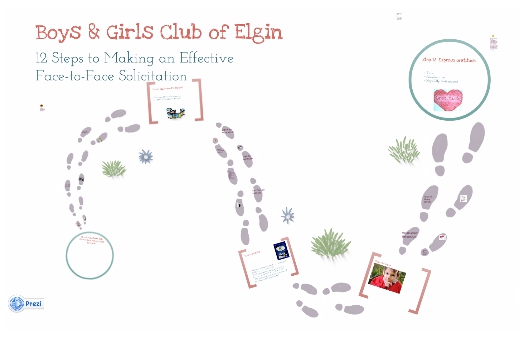
Just yesterday I transformed one of my PowerPoint presentations on the “12 Steps to Making a Face-to-Face Solicitation” into a Prezi. After the training, I had a few different volunteer solicitors thank me for using a different format. You can check-out that presentation by clicking here or the graphic below.

Prezi sample

Let me end this post with a dose of skepticism.

I personally don’t believe that people are tired of PowerPoint presentations and I don’t think Prezi is the solution to all of our problems.

In fact, I suspect that what non-profit volunteers are actually trying to tell us is:

Enough of the presentations! Can we have a discussion?

Perhaps, we’re talking too much at our board volunteers, and we need to figure out how to incorporate more discussions into our board meetings and board retreats.

Have you been struggling with this question recently? If so, please scroll down and share your thoughts in the comment box about the following questions:

  • Who should facilitate these engaging discussions in the boardroom, especially when no one on the board is a highly skilled facilitator?
  • Are there trainings available that a board president can easily access to improve his/her facilitation skills?
  • What role should staff play in framing and staging these conversations before, during and after the board meeting?
  • When information is vital to framing an important discussion, what is the best way to present it to board members without lulling them to sleep?

Please don’t misread me. I’m not suggesting that you throw all of your PowerPoint slides away. I’m not suggesting that Prezi is manna from heaven. I’m not telling you to only have robust discussions in the boardroom or board retreat. However, I am suggesting there is a delicate balance and we need to figure out if we want our non-profit boards to get better at governance.

We can all learn from each other. Please weigh-in with your thoughts using the comment box below.

Here’s to your health!

Erik Anderson
Founder & President, The Healthy Non-Profit LLC
www.thehealthynonprofit.com 
erik@thehealthynonprofit.com
http://twitter.com/#!/eanderson847
http://www.facebook.com/eanderson847
http://www.linkedin.com/in/erikanderson847

Your donors know when you’re lying

white lieWelcome to O.D. Fridays at DonorDreams blog. Every Friday for the foreseeable future we will be looking at posts from John Greco’s blog called “johnponders ~ about life at work, mostly” and applying his organizational development messages to the non-profit community.

In a post titled “My Son Knows When I’m Lying,” John talks about one study that claims that people lie two or three times every 10 minutes. He uses that study to transition into talking about “microexpressions” and how our faces betray us all of the time.

John’s blog post got me thinking about how many non-profit organizations lie to their donors.

OK . . . I’m sure some of you think I’m being harsh, but I don’t necessarily mean big lies that come with legal complications. Here are a few examples floating through my head:

  • Please join our board. It only involves coming to one meeting, once a month.”
  • We do a great job at measuring our outcomes and impact, which is how we know your contribution makes a huge difference.”
  • Yes, we’re going to miss our development director something fierce, but they left to pursue a once in lifetime opportunity.”
  • We doing a great job weathering the economic downturn. We are on a good fiscal footing.”

Little white lies. We tell donors these things all the time. In fact, the list goes on and on (but I certainly hope it isn’t anywhere close to the two to three lies every 10 minutes that John referenced in his blog post). We do this for any number of reasons including:

  • We don’t want to worry or concern our donors.
  • We fear that if they knew the truth, they’d stop donating to us.
  • A wise person once said, “If you like sausage, you don’t want to know how it is made.”   😉

With all of this being said, John’s blog post also got me thinking that about how donors probably see right through all of it. If this is true, then it begs the questions:

  • What do white lies do to our organizational credibility?
  • Do our microexpressions betray us enough to have an impact on donor retention rates?
  • Is there a better way to steward donors where we can avoid little white lies and be more transparent all the while cultivating a deeper sense of donor engagement?

I ask lots of questions today and offer no tips, tricks or solutions; however, I don’t think there are easy answers that I can offer you. Regardless, I suspect many of you have thoughts on this subject. How are you working hard at being more transparent and honest with your donors? What strategies and tactics do to you use? Please scroll down and share a quick thought or idea in the comment box below. We can all learn from each other.

Here’s to your health!

Erik Anderson
Founder & President, The Healthy Non-Profit LLC
www.thehealthynonprofit.com 
erik@thehealthynonprofit.com
http://twitter.com/#!/eanderson847
http://www.facebook.com/eanderson847
http://www.linkedin.com/in/erikanderson847
Using SWOT for more than just strategic planning

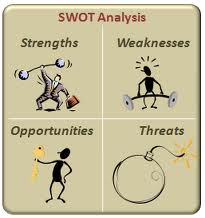
swot1I’ve had SWOT on my mind a lot lately. For those of you who don’t know, this acronym is a planning term that stands for “Strengths-Weaknesses-Opportunities-Threats“. It is an exercise you go through during the assessment phase of whatever planning process you’re undertaking. If used correctly, it should provide you with a platform upon which to build your goals, objectives and action plans. Unfortunately, I see too many organizations “going through the motions” and under-utilizing this very powerful tool.

Not just for strategic planning

SWOT gets used a lot in strategic planning projects, but I see very few people employing this tool when working on a:

  • board development plan
  • marketing plan
  • resource development plan
  • individual giving campaign plan
  • program plan
  • facilities maintenance plan
  • capital improvement plan
  • business plan

Generally speaking, a SWOT analysis tells you what your organization has going for it and against it. From this perspective, wouldn’t you want to know this before rolling up your sleeves and undertaking any project?

Scrambling the letters

swot2There seems to be a genuine misunderstanding about the letters in this acronym. In my experience, people get confused and only use this exercise to look internally at their own organization. In reality, the SWOT exercise is designed to look both internally and externally.

The “S” and “W” stand for “Strengths” and “Weaknesses”. At this point in the exercise, participants should be inwardly focused on the following questions (as it pertains to the project you’re thinking about undertaking):

  • What do we do well? 
  • What don’t we do so well?

The “O” and the “T” stand for “Opportunities” and “Threats”. At this point in the exercise, participants should be externally focused on the following questions (as it pertains to the project you’re thinking about undertaking):

  • What’s happening or about to happen outside of our organization (or your department) that we can take advantage of to help make this project successful?
  • What’s happening or about to happen outside of our organization (or your department) that we should be concerned about because it could negatively impact the success of this project?

In my experience, too many people don’t want to use the “O” and “T” to look external. For whatever reason, they like to remain focused internally and they conflate strengths and opportunities as well as weaknesses and threats.

I can’t tell you how many times I’ve seen a project run aground because of external factors that weren’t given any serious consideration during the planning process.

You want an example?  Here you go . . .

Non-profit ABC decides to plan and implement an annual campaign pledge drive. They put together their campaign plan and their focus is 100% internal (e.g. staffing, volunteers, materials, reporting, systems, etc). They launch the campaign and quickly find out that donors (aka an external audience) don’t support the campaign for any number of reasons (e.g. not enough cultivation, not enough stewardship, etc).

Not following through

swot3One of the biggest mistakes I see when it comes to using a SWOT exercise is not following through and using the analysis. This happens when participants do the good work in assessing their internal strengths and weaknesses and the external opportunities and threats and then stop right there.

At the end of any good SWOT exercise, the following questions need to be asked as you pivot toward goal setting:

  • What strengths will help us implement this project?
  • Are there specific strengths we should build our plan around?
  • Which organizational weaknesses pose challenges to our plan?
  • Should we build things into the plan that help us fix our weaknesses?
  • If fixing our weaknesses isn’t realistic, are there things we should build into the plan to help us compensate for our weaknesses?
  • Are there external opportunities we need to take advantage of to help us achieve what we want to achieve (e.g. low hanging fruit)?
  • Are there external threats (e.g. icebergs in the water) that we should try to account for in the plan?

SWOT just for the sake of doing SWOT is meaningless. The information and insights you gain from this powerful exercise should be used as a springboard into goal setting conversations. These questions can act as a lens by which you look at your “vision” and brainstorm the goals for accomplishing your vision. You can do the same thing when pivoting toward development of objectives as well as when you finally pivot towards action planning. In each of these cases, SWOT acts as a lens by which you frame the next stage of the planning process and keep things real.

My simple suggestion is . . . get in the habit of using SWOT before tackling any large project and use this tool to its fullest extent. Doing so improves your planning process and increases the likelihood of future success.

Has you organization ever used SWOT for anything other than strategic planning? If so, how did it work for you? Please scroll down and share your experience in the comment box below. We can all learn from each other.

Here’s to your health!

Erik Anderson
Founder & President, The Healthy Non-Profit LLC
www.thehealthynonprofit.com 
erik@thehealthynonprofit.com
http://twitter.com/#!/eanderson847
http://www.facebook.com/eanderson847
http://www.linkedin.com/in/erikanderson847

You can mourn change, however.

hurricane1Welcome to O.D. Fridays at DonorDreams blog. Every Friday for the foreseeable future we will be looking at posts from John Greco’s blog called “johnponders ~ about life at work, mostly” and applying his organizational development messages to the non-profit community.

In a post titled “A New Beach,” John talks about how change is inevitable and your attitude as a leader towards it is important.

I went scrambling to find this August blog post after readingthe front page and Section of USA Today on Thursday. I did so because reading the newspaper reminded me that so much of our news coverage is centered on change. Consider the following news headlines found in Section A on Thursday:

  • “Pentagon Warns Of Huge Cuts “(aka changes to the federal budget coming)
  • “Rain, sleet, snow, but not Saturday” (aka Post Office is changing delivery schedule)
  • “Monopoly fans vote to pull the plug on the iron: But in a first, a token cat is elected to the board” (aka classic American board game is changing)

Change . . . Change . . . and more change. It is all around us, and I am reminded of how difficult change can be when I read the following the following one sentence commentary offered up by the journalist who wrote the post office story: “You can mourn change, however.”

These words appeared at the bottom of the article right before the article encourages me to jump to page two to finish reading the story.

As I grappled with those words — “You can mourn change, however.” — and as I was turning to page two, my eyes settled on another article on page three titled “No vote on gay members in Boy Scouts until May“.

In that very instance, it all snapped into place. I get it . . . “You can mourn change, however.”

Non-profit organizations face change every day when they turn the lights on in the office. Change is part of life, and as John points out in his post titled “A New Beach,”  the only thing you can control is your perspective, your attitude, and your response.

In the case of the Boy Scouts of America (BSA), they decided decades ago to fight the changes happening in our society. The changes I’m referring to is our society’s gradual acceptance of people who are gay.

When I look at the BSA, all I see is a non-profit organization mourning change.

hurricane2John Greco used the imagery of a hurricane to represent “change”. Carrying this analogy forward, you simply need to ask yourself: “Why does the BSA think they can stop the hurricane?” Wouldn’t it be far better to focus on how to respond to the change?

The BSA obviously thought they could stop the hurricane. Here is how they chose to address the issue over the last three decades:

  • They fired employees who were found out to be gay.
  • They stripped kids of their Eagle Scout honors if they were discovered to be gay.
  • They kicked kids out of the organization who said they were gay.
  • They took a lawsuit all the way to the Supreme Court (and won) to defend their right to do these things.

All of that and the hurricane still paid a visit to the BSA.

I sit here and wonder . . . What would things look like today if the BSA had read John’s blog post three decades ago? Perhaps, they would’ve made the decision to let their charter partners (e.g. PTA organizations, community centers and churches of all faiths including Mormons, Catholics, Methodists, etc) set their own membership restrictions. If they would’ve taken that road, I suspect the hurricane would’ve skipped the BSA and it would be battering the beaches of those charter partners who decided to fight rather than adapt.

I think we all owe the BSA a debt of gratitude because they created a case study in how NOT to deal with change. I suspect non-profits will talk about this case study for many years.

Do you have any good examples of how you’ve personally dealt with change? How do you “choose your attitude” when it comes to change? It is more difficult than it sounds. Please use the comment box below to share your victories and lessons learned. We can all learn from each other.

Here’s to your health!

Erik Anderson
Founder & President, The Healthy Non-Profit LLC
www.thehealthynonprofit.com 
erik@thehealthynonprofit.com
http://twitter.com/#!/eanderson847
http://www.facebook.com/eanderson847
http://www.linkedin.com/in/erikanderson847

Through the Looking Glass: When the new CEO and the old CEO collide

alice and the doorA few months ago, I bumped into someone who recently accepted a new executive director position for a non-profit organization. I thought that it would be a neat project to live vicariously through them and try to see non-profit work through their eyes. So, I asked if they wouldn’t mind periodically sharing their challenges and successes with me throughout their first year on the job. In turn, I would translate those conversations into blog posts for DonorDreams subscribers. Fortunately, they agreed to participate in this exercise. I am calling this series “Through the Looking Glass” in honor of Lewis Carroll and Alice in Wonderland. I hope you enjoy it!

I hope to start each one of these posts with a quote from Alice in Wonderland that ties back to the theme of that particular post. Today, I think the conversation between Alice and the talking door at the beginning of Alice’s adventure is most appropriate.

Door: “Why it’s simply impassible!”
Alice: “Why, don’t you mean impossible?”
Door: “No, I do mean impassible. (chuckles) Nothing’s impossible!”

Sometimes when a new non-profit executive director is hired, there is a transition period between OLD and NEW. It can be the old executive director staying on to help with orientation and training of the new executive director. In other instances, it can be the interim executive director overlapping with the incoming CEO.

When I was a new executive director, the interim executive director stayed on as an employee as a direct report with front line responsibilities. In the instance of our new executive director friend, the former executive director is hanging around for a while. Unfortunately, no one on the board in the beginning defined what this should look like, and there has been some ambiguity around what that employment relationship looks like and when it will end.

When I recently checked in to see how our new CEO was doing, they already had a great blog idea. They titled that blog post “What to do when the old CEO won’t cough up info for the new CEO“.

Who would’ve guessed that without an orderly written transition and orientation plan provided by the board of directors that something like this would happen? (yes, sarcasm is intended)

So, I asked our new executive director this simple question: “That is a great blog topic, but what advice would you give new execs?

alice and the door2This is how they responded:

  1. Politely but firmly continue to request the info (first verbally,then  in writing, and finally in writing with a cc to the Board Chair and Vice Chair).
  2. Doing a work around to obtain the info in other ways.
  3. Using empathy and compassion to analyze the reluctance to share information. Then re-framing the request for info as a way of moving the organization forward and helping with transition.
  4. Talking to the Board Chair and Vice Chair.
  5. Asking who else I should be talking to in order to obtain the needed info.  (e.g. maybe the former ED doesn’t have the information at all and doesn’t want me to know this)

This challenge is REAL for this new executive director. It is also a reality for countless others across the county. Here are a few great online articles and resources that I found that might be helpful to non-profit organizations going through or planning on going through executive transition:

I thought it would be more appropriate to end each of these blog posts by opening it up to the DonorDreams readership and asking you what kind of advice you have for this new executive director. Please use the comment section below and provide your best world-class coaching advice. How would you go about engaging the outgoing executive director to get the documents and information they are needed for a seamless transition?

We can all learn from each other and sometimes peer-to-peer coaching is the best kind of coaching. Please take a minute or two out of your busy schedule to help this new executive director. Pay it forward!

Here’s to your health!

Erik Anderson
Founder & President, The Healthy Non-Profit LLC
www.thehealthynonprofit.com 
erik@thehealthynonprofit.com
http://twitter.com/#!/eanderson847
http://www.facebook.com/eanderson847
http://www.linkedin.com/in/erikanderson847

Are you too busy or are you just prioritizing?

time1Welcome to O.D. Fridays at DonorDreams blog. Every Friday for the foreseeable future we will be looking more closely at a recent post from John Greco’s blog called “johnponders ~ about life at work, mostly” and applying his organizational development messages to the non-profit community.

In a post titled “Take Your Time,” John talks about the difference between not having time and not taking the time to do important things. I especially love how he starts his post off with a quote from The Merovingian in The Matrix, who said: “Who has time? Who has time? But then if we do not ever take time, how can we ever have time?”

I’ve been stewing on this for days because if I had a nickel for every time I heard a non-profit professional say something about not having enough time to do something, then I’d be a very rich man. Here are a few very real examples:

  • I didn’t have time to recruit an annual campaign committee and engage them in writing a plan.
  • I don’t have time to work on adding a major gifts initiative to our agency’s resource development program. And don’t get me started on planned giving.
  • Critique meeting? Are you kidding? We don’t have time to do that. We’re already late for the next special event.
  • I didn’t get around to writing an annual performance plan for my direct reports because there just wasn’t enough time.

I am the first person to point out that the non-profit community is severely under-resourced, and this means time is a precious commodity for non-profit professionals who are wearing multiple hats. HOWEVER . . . John pulls no punches when he says: “When we say we don’t have the time to do something, what we’re really saying is that something is not a priority.”

So, I find myself wondering:

  • Why is a written annual campaign plan (aka project management plan) not a priority?
  • How can it not be a priority to write a performance management plan for your direct reports?
  • What can be more important than working on complex fundraising tools that will bring in more funding?

time2I will be the first person to admit that I sometimes find myself practicing “avoidance behavior;” however, I know that this isn’t productive. More importantly it is destructive behavior and something that a non-profit organization cannot afford.

Do you find yourself routinely saying: “There just aren’t enough hours in the day to . . .”? If so, then I strongly suggest that you do an informal self assessment. You can accomplish this by doing the following:

  • Draw a line down the middle of a piece of paper,
  • List all of the things you find yourself saying that you don’t have time to do on one side,
  • List all of the things you decided to do that same day on the other side of the paper, and
  • Go item by item and ask yourself:  “Was this more important than . . .”

You may just discover that you’re not prioritizing your time effectively. Or you may not. Regardless of the outcome, I think this process is good to go through periodically just to make sure you’re prioritizing your time effectively.

If you do go through this exercise and discover that you are doing a good job with prioritizing your time, then please stop saying that you don’t have enough time. Own the fact that you have limited time and need to make tough decisions about what gets accomplished. Once you start doing this, you might be surprised at how many people start telling you that what you’re deciding not to do is very important. Once THAT starts happening, then you have achieved the necessary leverage to turn the tables and ask them to please lend a hand with what they have just described as a very important task.

How can they say ‘NO’?

Do you find yourself saying that you don’t have enough time? How do you ensure that you’re prioritizing effectively? Please scroll down and share your best practices with your non-profit friends and family in the comment box below. We can all learn from each other.

Here’s to your health!

Erik Anderson
Founder & President, The Healthy Non-Profit LLC
www.thehealthynonprofit.com 
erik@thehealthynonprofit.com
http://twitter.com/#!/eanderson847
http://www.facebook.com/eanderson847
http://www.linkedin.com/in/erikanderson847

My big dream for 2013 is . . .

smart goalsThe Nonprofit Blog Carnival is a collection of the best advice and resources that consultants, support organizations, and nonprofits themselves are offering to the nonprofit community through their blogs. The January theme focuses on “your big dream for your organization, cause or the nonprofit community this year, and how you’ll get there.” Today’s post looks at dreams and how your agency can go about framing its strategy in 2013.

Whenever I work with a non-profit organization on goal setting and planning, there are a number of quotes that immediately come to mind such as:

“Good is the enemy of great.” ~Jim Collins

“Insanity is doing the same thing over and over again but expecting different results.” ~Rita Mae Brown

 A few weeks ago, I shared a cup of coffee with a local non-profit executive director, and we engaged in a conversation about grant writing and sustainability planning. During that conversation, she said something like: “If agencies only did things that at face value appear to be sustainable, there wouldn’t be a lot of risk taking and innovation going on in the non-profit sector.”

After chewing on this, I absolutely agree with her, but I also don’t see a lot of risk taking going on out there. This got me thinking about this month’s Nonprofit Blog Carnival topic related to big dreams.

My wish/dream for my non-profit clients in 2013 is that they overcome their resistance to planning.

The following are just a few quick tips I think will help agencies achieve quick little victories and get them closer to goal setting, taking a few risks, more deeply engaging volunteers, and moving the needle:

  1. Don’t give up on doing some assessment work to get things started, but keep these efforts focused on quick and simple. A SWOT analysis tool can accomplish a heck of a lot in a short period of time.
  2. Include volunteers at every step of the process because planning is an “engagement” activity. If you want a plan that only you will work on implementing, then exclude others. If you will need others to help, then include them.
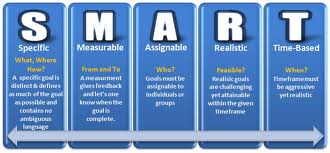
  3. Use SMART Goals. Any “dummy” can do it, click here for more information.
  4. Focus on 50,000 feet in the beginning and make sure to come out of the clouds toward the end of the process by asking specific questions about who will do what and by when.
  5. Find ways to inject urgency into the process. Don’t drag these efforts out over a few months. Can you work hard? Sprint? Get it done in a matter of weeks?  I suggest setting deadlines and assigning someone the responsibility of being the “task master” (e.g. a person who pushes hard to keep your project on track).

Accountability and urgency are sometime best achieved if your agency engages an external consultant like me, but it doesn’t have to be that way. If you are part of a larger national organization, I’m sure there are internal consultants standing by to provide technical assistance. If you don’t have money to hire someone like me and don’t belong to a national network, then you can always talk to your local network of nonprofit agencies. One of your peers might be experienced in facilitation and willing to donate their time in exchange for something. You never know unless you ask, right?

What obstacles do you find get in your way when dreaming big? What has worked for you when trying to overcome those obstacles to planning and engaging volunteers. Please scroll down and use the comment box below to share your thoughts and experiences. We don’t need to re-invent the wheel. We can all learn from each other.

Here’s to your health!

Erik Anderson
Founder & President, The Healthy Non-Profit LLC
www.thehealthynonprofit.com 
erik@thehealthynonprofit.com
http://twitter.com/#!/eanderson847
http://www.facebook.com/eanderson847
http://www.linkedin.com/in/erikanderson847

The importance of intuition in non-profit work

intuitionWelcome to O.D. Fridays at DonorDreams blog. Every Friday for the foreseeable future we will be looking more closely at a recent post from John Greco’s blog called “johnponders ~ about life at work, mostly” and applying his organizational development messages to the non-profit community.

In a post titled “I Have Leemers,” John talks about the power of intuition and the resistance he encounters from leaders in his workplace when it comes to making decisions based on these gut feelings.

Let me start by making a confession. My Myers-Briggs personality type is ESTP, which means I am:

  • Extroverted
  • Sensing
  • Thinking
  • Perceiving

This is what personality type experts will tell you about intuition and people like me:

“ESTP’s least developed area is their intuitive side. They are impatient with theory, and see little use for it in their quest to “get things done”. An ESTP will occasionally have strong intuitions which are often way off-base, but sometimes very lucid and positive. The ESTP does not trust their instincts, and is suspicious of other people’s intuition as well.”

As a non-profit and fundraising professional, I can honestly tell you that I’ve always felt like I’m at a disadvantage because of my intuition deficit. It is for this reason I work extra hard at trying to develop the intuition side of my personality.

Impossible you say? I don’t think so.  I’ve heard personality type experts compare work like this to right-handed people learning to write with their left hand. It isn’t impossible. It is hard to do and will never feel “normal,” but it is doable.

So, you might be wondering ‘WHY’ would I ever attempt to do something like this? Well, I personally think intuition is a very important attribute for successful non-profit people. Let me give you two examples.

Fundraising

As part of any good annual campaign, you schedule face-to-face meetings with donors. In those meetings you make the case for support and ask them to pledge/give a specific dollar amount. It sounds something like this:

“So, Sally . . . I am hoping that you would give some thoughtful consideration to making a contribution of $1,000 this year to support some of the programs we just talked about as well as everything else this agency does to make a difference in our community.”

That $1,000 ask amount is determined at a committee meeting as part of prospect identification-evaluation-qualification exercises during the campaign planning phase.

As an ESTP, I love prospect identification-evaluation-qualification because it feels like we’re making a decision based on facts and data. We’re looking at the donor database and a prospect’s giving history. We’re looking at a prospect’s life circumstances (e.g. divorce, kids in college, retirement, etc). This decision is based on things that this Sensor can wrap his arms around.

However, I cannot tell you how many times I’ve been in the middle of a solicitation call and my intuition is screaming at me.  As John said in his post, I heard those Leemers saying things like:

  • Abort! Abort! This donor isn’t ready to be asked.
  • Uh-Oh! We’re asking for too much.
  • Eeeek! This person is in love with the agency, and we’re asking for too little.

In every instance, I’ve always stuck to the plan and continued forward with the solicitation and asked for the amount determined by the committee. I can also tell you that every single time, I’ve walked away from the meeting thinking, “Damn, I should’ve gone with my gut feeling.”

I will become a better fundraising professional if I do a better job at developing my intuition.

Board Development

Did you read my blog post yesterday titled “The Chicago Cubs Convention through non-profit eyes: Part Three“???  If that wasn’t an ESTP’s point of view on board development, then I don’t know what is.  LOL

The main theme of yesterday’s post was how important it is to develop data-based metrics to evaluate board volunteer prospects.

As with the fundraising example that I just talked about, I cannot tell you how many times I’ve walked a board prospect through a recruitment process and those Leemers were screaming at me:

  • This person won’t be a good fit for this board.
  • This person needs other experiences first (e.g. fundraising) before joining the board.
  • This person is saying ‘YES’ but I can’t put my finger on why they should be saying ‘NO’

Again, if I had a dollar for every circumstance I stuck with the plan, closed the deal, and those Leemers were right, then I’d be a very rich man.

I believe intuition is an important board development tool that needs to be in every non-profit leader’s toolbox.

As it relates to me, developing my intuition muscles (even a little bit more) and combining that with my “Sensing” abilities, will help me become a stronger leader, professional, consultant and coach. So, it isn’t about doing less sensing and more intuiting, it is about “balance” for me.

Please scroll down and use the comment box to share an example of when you listened to (or didn’t listen to) your Leemers in a non-profit context. Are you in the same boat as me and need to further develop your intuition? How are you going about doing that? We can all learn from each other.

Here’s to your health!

Erik Anderson
Founder & President, The Healthy Non-Profit LLC
www.thehealthynonprofit.com 
erik@thehealthynonprofit.com
http://twitter.com/#!/eanderson847
http://www.facebook.com/eanderson847
http://www.linkedin.com/in/erikanderson847