
As most of you know, the first Thursday of every month has been dedicated to featuring a short video from Henry Freeman, who is an accomplished non-profit and fundraising professional. We affectionately call this monthly series “Hangin’ With Henry” because of the conversational format around which he has framed his online videos. This month we’re talking about Keeping the Ask Simple (aka applying the K.I.S.S. principle to asking donors for a contribution).
For those of you who subscribe to DonorDreams blog and get notices by email, you will want to click this link to view this month’s featured YouTube video. If you got here via your web browser, then you can click on the video graphic below.
https://www.youtube.com/watch?v=qGPENKwRwjE
After listening to Henry for almost seven minutes this morning (and I wasn’t even done with my first cup of coffee), I was left thinking the following:
- Face-to-face solicitation is the most effective form of solicitation (even though Henry was talking mostly about mail and email solicitations)
- There is a serious risk of burying the donor in lots of collateral material and talking the donor’s ear off, especially if the person doing the asking is apprehensive about doing so
- Fundraising professionals should probably only give volunteer solicitors nothing more than an internal case for support document (aka their talking points), an external case for support document (aka the campaign brochure) and the pledge form
This video also reminded me of an awesome training my former employer developed that turned every solicitation into a series steps. As I reflect upon those steps in the warm glow of this morning’s video, I now appreciate how they were trying to make in-person solicitation a simple exercise for volunteers.
 For those who are curious, here are those 12 steps to a simple and effective face-to-face solicitation:
- Don’t call your prospect until you’ve inked your pledge form
- Don’t think about the money . . . think about the client who will benefit from this potential contribution (and keep doing so throughout the entire process)
- Make sure you have a connection or relationship with the prospects you’ve chosen to solicit because cold calls are scary and not very effective
- Pick-up the phone and ask your prospect for time in their calendar (guard against accidentally asking for the contribution while you’re on the phone)
- Prepare for the meeting (e.g. review the case for support doc, FAQs, etc)
- When sitting down with the prospective donor, talk about what is in the case for support document (e.g. org mission, community need/s that the org is trying to address, what the org is doing to address those needs and the effectiveness of those programs, etc)
- Share your personal commitment to the campaign and the organization (e.g. your gifts of time, talent and treasure and why you are doing so)
- Ask the prospect to join you by considering a contribution of a specific dollar amount (e.g. “we’re hoping you will give some thoughtful consideration to making a contribution of $XXX to support the programs we just talked about as well as everything else this organization does for its clients)
- Be quiet and let the donor give your request some consideration (and the first person to speak should be the donor)
- Answer the donors questions
- Set-up a time to follow-up with the donor if they aren’t ready to immediately ink the pledge form (e.g. never leave the pledge form behind and always walk out of the meeting with a definite date and time to touch base again)
- Express your thanks and gratitude for their time (because their time was a gift unto itself)
I love this list because as Henry expressed in his morning’s video, volunteers need tools to help them keep the solicitation meeting simple and following this 12 step process could very easily help keep the in-person meeting focused and short.
 This morning’s video also reminded me of another YouTube video a friend sent me a few days ago. It is a montage of video clips featuring actor Matt Damon in the HBO television series “Entourage“. The YouTube video illustrates the emotions, fears, and mistakes associated with asking your friends and colleagues for a charitable contribution.
The person who posted the Entourage video clips blocked my ability to embed the video into my blog. So, you need to click here to watch that video directly on YouTube. But don’t forget to circle back to this post and finish up our discussion. 😉
So, what are you thinking this morning after watching two great YouTube videos and reading this post? How do you help your fundraising volunteers “keep it simple“? How do you keep it simple when soliciting donors? How many mistakes were you able to spot in the Matt Damon video clip? Please scroll down and share your thoughts and experiences in the comment box. We can all learn from each other.
Here’s to your health!
Erik Anderson
Founder & President, The Healthy Non-Profit LLC
www.thehealthynonprofit.com
erik@thehealthynonprofit.com
http://twitter.com/#!/eanderson847
http://www.facebook.com/eanderson847
http://www.linkedin.com/in/erikanderson847
![IMG_20150802_102350339_HDR[1]](https://donordreams.files.wordpress.com/2015/08/img_20150802_102350339_hdr1.jpg?w=300) A few days ago, I was in an airport trying to catch a connecting flight when I saw a poster advertisement for an international non-governmental organization (NGO) that provides medical services to children and families in third world countries. I took a picture of the portion of the advertisement that immediately caught my attention.
A few days ago, I was in an airport trying to catch a connecting flight when I saw a poster advertisement for an international non-governmental organization (NGO) that provides medical services to children and families in third world countries. I took a picture of the portion of the advertisement that immediately caught my attention. One of the clients I’ve been working with for a while is located in Bloomington, Indiana, which is where I met Rachael Jones. Rachael is a transgender woman who used to own “Rachael’s Cafe”. Unfortunately, after eight years of serving coffee, food and a side of acceptance, Rachael closed her doors last month. During my last visit, the executive director handed me a copy of the June 29th edition of The Herald-Times newspaper with a front page story headline that read “Downtown gathering place closes after 8 years of fostering acceptance“. He shared the newspaper story with me because he knew I had wanted to be there for Rachael’s last day, but I just couldn’t make it work with my travel schedule.
 The ease of technology now reaches almost all aspects of life, even fundraising. With the help of social media and email and texting, nonprofits are now able to raise money with the click of a button. This shift has been hugely beneficial.
 Gretchen Barry, Director of Marketing — Gretchen has been a leader in corporate communications and marketing for 20+ years. Gretchen has published numerous articles related to charitable giving and is a passionate advocate for public schools. Gretchen has donated her time to numerous causes including Relay for Life, Girls on the Run, Rebuilding Together, and just recently became involved with the local land trust. Gretchen graduated from the University of Nevada with a degree in English literature.
 My neighbor owns and operates a home business, and last week he received a letter from a local non-profit organization asking him to sponsor a
  Without a good list of donors, your year-end mail appeal will fall very flat and likely not raise very much money. Some direct mail experts, such as the folks at
  Last week I wrote a post titled “
 In other words, most of us run at least one special event as part of our comprehensive resource development program. While this was foreseeable and expected, what was surprising to me was that different size non-profit organizations get more bang-for-their-buck from different types of events. And what floored me was that regardless of organizational size most respondents reported that “fun runs and walks” universally receive a high return on investment (ROI).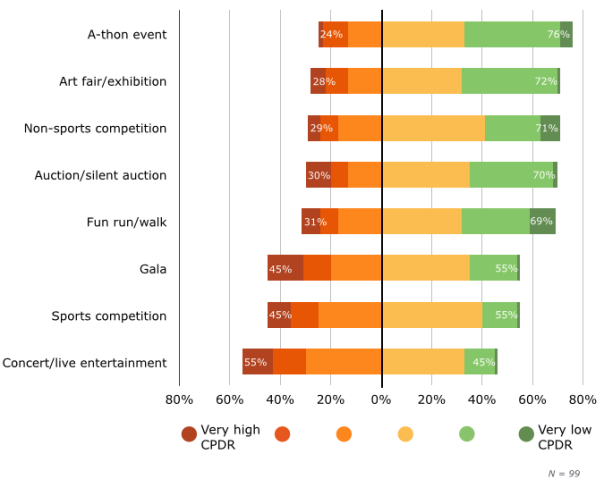
 It is June and you know what that means … The Indiana University Lilly Family School of Philanthropy and the fundraising professionals from
  Before you dive into lots of other chatter, you may want to purchase this year’s Giving USA annual report (or at least download the free whitepaper highlights).
  In recent months, I’ve been reminded of the power of donor databases and Customer Relationship Management (CRM) systems. For-profit corporations grasped the importance of gathering customer data a long time ago, which is why they invested in these systems before many non-profit organizations started doing so. I will divide the remainder of this blog post up into sections and share a few personal stories about my experiences in recent months. At the end of this post, I’ll share a few resources to help you with your search.
![IMG_20150414_215128628[1]](https://donordreams.files.wordpress.com/2015/06/img_20150414_2151286281.jpg?w=169) My husband and I like to take cruises every other year and visit fun places. Over the years we’ve traveled to the Caribbean, Greek Islands, Scandinavian peninsula (and St. Petersburg, Russia), Alaska, and recently the Panama Canal (and Central America).
My husband and I like to take cruises every other year and visit fun places. Over the years we’ve traveled to the Caribbean, Greek Islands, Scandinavian peninsula (and St. Petersburg, Russia), Alaska, and recently the Panama Canal (and Central America).![IMG_20150414_191147999_HDR[1]](https://donordreams.files.wordpress.com/2015/06/img_20150414_191147999_hdr1.jpg?w=300) While some people think this level of interaction is creepy, I believe the vast major of people (including myself) find this comforting and convenient. I prefer to think of it differently. I’m in a 10 year relationship with Princess Cruises, and they better know my preferences just like my husband better know my eye color.
While some people think this level of interaction is creepy, I believe the vast major of people (including myself) find this comforting and convenient. I prefer to think of it differently. I’m in a 10 year relationship with Princess Cruises, and they better know my preferences just like my husband better know my eye color.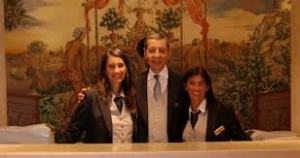 When I returned from my cruise at the end of April, I immediately hit the road on a business trip. Whenever I visit this one particular client, I always stay at the same hotel — Marriott SpringHill Suites.
 As I’ve already explained, I couldn’t sleep, and the Red Cross story by Larry Wilmore rattled me to my non-profit core.
 Recently, I’ve become frustrated by the word “stewardship” because every time I say it, the conversation immediately veers in the direction of gift acknowledgement letters, annual reports, thank-a-thon events, etc. While these things are important and necessary, the fact of the matter is that recognition is only a part of stewardship.
 I went looking online for other non-profit consultants and bloggers with ideas to share. So, I wasn’t surprised when I came across a similar post from Marc Pitman (otherwise known as The Fundraising Coach). He also talks about Haiti and the Red Cross, and at the end of his blog post he lays out an awesome 30 minute exercise you can facilitate in your boardroom or with your resource development committee.