
Let’s face it. Times change, and those things that don’t evolve and keep up with the times get old and stale. And this applies to everything in life including your fundraising plan (which includes your goals, strategies, tactics and sometimes even best practices). I’ve asked Abby Jarvis from Qgiv to weigh-in with her suggestions on how your organization might evolve its approach to soliciting donors and polishing up its fundraising plan. I think you will like her five suggestions. Here’s to your health! ~Erik
5 Ways to Make Better Fundraising Asks
By Abby Jarvis
Blogger, marketer & communications coordinator for Qgiv
 Your nonprofit is constantly trying to improve. Whether you’re developing an efficiency hack for your staff members or trying new fundraising events, openness to change is what allows your organization to grow, acquire more donors, and raise more money for your cause.
One area that nonprofits can constantly improve in is their donation appeal strategies. There is always room for improvement, whether you ask for donations over the phone, in person, with direct mail, or through any other method.
Check out these five ways to improve your fundraising appeals!
1. Update your website
Donors who find themselves on your nonprofit’s website don’t want to see pages that haven’t been updated since 2007.
Part of improving your fundraising efforts should involve sprucing up your nonprofit’s website and donation page.
Online donations are steadily rising and becoming the preferred giving method for younger generations who have grown up surrounded by technology. Make sure that you aren’t losing these donors’ interests by having an outdated donation page and website.
Check out these great examples of donation forms for a little inspiration.
2. Start personalizing your direct mail
You wouldn’t send a letter to your Aunt Margaret that started off with “Dear Relative.”
You shouldn’t be doing that in your direct mail appeals either.
One characteristic that unites all nonprofits with successful direct mail solicitation is the personalization of their letters.
Personalization doesn’t just mean using the donor’s name in the greeting, though. It also means:
- Referencing past involvement or contributions.
- Offering new ways to interact with your nonprofit.
- Suggesting giving levels based on past contributions.
- A personal signature from an organization member.
- And more!
Make sure that you’re personalizing your direct mail appeals to bring in more donations for your nonprofit!
3. Ramp up your email campaigns
More and more nonprofits are looking to improve their email marketing techniques. Is your organization ready to join them?
Ramping up your email campaigns means taking a look at the successful emails you’ve sent in the past and improving the ones that weren’t as effective.
Don’t just send out donation appeals in your emails, though. Give donors regular updates about your organization with:
- Success stories.
- Info on current projects.
- Volunteering opportunities.
- Invitations to events.
- And more!
Sending out emails to your donors is a cost-effective and efficient way to keep them in the loop and to ask for donations.
4. Host really great fundraising events
Even though event fundraisers come with a cost, they can be fantastic opportunities for your supporters to interact with one another and your nonprofit.
They can be a valuable be a great way for your organization to ask for donations!
Let’s say you’re hosting a family fun day for your church’s mission trip. During the opening or closing ceremony, let attendees know why their donations are so important and what they will help fund. Then, give them ways to donate either through physical, on-site donations, or digital methods like text-to-give or mobile donation forms.
Hosting a fundraising event takes a lot of planning and coordination, but with the right tools, your nonprofit can make better fundraising asks at the events you host for donors!
5. Take a look at your major gift strategy
Asking for donations from major gift prospects can be tricky. Not only do you have to convince someone that your organization is worth supporting, but you have to ask that person for a significant amount of money.
The best way for your nonprofit to succeed when it comes to major gifts is to develop a strategy for going after those donations. This strategy should include:
- Appointing a major gift officer.
- Developing comprehensive cultivation techniques.
- Forming solid relationships with your prospects.
- Using prospect research to help determine the right ask amount.
- Creating solid stewardship practices for after the donation has been made.
Major gifts are often some of the biggest donations that a nonprofit can receive. In fact, an individual who has made a gift between $50,000 and $100,000 is 25 times more likely to donate than an average person is. Make sure you aren’t missing out on these large contributions because your major gift strategy has been found lacking.
Your nonprofit should have several goals for improvement, but one of them should definitely be to make better fundraising asks! With these five tips, you’ll be set for success. Happy asking!
 Abby Jarvis is a blogger, marketer, and communications coordinator for Qgiv, an online fundraising service provider. Qgiv offers industry-leading online giving and peer to peer fundraising tools for nonprofit, faith-based, and political organizations of all sizes. When she’s not working at Qgiv, Abby can usually be found writing for local magazines, catching up on her favorite blogs, or binge-watching sci-fi shows on Netflix.
 Well, it happened to me and my husband again just the other day. We were asked to dinner by a non-profit friend. It was a simple dinner invitation, and one that we’ve been working on setting up for more than a year. We weren’t in the restaurant for more than 15 minutes and the pre-meal cocktails had just arrived, when our friend was asking us to give some consideration to making a contribution to their organization’s endowment fund.
 Simply, I believe soliciting unsuspecting prospects and donors is detrimental to your organization (and to everyone else in non-profit sector) for the following reasons:
 In an effort to do may part to help eradicate the “ambush” tactic from our non-profit toolbox, I will share with you some of the tips from this video.
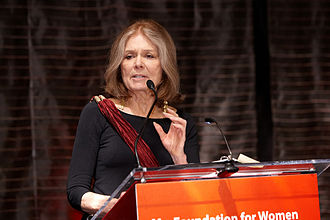 It was a bleary-eyed late night dash in a rental car to position myself for a morning meeting, and I was listening to National Public Radio (NPR) in an effort to stay awake. At one point, someone was interviewing iconic feminist leader Gloria Steinem. While I cannot remember the big reason for the interview (e.g. new book, rally, election analysis, court ruling, etc), there was one thing that stuck with me, and I just had to share with you because I think it is a great allegory for how your non-profit should interact with donors.
 For me, sometimes people speak the truth and it hits me in such a way that I have a hard time getting it out of my head. It rolls around like a pinball in my brain, and the only way for me to stop the experience is to write about it. Well, this happened again on January 28, 2016 at approximately 10:15 pm while I was watching a Special Edition of Hardball with Chris Matthews. It occurred during an interview with Mike Huckabee, when the former presidential candidate said something close to the following (and if memory serves me correctly, I think it was in response to a question about the primary election system):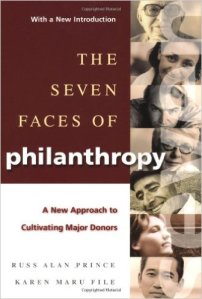
 This morning, I was in my car driving down the interstate when National Public Radio (NPR) ran a story about UNICEF’s goal to raise $9 million to fight against the Zika virus. If you want to learn more about this new, you can
 ![20160121_131831[1]](https://donordreams.files.wordpress.com/2016/01/20160121_1318311.jpg?w=300) Recently, I’ve been working with Boys & Girls Club of Watertown on a project, and a few months ago staff asked me if I wanted to schedule my January return trip around their
Recently, I’ve been working with Boys & Girls Club of Watertown on a project, and a few months ago staff asked me if I wanted to schedule my January return trip around their ![20160122_205458[1]](https://donordreams.files.wordpress.com/2016/01/20160122_2054581.jpg?w=169) In a nutshell, a camel race is a game of chance. It involves betting, dice rolling and moving decorated camels through a race course. Here are a few details:
In a nutshell, a camel race is a game of chance. It involves betting, dice rolling and moving decorated camels through a race course. Here are a few details:![20160122_205516[1]](https://donordreams.files.wordpress.com/2016/01/20160122_2055161.jpg?w=300) Two very large fuzzy dice are rolled and the numbers rolled move the camel with the corresponding number one space forward on the race course (e.g. if a two and six are rolled then camel #2 and camel #6 each move one space)
Two very large fuzzy dice are rolled and the numbers rolled move the camel with the corresponding number one space forward on the race course (e.g. if a two and six are rolled then camel #2 and camel #6 each move one space)![20160122_171636[1]](https://donordreams.files.wordpress.com/2016/01/20160122_1716361.jpg?w=169)
![20160122_171639[1]](https://donordreams.files.wordpress.com/2016/01/20160122_1716391.jpg?w=168)
![20160122_171644[1]](https://donordreams.files.wordpress.com/2016/01/20160122_17164411.jpg?w=169)
![20160122_171648[1]](https://donordreams.files.wordpress.com/2016/01/20160122_1716481.jpg?w=169)
![20160122_171652[1]](https://donordreams.files.wordpress.com/2016/01/20160122_1716521.jpg?w=169)
![20160122_171655[1]](https://donordreams.files.wordpress.com/2016/01/20160122_1716551.jpg?w=169)
![20160122_171700[1]](https://donordreams.files.wordpress.com/2016/01/20160122_1717001.jpg?w=168)
![20160122_171705[1]](https://donordreams.files.wordpress.com/2016/01/20160122_1717051.jpg?w=168)
![20160122_171707[1]](https://donordreams.files.wordpress.com/2016/01/20160122_1717071.jpg?w=169)
![20160122_171711[1]](https://donordreams.files.wordpress.com/2016/01/20160122_1717111.jpg?w=168)
![20160122_171717[1]](https://donordreams.files.wordpress.com/2016/01/20160122_1717171.jpg?w=169)
![20160122_171727[1]](https://donordreams.files.wordpress.com/2016/01/20160122_1717271.jpg?w=169)
![20160122_171732[1]](https://donordreams.files.wordpress.com/2016/01/20160122_1717321.jpg?w=168)
![20160122_171749[1]](https://donordreams.files.wordpress.com/2016/01/20160122_1717491.jpg?w=169)
![20160122_171814[1]](https://donordreams.files.wordpress.com/2016/01/20160122_1718141.jpg?w=168)
![20160122_205535[1]](https://donordreams.files.wordpress.com/2016/01/20160122_2055351.jpg?w=300) Special event fundraising is:
Special event fundraising is: I had the privilege of interviewing a young fundraising professional yesterday for an online article that I am writing. In that interview, we talked for almost an hour about direct mail and her passion for learning as much as she can about that industry’s best practices and how to apply it to her non-profit fundraising work.
 OK . . . I have a confession to make. When I’m on the road and run down, sometimes I flop into bed and watch an episode or two of South Park on Comedy Central. While the show’s satire is often over the top, their social commentary on all sorts of current events is razor sharp. A few nights ago I found myself caught up in this “travel habit” and engaged in watching season 19 episode five, which was all about Internet Shaming and included a subplot about Charity Shaming.