
 On Tuesday, I wrote a post titled “Things to consider before sending your next direct mail solicitation” and there appeared to be great interest from DonorDreams readers. So, today I decided to drill down on one specific mail solicitation topic — “asking for a specific donation amount” — because it is something few people seem to feel comfortable doing.
Everyone I’ve ever talked to about their mail appeal swears that they are good at asking for a contribution in their letter. However, the truth is that many of the letters I receive default to what I call the “passive ask.”
Here are a few examples of what I’m talking about:
- “But we can’t do any of this without you. We need you to make a contribution today.”
- “All gifts are appreciated and needed to continue this important mission. Small or large, your gift makes a difference.”
- “Say YES to making a donation today to XYZ agency and being a special part of the XYZ family.”
These were real solicitations that I received from organizations.
Many of you are probably asking: “What is so wrong with this approach?”
The truth of the matter is that this donor (and I suspect many other donors) want to know:
- what is a reasonable gift for donors like me?
- what contribution amount from me will help you hit your goal?
- what level of donation will help you make a difference with your clients?
Put me in a ballpark. Make a suggestion. Bottom line? I don’t really want to think too hard about this. Throw out a suggestion (based upon what you know about me). I’ll consider it. If it is something I can and want to do, then I’ll do it. If it isn’t something I can or want to do, then I won’t.
In my opinion, there is a darker side to this entire question . . .
Stop putting your donors on the spot and making them guess what you need.
This is, in fact, exactly what you’re doing. Right? Let’s think about this situation in a different light.
 What if your spouse or friend approached you and said, “I am really hungry and I need you get me food and make a meal before I starve.” However, they didn’t tell you:
- How hungry they are?
- How much time they had left before they starved?
- How much food would satisfy their need?
- What they want to eat?
- How they like their food prepared?
You’ve been put on the spot, but you have no idea what is expected of you or what needs to occur to solve the problem.
In my book, that is frustrating! And the last time I checked, it is never a good idea to do things that frustrate your donors and supporters.
So, you’re probably wondering what’s the right way to respectfully make an ask in a mail appeal?
Here’s a few real examples:
- Smile Train: “We hope you can send a donation of $25 that can cover the cost of sutures for one cleft surgery . . . $50 that can cover the cost of anesthesia . . . $125 that can pay half the costs of one surgery . . . or a most generous donation of $250 that can cover the cost of one complete surgery to save a child forever.“
- Council of Indian Nations: “Mr. Anderson, do you realize that for $10, we have the ability to provide over 90 servings of food to hungry Native Americans?“
- Michelle Obama: “So please, without waiting even a moment, rush your contribution of $1,000, $1,500 or whatever you can afford to Obama for America today.“
- The Washington, DC Martin Luther King, Jr. National Memorial Project Foundation: “But Founding Sponsors who contribute $150 or more will also receive a limited-edition, numbers photograph of Dr. King and his ‘American Dream’ speech.“
- Boys & Girls Club of Elgin: “Would you consider making a $25.00 donation to the Boys & Girls Club of Elgin to help underwrite educational and technology programs?“
 A few observations:
- Technology is amazing and easy to use. Mail merge allows you to personalize every letter and change the solicitation amount for each donor and prospect.
- If you don’t know the person receiving your solicitation letter, you can always ask for consideration in a range.
- You can also lay out a variety of giving options with an explanation of what each option helps underwrite.
With all of this being said, I understand the following:
- this isn’t easy
- there are times when you shouldn’t ask for a specific contribution amount
- some people insist there is a science to these issues
If you want to explore this question in more depth (and I encourage you to do so), you might want to investigate the following resources:
- [Working Paper] Griet Alice Verhaert & Dirk Van den Poel at Universiteit Gent: “Improving campaign success rate by tailoring donation requests along the donor lifecycle“
- Steve Hitchcock at Contributions Magazine: “When Not to Ask for a Specific Amount“
- Roger Carver at Agitator blog: Flat Earth Fundraising: Asking Amounts“
How does your agency tackle the issue of setting suggested ask amounts in your targeted and direct mail solicitations? Please scroll down and share your thoughts and experiences in the comment box below. Because we can all learn from each other.
Here’s to your health!
Erik Anderson
Founder & President, The Healthy Non-Profit LLC
www.thehealthynonprofit.com
erik@thehealthynonprofit.com
http://twitter.com/#!/eanderson847
http://www.facebook.com/eanderson847
http://www.linkedin.com/in/erikanderson847
 A client called and asked for a little help with their upcoming direct mail solicitation. As a result, all I’ve had on my mind over the last few days is direct mail. So, it only made sense to blog about it today. I’m breaking this post down into small sections, and I’m doing so in the order of highest importance (e.g. the first section has a bigger impact on the performance of your mailing than the second section, etc)
 Perhaps, the biggest factor in the success of your direct mail appeal is your mailing list. The following are just a few donor segments that I’ve mailed to throughout the years:
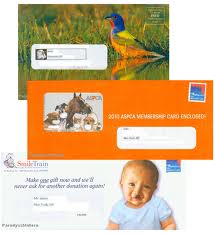 Your beautifully crafted letter means nothing if the recipient of your mailing doesn’t open the envelope. Right?
 Haha! You thought I was going to start with something like, “And God said, ‘Let there be light,’ and there was light.” (OK, the thought went through my head. Guilty as charged!)
 He who seeks finds
 Give to him who asks of you
 Craig Linton, blogger at
  Acknowledgement letters, emails, phone calls and gifts
 Inviting donors to take a tour
 Send chocolate covered strawberries
 “I laughed at the Lorax, “You poor stupid guy!
 Other stewardship activities definitely get you a little closer to building that relationship and understanding your donors’ rationale for making a charitable contribution:
 I believe it is a basic truism that you can’t make people do anything they don’t want to do. Every example I can think of ends up not working.
 Board Development
 Resource Development Plan
 This entire week we’ve been looking back upon 2011 for major trends, and then looking forward to 2012 with an eye towards making a few predictions. Today’s post speaks to a fundraising prediction that has been true every year since the birth of our country more than 235 years ago:
 Earlier this week, I found myself walking into a title company to interview a donor for a client. As I walked into the office building, I noticed the following things:
 I walked away from the conversation thinking this was a unique, fun and quirky business practice. I also came to understand that this business practice was a genius idea on so many different levels:
 As I walk down the driveway of an 80-something-year-old donor, he starts sharing a story with me about a skunk that appeared in his very nice and upscale neighborhood.
 Happy Friday morning, DonorDreams blog readers! I owe you an apology because I missed my mark yesterday and didn’t publish a post. I had good intentions, but my day started fast and snowballed unexpectedly from that point onward. Needless to say, I didn’t even have time to reach into my bag of guest bloggers and share something from them with you. So, I’m going to rectify my Thursday mistake with a Friday morning bonus.
 I had an interesting chat today with a new client who told me their last grant writer didn’t have any luck using a costly search engine tool for finding new foundations. After a year, they ended the contract on the search engine and now he is no longer with the organization. The moral of this story? Tools don’t make the worker…the worker must really know how to get the most from their tools.