 Dani Robbins is the Founder & Principal Strategist at Non Profit Evolution located in Columbus, Ohio. I’ve invited my good friend and fellow non-profit consultant to blog the first Wednesday of each month about board development related topics. Dani also recently co-authored a book titled “Innovative Leadership Workbook for Nonprofit Executives” that you can find on Amazon.com.
Multiple conversations about the same topic with the leadership of a variety of organizations tend to lead to blog posts. When that happens, it is usually prompted by a question, though the question is rarely about the actual issue at hand. The issue that is really the issue at hand is usually behind the issue that is being presented.
For those of you know me, it will come as no surprise to you that I spend a lot of time thinking about the situation behind the situation. (When you make your living telling people what you think, you’d better have thought extensively about whatever they might want to know.)
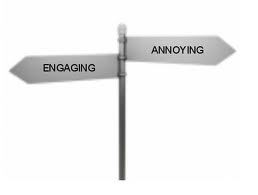
When it comes to Boards and fundraising (and quite a few other topics as well), the issue behind the issue is often “engagement”.
The question I am being asked a lot lately is “How can I get my Board to fund raise?”
If your Board is not fundraising the way you want them to, I submit you do not have a fundraising issue; you have an engagement issue and possibly a Board Development issue.
Boards that are engaged, raise money. Boards that are not, don’t.
What is the emotional energy of the people in the room during a Board meeting?
When I ask this question while facilitating a session, I set up the answer on a scale of 1-4, with one being “I can’t believe I left my office for this” and 4 being “I feel privileged to be in this room.” Where do your Board members fall?
Mission moments, generative discussions and strategic conversations are engaging. Upholding the fiduciary responsibilities, while critical for an organization is also, for the most part, disengaging. It’s boring. It’s necessary but it’s still boring and boring is disengaging.
Every time I facilitate a planning session with a Board, someone comes up to me and says something to the effect of “That was great! I’m so happy to be talking about strategy and issues and not about the building” (or the finances, or fill in whatever you are sick of).
 We engage Board members initially by talking to them about our organization’s mission, the impact it makes in our communities and our vision for changing our corner of the world. They join our Boards in order to help us do those things – and then we never talk with them ever again about any of it. Ever.
We talk with Board members about money — what we spent and why we need more of it. We talk with them about fundraising, and why they need to do more of it. We talk with them about the problems we’re having, and what we need from them to fix it.
We don’t talk with them nearly enough about what they want, about why they joined our Board, and what they hoped to get out of their service.
It is a great opportunity to change the discussion; change the topic; change the impact; change the engagement level.
Call a retreat. Take a survey. Add some client stories to the agenda. Have a strategic planning strategy session, and then continue to talk strategy throughout the year. Present a horizontal scan and discuss how it will impact your clients, not just your agency, but your clients. Introduce some generative discussions at a Board meeting. Here are a few ideas how from my favorite Board book Governance as Leadership:
- “At the end of discussions give each member 2-3 minutes to write down any thoughts or questions that weren’t expressed.
- Randomly designate 2-3 trustees to make the powerful counter arguments to initial recommendations.
- Ask a subset of the Board to assume the perspective of different constituent groups likely to be affected by the decision at hand.”
Find out what people expect when they joined your Board and meet their expectations. You’ll be glad you did and so will your Board members. They might become so engaged, they might even start telling people about your agency, and asking people to support it.


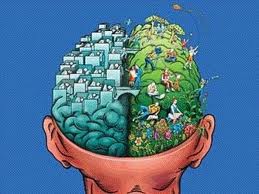




 This phenomenon is called the “crowding out effect” and I wrote about it in the following blog posts in 2011:
 The crowding out effect is real, and it is something non-profit organizations need to understand and deal with. If not, then I advise putting the following age-old expression in a frame above the boardroom door: “The road to hell is paved with good intentions.”
 Fundraising policies
 Welcome to O.D. Fridays at DonorDreams blog. Every Friday for the foreseeable future we will be looking more closely at a recent post from John Greco’s blog called “
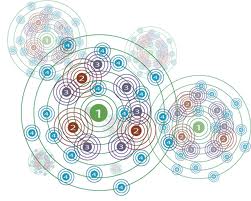 I was recently engaged in an engaging discussion about board development with a great group of non-profit board volunteers. The range of topics in that conversation spanned issues such as prospect identification, evaluation methods, prioritizing prospect lists, cultivating prospects, recruitment process, orientation, recognition, and evaluation. It was one of those conversations that a facilitator loves because everyone was engaged and actively participating. There was an energetic dynamic in the room, and then someone asked a really tough question:
 For decades (and probably centuries), board development committees have answered this question the old fashion way. They sat down around a table and talked it over. Those committees who were successful had a diversity of people sitting around the table and were able to assess a prospect’s social network in an anecdotal manner. They talked about what they see and hear about the prospect. Here are just some of the things they most likely talked through:
 However, there are some “21st Century” tools that your board development committee might want to start using when talking through the issue of a prospect’s network. Consider the following:
 It’s the end of the year, which always seems like a good time to take stock. Did I meet my obligations? Did I rise to the occasion? Did I do what I said I would? Have I become what I aspired to be? Am I living an authentic life?