
 In my last blog post I talked about a USA Today article from John Waggoner titled “Resolutions you can keep,“ which I came across during my New Year’s Eve Napa Valley vacation. I mentioned that there were three important fundraising concepts in the final two column inches of this article that non-profit organizations should take to heart as they start a new year. Tuesday’s blog was about sustainable giving strategies. Today’s post focuses on sacrificial giving and upgrade strategies.
So, the second notable thing that Waggoner said in the final two inches of his newspaper article was:
“How much you give is, of course, up to you. C.S. Lewis noted that if your charitable donations don’t pinch or hamper you in some way, they are probably too little.“
As I mentioned in my previous post, my first significant charitable contribution was a $1,000 annual campaign pledge to the Boy Scout council that employed me back in the 1990s. I used that story to springboard off into sustainable giving. The funny thing is that the same Boy Scout story pertains to the second Waggoner quote that I’m using today.
So, there I was in my Scout Executive’s office and he was debriefing me after my first ever solicitation of a donor. It didn’t go especially well, and he pointed out that I hadn’t yet turned in my personal pledge card prior to going on my solicitation appointment with another fundraising volunteer.
He helped me see the importance of “making your gift first before asking others to make their gift.” Of course, he seized the opportunity and solicited me on the spot.
First, he asked me if I had decided how much I planned on pledging. I explained that I had never made a pledge to any non-profit organization and was thinking about making a $100 contribution.
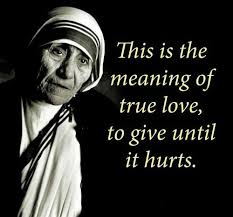 Then, he launched into a story about the importance of what he called “sacrificial giving” and “giving until you can feel a little pinch in your wallet.” The following are just a few of the reasons I recall from that conversation why it is important to give until it hurts:
- You will feel good about supporting a mission that you love
- You will be demonstrating your passion to volunteers and donors
- You won’t feel like you’re asking someone to do something that you aren’t doing yourself
- The fear associated with asking people for money will melt away
While I was skeptical at first, I took the plunge with a $1,000 pledge. In hindsight, my Scout Executive couldn’t have been more right, especially about “eliminating the fear” associated with asking people for money.
With all that being said, I believe Waggoner’s second to last paragraph in the USA Today article begs the following question:
Does your organization have an “upgrade strategy”?
Fundraising analytics demonstrate that an individual’s first contribution is almost never his/her largest one. In fact, a donor’s first contribution is usually a token gift and very often a test. Uh-huh, you heard me right. The research data that I’ve seen indicates that:
- Donors want to see what their contribution will do
- They are interested in seeing how you engage them
- While they likely already believe in your mission, they want to really believe and want you to show them why they should
- Many donors are looking for signs that your organization is well-run and financially stable and responsible
- Some supporters (and I count myself as one of these types of donors) actually look forward to hearing success stories about your clients
So, if you’ve done a good job with stewarding your donors in 2014, then you need to have a strategy to ask your donors to consider making a larger contribution in 2015.
 Your strategy doesn’t have to be complicated. In fact, the following is a simple upgrade strategy that one of my former employers put together:
- Identify donors who are ready to be asked to increase their giving
- Develop your case for support
- Identify volunteers with relationships to targeted donor
- Ask those volunteers to upgrade their personal contribution
- Solicit (making sure to involve someone they know well and who has also recently increased their giving)
- Steward (focusing on what the increased giving resulted in)
When developing your case, make sure to answer this simple question: “What will an X% increase in giving help your organization do and how will that in turn meet the donor’s needs?”
Of course, answering this question means that you need to know your donor and their needs, which likely means you’ve been talking with them about their philanthropic dreams/desires.
If you don’t like simple, then you might want to look into developing a donor recognition society that caters to the needs of donors who increase their giving. This donor society should contain considerations like:
- Special mention in your annual report
- Special communications
- Special recognition
The operative word, of course, is “special,” but the trick is to make the recognition feel appropriate and not over-the-top. Here are a few ideas that I’ve seen some organization’s use to make their recognition societies feel special:
- Quarterly get together (usually mission-focused)
- Routine communication specifically for members of the recognition society
- Small gift typically designating membership in the society (e.g. coffee mug, lapel pin, etc)
You shouldn’t go out and hire a skywriter to thank these donors, but you do need to go above-and-beyond if you decide to go down this path.
Does your organization have an upgrade strategy in place for 2015? If so, please scroll down and share it in the comment box below. We can all learn from each other.
If you want to read more about upgrade strategies, I found a really nice blog post from Joe Garecht at The Fundraising Authority titled “How to Upgrade Your Donors“.
Here’s to your health!
Erik Anderson
Founder & President, The Healthy Non-Profit LLC
www.thehealthynonprofit.com
erik@thehealthynonprofit.com
http://twitter.com/#!/eanderson847
http://www.facebook.com/eanderson847
http://www.linkedin.com/in/erikanderson847
 As a donor, I discovered long ago that if I want to make a large contribution to a non-profit organization it probably won’t happen by writing one large check. While some people on this planet have that capacity, my bank account balance isn’t fat enough to do something like Bill Gates or Warren Buffet. However, “large contribution” is a relative term, and I made my first meaningful, sacrificial gift at the age of 27 when I pledged $1,000 to a local Boy Scout council while earning $27,000 working for that same organization.
 The United Way figured this one out a long time ago, didn’t they?
 Since the Great Recession of 2008, many non-profit organizations have explored and developed monthly giving programs. This strategy has been very popular with European charities, and it is akin to the “set it and forget it” mentality of our society.
 Happy New Year, everyone!
 Happy Holidays, DonorDreams readers! It is Christmas morning and my inner child woke me early. I’ve been sitting on the couch, enjoying a silent cup of coffee, and waiting for everyone to wake up.
 On Saturday, I attended the funeral of my father’s aunt —
  He first started looking for people who had once been loyal supporters but for whatever reason stopped donating. Then he found mutual friends (e.g. board members, former board members, volunteers, donors, etc) and asked them to assist with a re-introduction. On a go-forward basis he simply engaged in relationship building.
 So, I guess I’m feeling a little bah-humbug about the entire idea of #RetentionWednesday. If I were king for a day (a scary thought), I would decree 2015 “The Year of Retention“.
 I was on the phone yesterday talking with
  Our United Way friends totally get an A+ on this one because they’ve been running around for a decade now telling us to LIVE UNITED which encompasses the following ideas:
 My first Boys & Girls Club national conference was in New York City in 2001 literally months before the terror attacks.
 Fast forward to one of my first engagements as an external consultant. I was assisting with an organizational assessment and conducting interviews with board members, volunteers, collaborative partners, donors, former donors and various other stakeholders.
 I often find myself standing in parking lots after meeting “kicking stones” with staff, board members, volunteers, etc.
 Last night I had the privilege of being invited to a non-profit organization’s year-end holiday party stewardship event. In attendance were board members, capital campaign volunteers, auxiliary members, and various other stakeholders. There was no solicitation presentations, but there were a few powerful testimonials from alumni and lots of gratitude. The energy in the room was palpable, and I was reminded me of the old expression that “hope floats“. It was in this dynamic setting that I had an amazing conversation with someone about the power of leadership.
 The following is a list of competencies and skill sets the search committee reviewed during its search criteria conversations:
 Sorry about not posting something this morning, but I got to my hotel late last night (around midnight) and I was up five hours later for a 6:00 prospect identification/evaluation meeting. My request of Santa this year is more time added to the day and a few more weeks added on to the year. 🙂
 Successful #GivingTuesday solicitations probably utilize some of the same strategies that for-profits use to create the conditions for an impulse buy. Now it all makes sense. (I might not be quick, but I usually get there.) 🙂
 We are just a few days away from Thanksgiving, and I’m getting in touch with my gratitude muscles this week. If you’re anything like me then you’re probably a “lifelong learner” and love to read about bigger and better ways to engage donors and practice the art of resource development. One of the ways I feed my need to learn is reading other non-profit bloggers. Today’s post is dedicated to some of my absolute favs.